Meta invests $14.3B in AI firm Scale and recruits its CEO for ‘superintelligence’ team
Advertisement
Read this article for free:
or
Already have an account? Log in here »
To continue reading, please subscribe:

Digital Subscription
One year of digital access for only $205*
- Enjoy unlimited reading on winnipegfreepress.com
- Read the E-Edition, our digital replica newspaper
- Access News Break, our award-winning app
- Play interactive puzzles
*First annual payment billed as $205.00 + GST for one year. This annual subscription will automatically renew at $233.00 + GST every 52 weeks (10% off the regular annual price of $259.35). Offer available to new and qualified returning subscribers only. Cancel any time.
To continue reading, please subscribe:
Add Free Press access to your Brandon Sun subscription for only an additional
$1 for the first 4 weeks*
- Enjoy unlimited reading on winnipegfreepress.com
- Read the E-Edition, our digital replica newspaper
- Access News Break, our award-winning app
- Play interactive puzzles
*Your next Brandon Sun subscription payment will increase by $1.00 and you will be charged $17.95 plus GST for four weeks. After four weeks, your payment will increase to $24.95 plus GST every four weeks.
Read unlimited articles for free today:
or
Already have an account? Log in here »
Hey there, time traveller!
This article was published 12/06/2025 (472 days ago), so information in it may no longer be current.
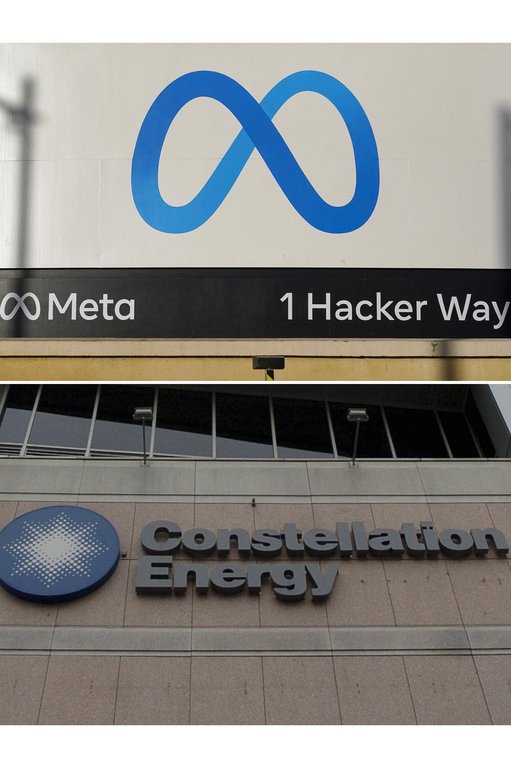
Meta is making a $14.3 billion investment in artificial intelligence company Scale and recruiting its CEO Alexandr Wang to join a team developing “superintelligence” at the tech giant.
The deal announced Thursday reflects a push by Meta CEO Mark Zuckerberg to revive AI efforts at the parent company of Facebook and Instagram as it faces tough competition from rivals such as Google and OpenAI.
Meta announced what it called a “strategic partnership and investment” with Scale late Thursday. Scale said the $14.3 billion investment puts its market value at over $29 billion.
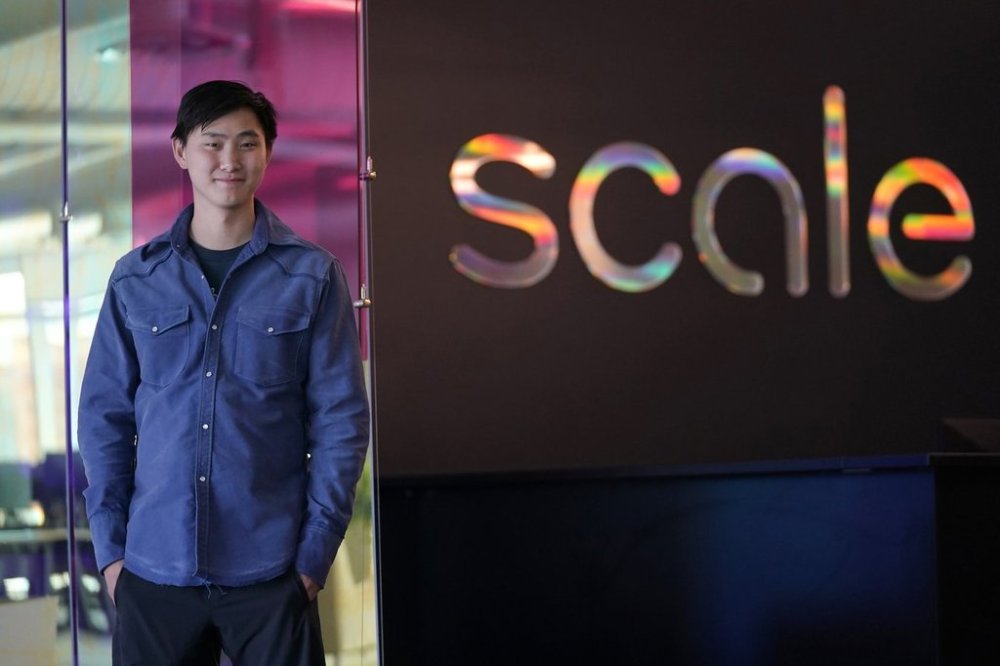
Scale said it will remain an independent company but the agreement will “substantially expand Scale and Meta’s commercial relationship.” Meta will hold a 49% stake in the startup.
Wang, though leaving for Meta with a small group of other Scale employees, will remain on Scale’s board of directors. Replacing him is a new interim Scale CEO Jason Droege, who was previously the company’s chief strategy officer and had past executive roles at Uber Eats and Axon.
Zuckerberg’s increasing focus on the abstract idea of “superintelligence” — which rival companies call artificial general intelligence, or AGI — is the latest pivot for a tech leader who in 2021 went all-in on the idea of the metaverse, changing the company’s name and investing billions into advancing virtual reality and related technology.
It won’t be the first time since ChatGPT’s 2022 debut sparked an AI arms race that a big tech company has gobbled up talent and products at innovative AI startups without formally acquiring them. Microsoft hired key staff from startup Inflection AI, including co-founder and CEO Mustafa Suleyman, who now runs Microsoft’s AI division.
Google pulled in the leaders of AI chatbot company Character.AI, while Amazon made a deal with San Francisco-based Adept that sent its CEO and key employees to the e-commerce giant. Amazon also got a license to Adept’s AI systems and datasets.
Wang was a 19-year-old student at the Massachusetts Institute of Technology when he and co-founder Lucy Guo started Scale in 2016.
They won influential backing that summer from the startup incubator Y Combinator, which was led at the time by Sam Altman, now the CEO of OpenAI. Wang dropped out of MIT, following a trajectory similar to that of Zuckerberg, who quit Harvard University to start Facebook more than a decade earlier.
Scale’s pitch was to supply the human labor needed to improve AI systems, hiring workers to draw boxes around a pedestrian or a dog in a street photo so that self-driving cars could better predict what’s in front of them. General Motors and Toyota have been among Scale’s customers.
What Scale offered to AI developers was a more tailored version of Amazon’s Mechanical Turk, which had long been a go-to service for matching freelance workers with temporary online jobs.
More recently, the growing commercialization of AI large language models — the technology behind OpenAI’s ChatGPT, Google’s Gemini and Meta’s Llama — brought a new market for Scale’s annotation teams. The company claims to service “every leading large language model,” including from Anthropic, OpenAI, Meta and Microsoft, by helping to fine tune their training data and test their performance. It’s not clear what the Meta deal will mean for Scale’s other customers.
Wang has also sought to build close relationships with the U.S. government, winning military contracts to supply AI tools to the Pentagon and attending President Donald Trump’s inauguration. The head of Trump’s science and technology office, Michael Kratsios, was an executive at Scale for the four years between Trump’s first and second terms. Meta has also begun providing AI services to the federal government.
Meta has taken a different approach to AI than many of its rivals, releasing its flagship Llama system for free as an open-source product that enables people to use and modify some of its key components. Meta says more than a billion people use its AI products each month, but it’s also widely seen as lagging behind competitors such as OpenAI and Google in encouraging consumer use of large language models, also known as LLMs.
It hasn’t yet released its purportedly most advanced model, Llama 4 Behemoth, despite previewing it in April as “one of the smartest LLMs in the world and our most powerful yet.”
Meta’s chief AI scientist Yann LeCun, who in 2019 was a winner of computer science’s top prize for his pioneering AI work, has expressed skepticism about the tech industry’s current focus on large language models.
“How do we build AI systems that understand the physical world, that have persistent memory, that can reason and can plan?” LeCun asked at a French tech conference last year.

These are all characteristics of intelligent behavior that large language models “basically cannot do, or they can only do them in a very superficial, approximate way,” LeCun said.
Instead, he emphasized Meta’s interest in “tracing a path towards human-level AI systems, or perhaps even superhuman.” When he returned to France’s annual VivaTech conference again on Wednesday, LeCun dodged a question about the pending Scale deal but said his AI research team’s plan has “always been to reach human intelligence and go beyond it.”
“It’s just that now we have a clearer vision for how to accomplish this,” he said.
LeCun co-founded Meta’s AI research division more than a decade ago with Rob Fergus, a fellow professor at New York University. Fergus later left for Google but returned to Meta last month after a 5-year absence to run the research lab, replacing longtime director Joelle Pineau.
Fergus wrote on LinkedIn last month that Meta’s commitment to long-term AI research “remains unwavering” and described the work as “building human-level experiences that transform the way we interact with technology.”