Trial opens against Meta CEO Mark Zuckerberg and other leaders over Facebook privacy violations
Advertisement
Read this article for free:
or
Already have an account? Log in here »
To continue reading, please subscribe:

Digital Subscription
One year of digital access for only $205*
- Enjoy unlimited reading on winnipegfreepress.com
- Read the E-Edition, our digital replica newspaper
- Access News Break, our award-winning app
- Play interactive puzzles
*First annual payment billed as $205.00 + GST for one year. This annual subscription will automatically renew at $233.00 + GST every 52 weeks (10% off the regular annual price of $259.35). Offer available to new and qualified returning subscribers only. Cancel any time.
To continue reading, please subscribe:
Add Free Press access to your Brandon Sun subscription for only an additional
$1 for the first 4 weeks*
- Enjoy unlimited reading on winnipegfreepress.com
- Read the E-Edition, our digital replica newspaper
- Access News Break, our award-winning app
- Play interactive puzzles
*Your next Brandon Sun subscription payment will increase by $1.00 and you will be charged $17.95 plus GST for four weeks. After four weeks, your payment will increase to $24.95 plus GST every four weeks.
Read unlimited articles for free today:
or
Already have an account? Log in here »
Hey there, time traveller!
This article was published 16/07/2025 (446 days ago), so information in it may no longer be current.
WILMINGTON, Del. (AP) — An $8 billion class action investors’ lawsuit against Meta CEO Mark Zuckerberg and company leaders — current and former — began Wednesday, with claims stemming from the 2018 privacy scandal involving the Cambridge Analytica political consulting firm.
Investors allege in their lawsuit that Meta did not fully disclose the risks that Facebook users’ personal information would be misused by Cambridge Analytica, a firm that supported Donald Trump’s successful Republican presidential campaign in 2016. Shareholders say Facebook officials repeatedly and continually violated a 2012 consent order with the Federal Trade Commission under which Facebook agreed to stop collecting and sharing personal data on platform users and friends without their consent.
Facebook later sold user data to commercial partners in direct violation of the consent order and removed disclosures from privacy settings that were required under consent order, the lawsuit alleges.

The fallout led to Facebook agreeing to pay a $5.1 billion penalty to settle FTC charges. The social media giant also faced significant fines in Europe and reached a $725 million privacy settlement with users. Now shareholders want Zuckerberg and others to reimburse Meta for the FTC fine and other legal costs, which the plaintiffs estimate total more than $8 billion.
The first trial witness, privacy expert Neil Richards, testified Monday morning for the shareholders.
“Facebook’s privacy disclosures were misleading,” said Richards, a professor at Washington University Law School.
In later testimony, Jeffrey Zients, who served on Facebook’s board from 2018 to 2020, testified that consumer privacy and user data were priorities for both management and the board.
Nonetheless, he supported settling with the FTC as it investigated potential violations of the 2012 consent order, so the company could move forward.
“It was difficult because this was a lot of money, but I think it was better than the alternative,” Zients said.
Asked if the board considered making its founder a party to the settlement, he said Zuckerberg was “essential” to running the company.

And, Zients, who served in both the Obama and Biden administrations, said, “there was no indication that he had done anything wrong.”
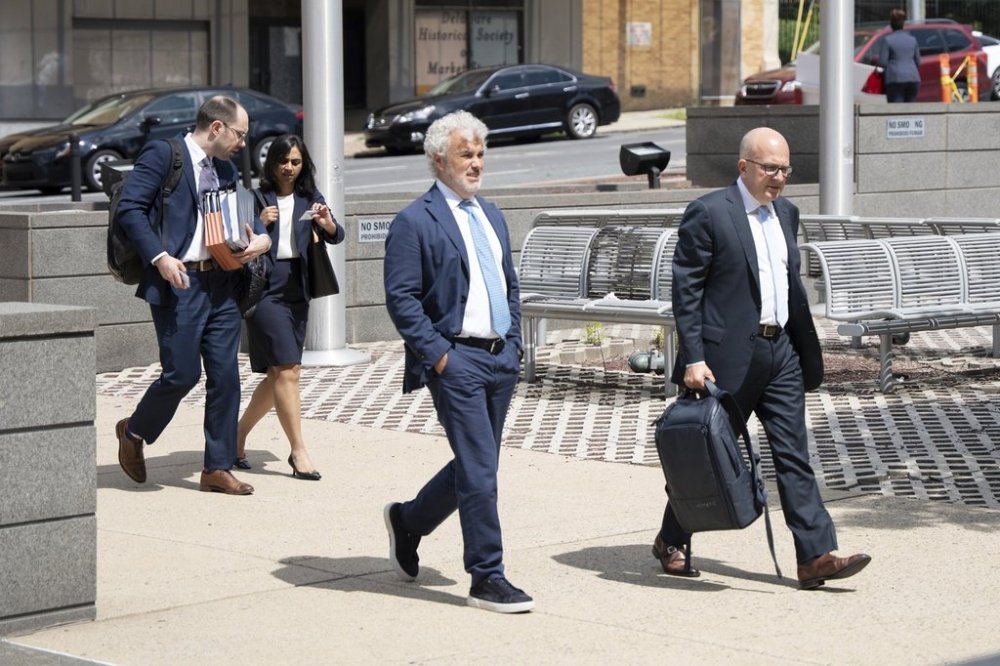
The case is expected to run through late next week and include testimony from both Zuckerberg and former Chief Operating Officer Sheryl Sandberg. Other witnesses expected in Delaware Chancery Court, where Facebook parent Meta Platforms Inc. is incorporated, include board member Marc Andreessen and former board member Peter Thiel. The judge is not expected to rule for several months.
Meta had hoped the Supreme Court would dismiss the case. Justices heard arguments in November before deciding they should not have taken it up. The high court dismissed the company’s appeal, leaving in place an appellate ruling allowing the case to go forward.
—
Ortutay reported from San Francisco.