OpenAI’s advisory board calls for continued and strengthened nonprofit oversight
Advertisement
Read this article for free:
or
Already have an account? Log in here »
To continue reading, please subscribe:

Digital Subscription
One year of digital access for only $205*
- Enjoy unlimited reading on winnipegfreepress.com
- Read the E-Edition, our digital replica newspaper
- Access News Break, our award-winning app
- Play interactive puzzles
*First annual payment billed as $205.00 + GST for one year. This annual subscription will automatically renew at $233.00 + GST every 52 weeks (10% off the regular annual price of $259.35). Offer available to new and qualified returning subscribers only. Cancel any time.
To continue reading, please subscribe:
Add Free Press access to your Brandon Sun subscription for only an additional
$1 for the first 4 weeks*
- Enjoy unlimited reading on winnipegfreepress.com
- Read the E-Edition, our digital replica newspaper
- Access News Break, our award-winning app
- Play interactive puzzles
*Your next Brandon Sun subscription payment will increase by $1.00 and you will be charged $17.95 plus GST for four weeks. After four weeks, your payment will increase to $24.95 plus GST every four weeks.
Read unlimited articles for free today:
or
Already have an account? Log in here »
Hey there, time traveller!
This article was published 17/07/2025 (450 days ago), so information in it may no longer be current.
OpenAI should continue to be controlled by a nonprofit because the artificial intelligence technology it is developing is “too consequential” to be governed by a corporation alone.
That is the message from an advisory board convened by OpenAI to give it recommendations about its nonprofit structure — delivered in a report released Thursday, along with a sweeping vision for democratizing AI and reforming philanthropy.
“We think it’s too important to entrust to any one sector, the private sector or even the government sector,” said Daniel Zingale, the convener of OpenAI’s nonprofit commission and a former adviser to three California governors. “The nonprofit model allows for what we call a common sector,” that facilitates democratic participation.
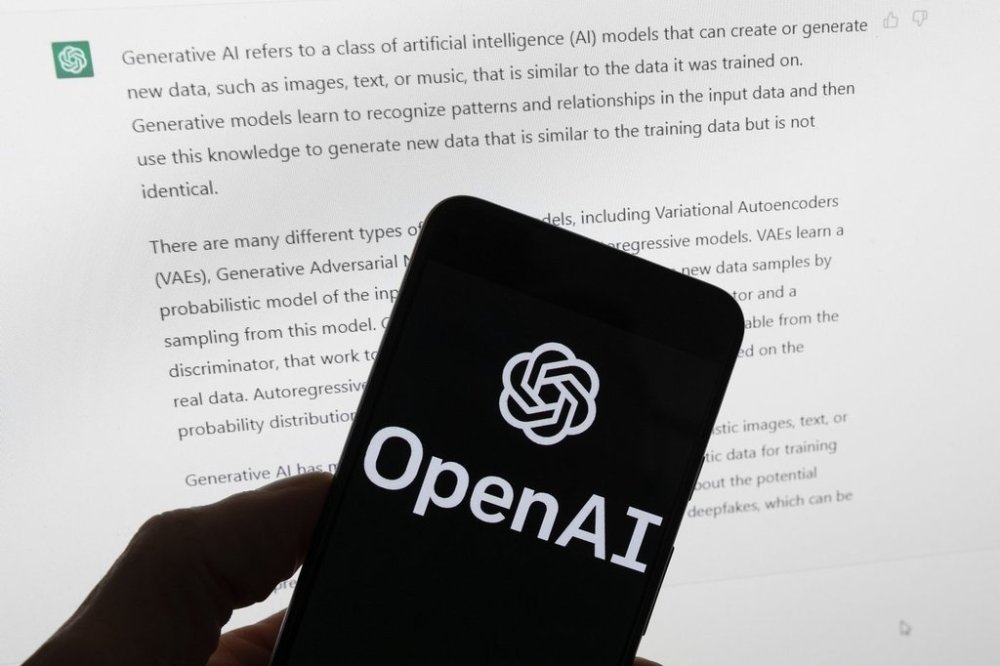
The recommendations are not binding on OpenAI, but the advisory commission, which includes the labor organizer Dolores Huerta, offers a framework that may be used to judge OpenAI in the future, whether or not they adopt it.
In the commission’s view, communities that are already feeling the impacts of AI technologies should have input on how they are developed, including how data about them is used. But there are currently few avenues for people to influence tech companies who control much of the development of AI.
OpenAI, the maker of ChatGPT, started in 2015 as a nonprofit research laboratory and has since incorporated a for-profit company with a valuation that has grown to $300 billion. The company has tried to change its structure since the nonprofit board ousted its CEO Sam Altman in Nov. 2023. He was reinstated days later and continues to lead OpenAI.
It has run into hurdles escaping its nonprofit roots, including scrutiny from the attorney generals in California and Delaware, who have oversight of nonprofits, and a lawsuit by Elon Musk, an early donor to and founder of OpenAI.
Most recently, OpenAI has said it will turn its for-profit company into a public benefit corporation, which must balance the interests of shareholders and its mission. Its nonprofit will hold shares in that new corporation, but OpenAI has not said how much.
Zingale said Huerta told the commission their challenge was to help make sure AI is a blessing and not a curse. To grapple with those stakes, they envision a nonprofit with an expansive mandate to help everyone participate in the development and trajectory of AI.
“The measure of this nonprofit will be in what it builds, who it includes, and how faithfully it endures to mission and impact,” they wrote.
The commission toured California communities and solicited feedback online. They heard that many were inspired by OpenAI’s mission to create artificial intelligence to benefit humanity and ensure those benefits are felt widely and evenly.
But, Zingale said many people feel they are in the dark about how it’s happening.
“They know this is profoundly important what’s happening in this ‘Age of Intelligence,’ but they want to understand better what it is, how it’s developed, where are the important choices being made and who’s making them?” he said.
Zingale said the commission chose early on not to interact with Altman in any way in order to maintain their independence, though they quote him in their report. However, they did speak with the company’s senior engineers, who they said, “entered our space with humility, seriousness, and a genuine desire to understand how their work might translate into democratic legitimacy.”
The commission proposed OpenAI immediately provide significant resources to the nonprofit for use in the public interest. For context, the nonprofit reported $23 million in assets in 2023, the most recent year that its tax filing is available.
The commission recommend focusing on closing gaps in economic opportunity, investing in AI literacy and creating an organization that is accessible to and governed by everyday people.
“For OpenAI’s nonprofit to fulfill its mandate, it should commit to more than just doing good – it should commit to being known, seen, and shaped by the people it claims to serve,” they wrote.

The commission suggested opening a rapid response fund to help reduce economic strains now. Zingale said they specifically recommended funding theater, art and health.
“We’re trying to make the point that they need to dedicate some of their resources to human to human activities,” he said.
The commission also recommended setting up a requirement that a human lead the nonprofit, which Zingale said is a serious recommendation and “a sign of the times.”
___
Associated Press coverage of philanthropy and nonprofits receives support through the AP’s collaboration with The Conversation US, with funding from Lilly Endowment Inc. The AP is solely responsible for this content. For all of AP’s philanthropy coverage, visit https://apnews.com/hub/philanthropy.
Related Articles
AI ‘scribes’ in use at Manitoba doctors’ offices
Advertisement Advertise With Us
Advertisement Advertise With Us