‘Just don’t give up, or we’re done for’
Green chemist and musician on fighting climate change
Advertisement
Read this article for free:
or
Already have an account? Log in here »
To continue reading, please subscribe:
Digital Subscription
One year of digital access for only $1.44 a week*
- Enjoy unlimited reading on winnipegfreepress.com
- Read the E-Edition, our digital replica newspaper
- Access News Break, our award-winning app
- Play interactive puzzles
*Billed as $5.77 plus GST every four weeks. After 52 weeks, price increases to the regular rate of $19.95 plus GST every four weeks. Offer available to new and qualified returning subscribers only. Cancel any time.
To continue reading, please subscribe:
Add Free Press access to your Brandon Sun subscription for only an additional
$1 for the first 4 weeks*
- Enjoy unlimited reading on winnipegfreepress.com
- Read the E-Edition, our digital replica newspaper
- Access News Break, our award-winning app
- Play interactive puzzles
*Your next Brandon Sun subscription payment will increase by $1.00 and you will be charged $17.95 plus GST for four weeks. After four weeks, your payment will increase to $24.95 plus GST every four weeks.
Read unlimited articles for free today:
or
Already have an account? Log in here »
Hey there, time traveller!
This article was published 19/07/2025 (464 days ago), so information in it may no longer be current.
There’s no shortage of doom and gloom associated with the words “climate change” these days. As a result, many people are stressed out and feeling helpless.
Particularly concerning is that, more than ever, younger people are experiencing considerable distress with environmental anxiety, also known as eco-anxiety or climate anxiety. The Journal of Mental Health and Climate Change, an open-access publication that features interdisciplinary scientific research on mental health and climate change, continues to write extensively on this subject.
While prominent environmental activists, including well-known science broadcaster David Suzuki, paint a bleak picture of the future, many other professionals in various fields are working tirelessly to educate, inspire and fight the good fight for the next generations.
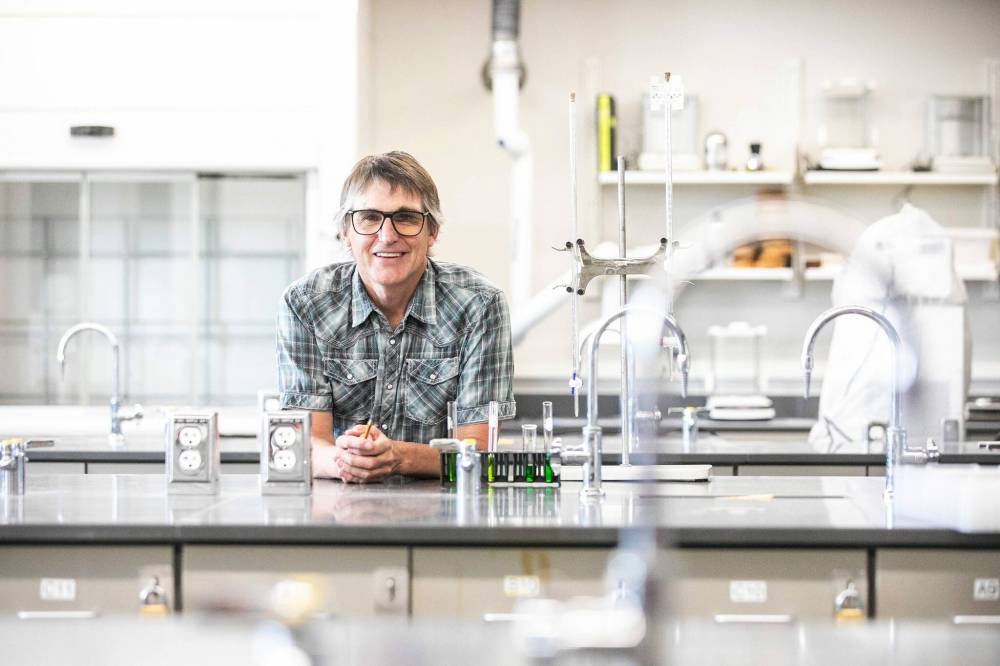
MIKAELA MACKENZIE / FREE PRESS
University of Winnipeg chemistry professor Devin Latimer, is passionate about climate justice and hopeful about the future.
Born and raised in Lynn Lake, Man., Devin Latimer is one of those professionals. The faculty member in chemistry at the University of Winnipeg is also a long-time musician, bass player with local band Leaf Rapids and the Juno award-winning Nathan Music Co.
He will gladly take every opportunity to share information about what can be done about current environmental concerns. Working primarily in green organic chemistry lab development and environmental communications, Latimer’s passion for the subject is infectious and has students equally interested and enthusiastic to learn more.
Latimer is also artistic director of Trout Forest Music Festival in northwest Ontario, where he programs Canadian acts for the three-stage annual festival in August. He’s taken his green chemistry teaching outside the classroom walls and into outdoor concerts, which he sees as perfect opportunities to connect with people about environmental issues.
“Cultural events — especially those held outdoors — are on the front lines of the climate crisis and their very existence is increasingly threatened in many parts of the country,” said Latimer, who’s been involved in countless concerts, festivals, and energy and climate workshops and discussions over the last few years.
“Coincidentally, I’ve found these same events to be powerful platforms for communicating energy and climate issues. I’ve since been discussing them with departments both within and beyond our university.”
Latimer would love to see changes and additional funding that would enable music festivals and cultural events to do more in terms of public education.
“They’re a great gathering place,” he said, noting that environmental conditions affect performers and audiences alike.
“The smoke is impacting attendance; with extreme heat there are cancellations.” Adding that some cultural events have even faced bankruptcy, he said, “Climate is a big part of it.”
The Energy and Climate Conversations at Cultural Events project came about as a result of his long-time research work in green chemistry and its ties to social justice, along with his community involvement in music, most specifically with the Trout Forest Music Festival. An inspiring meeting with local banjo player and solar technologist Jaxon Haldane led Latimer to apply for and obtain funding from Canadian Heritage during the pandemic.
He’s been bringing his talks and workshops to various events ever since. In addition, one of the project’s notable accomplishments — and a perfect conversation-starter — has been the creation of a solar-powered sound system for music concert stages.
More recently, Canadian Heritage and the Canada Council for the Arts organized a two-part session and panel on Culture in Climate at the International Folk Alliance conference in Montreal and invited Latimer to speak and moderate the discussions.
“Students love it. This is the thing they want to fix — to make an impact — this is their way of changing the world,” said Latimer, who teaches Learning to Green – Greening to Learn, inspiring students and the community through sustainable science.
In the classroom, Latimer’s presentations include discussions of the effects of the chemical industry, citing Cancer Alley in Louisiana, where residents are 700 times more likely to get cancer. Another example describes the impact of food-chain contamination and resulting toxins on the Inuit of northern Quebec.
“The chemical industry and chemical contaminants are a social justice issue,” said Latimer. “And so, this is the kind of thing that has guided me to the field of green chemistry. The chemicals are to blame for a lot of the pollution. Surely, we can do better.”
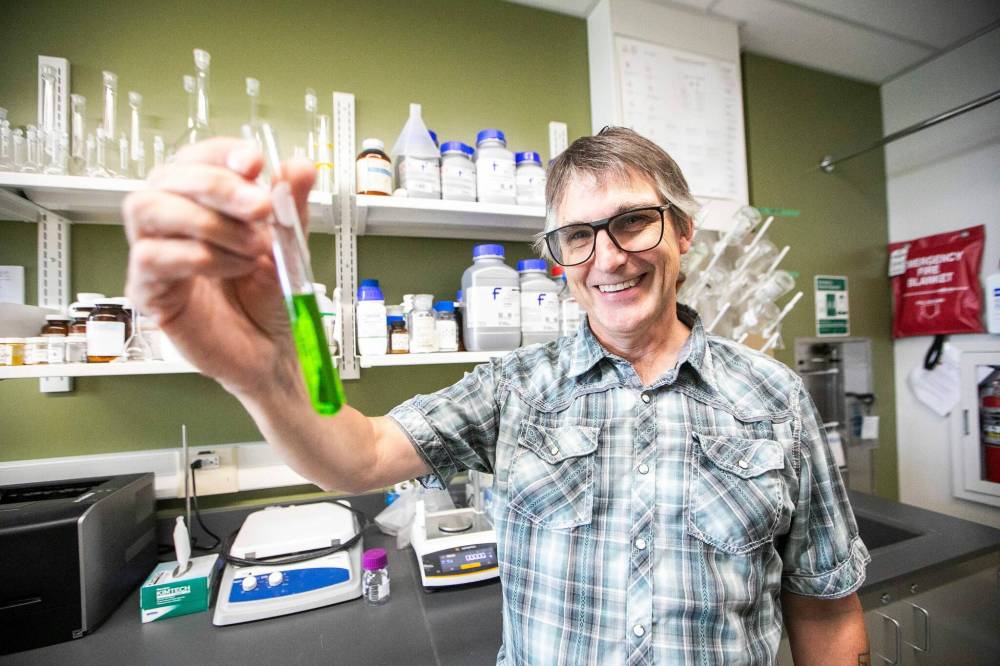
MIKAELA MACKENZIE / FREE PRESS
University of Winnipeg chemistry professor Devin Latimer, is passionate about climate justice and hopeful about the future.
Latimer says that while environmental chemistry works outwardly, going and sampling lakes to find out what’s in them, for example, green chemistry is the work of fixing things at the source.
“They are related, of course,” he said. “Green chemistry, for me, is all about social justice and considering what’s going on in our province, it’s very prudent to talk about climate justice and critical hope.
“Hope is critical and it’s what’s missing in all the conversations, why people don’t trust science anymore. I’m pretty committed to the idea that widespread science literacy and communication are key to transforming the overheated and floundering discussions surrounding energy and climate.”
Determined to keep the focus on collective responsibility, Latimer reminds people that there are actions that can make a difference.
“If you normally drive to work, start taking the bus once a week. Carpool. A little bit more every year: that’s where the hope comes from.
“I would suggest a community event, like the Winnipeg Folk Festival, could start charging $50 per vehicle to enter the parking lot. People going to that festival can generally afford it, and if they can’t, they will take the bus or car-pool (but do make sure the event is accessible to all). And then take the parking money and do some onsite energy communications and fund a scholarship in sustainable energy research,” he said.
With the population of this planet placing a monumental strain on the environment, Latimer says those 8.2 billion people, doing just a little better every year, can similarly have a monumental impact on healing ourselves and the environment.
“Industry does have huge emissions, but they also have to compete in an open market and are providing jobs, producing products and services that the rest of us are all creating a demand for. If you want industry to change, don’t buy the products that come from the worst polluters. We’re all demanding the energy that’s coming from fossil fuels right now and we can all do little things that invest in the transition.
“Just don’t give up or we’re done for. Do better every day…. industries, individuals, homeowners, renters, billionaires and hundredaires. We’re all equals when it comes to saving this planet.”
Related Articles
Wildfire roars in to Leaf Rapids, town reports

Advertisement Advertise With Us
Advertisement Advertise With Us