Radar satellite launched by India and NASA will track minuscule changes to Earth’s land and ice

Advertisement

Advertise with us

CAPE CANAVERAL, Fla. (AP) — NASA and India paired up to launch an Earth-mapping satellite on Wednesday capable of tracking even the slightest shifts in land and ice.

Read this article for free:


or

Already have an account? Log in here »

To continue reading, please subscribe:

Subscribe and receive a limited-edition Free Press branded hat or tote.

Digital Subscription

One year of digital access for only $205*

  • Enjoy unlimited reading on winnipegfreepress.com
  • Read the E-Edition, our digital replica newspaper
  • Access News Break, our award-winning app
  • Play interactive puzzles

*First annual payment billed as $205.00 + GST for one year. This annual subscription will automatically renew at $233.00 + GST every 52 weeks (10% off the regular annual price of $259.35). Offer available to new and qualified returning subscribers only. Cancel any time.

To continue reading, please subscribe:

Add Free Press access to your Brandon Sun subscription for only an additional

$1 for the first 4 weeks*

  • Enjoy unlimited reading on winnipegfreepress.com
  • Read the E-Edition, our digital replica newspaper
  • Access News Break, our award-winning app
  • Play interactive puzzles
Start now

*Your next Brandon Sun subscription payment will increase by $1.00 and you will be charged $17.95 plus GST for four weeks. After four weeks, your payment will increase to $24.95 plus GST every four weeks.

Hey there, time traveller!
This article was published 30/07/2025 (430 days ago), so information in it may no longer be current.

CAPE CANAVERAL, Fla. (AP) — NASA and India paired up to launch an Earth-mapping satellite on Wednesday capable of tracking even the slightest shifts in land and ice.

The $1.3 billion mission will help forecasters and first responders stay one step ahead of floods, landslides, volcanic eruptions and other disasters, according to scientists.

Rocketing to orbit from India, the satellite will survey virtually all of Earth’s terrain multiple times. Its two radars — one from the U.S. and the other from India — will operate day and night, peering through clouds, rain and foliage to collect troves of data in extraordinary detail.
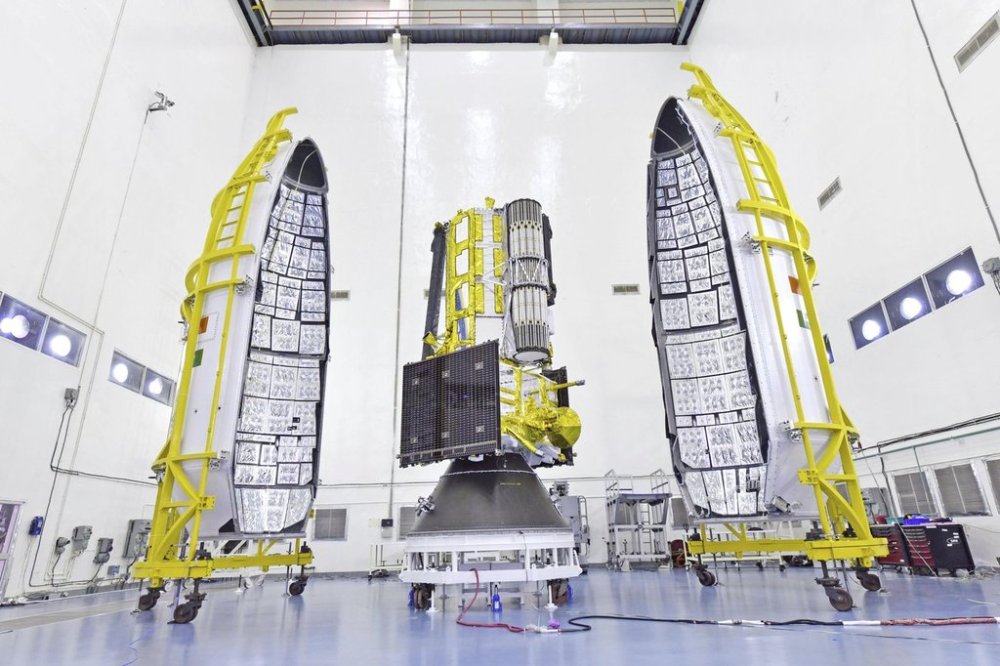
This photo provided by NASA shows the NISAR (NASA-ISRO Synthetic Aperture Radar) satellite on July 18, 2025, at the Indian Space Research Organization's Satish Dhawan Space Center in Sriharikota, Tirupati district, Andhra Pradesh, India. (Indian Space Research Organization/NASA via AP)

Microwave signals beamed down to Earth from the dual radars will bounce back up to the satellite’s super-sized antenna reflector perched at the end of a boom like a beach umbrella. Scientists will compare the incoming and outgoing signals as the spacecraft passes over the same locations twice every 12 days, teasing out changes as small as a fraction of an inch (1 centimeter).

“Congratulations India!” India’s minister of science and technology, Jitendra Singh, said via X once the satellite safely reached orbit. The mission “will benefit the entire world community.”

NASA’s deputy associate administrator Casey Swails, part of a small delegation that traveled to India for the launch, said it “really shows the world what our two nations can do. But more so than that, it really is a pathfinder for the relationship building,.”

It will take a full week to extend the satellite’s 30-foot (9-meter) boom and open the 39-foot-in-diameter (12-meter) drum-shaped reflector made of gold-plated wire mesh. Science operations should begin by the end of October.

Among the satellite’s most pressing measurements: melting glaciers and polar ice sheets; shifting groundwater supplies; motion and stress of land surfaces prompting landslides and earthquakes; and forest and wetland disruptions boosting carbon dioxide and methane emissions.
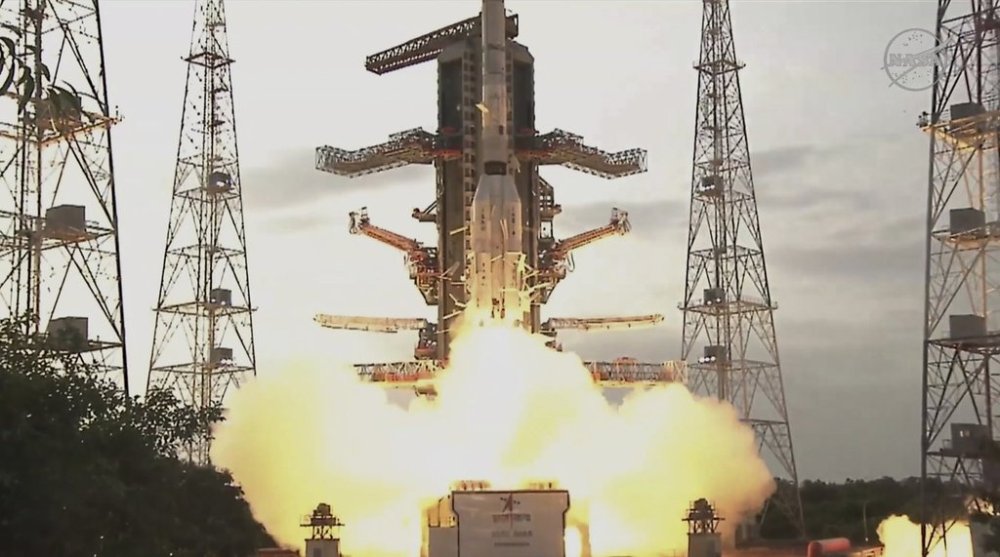
This image provided by NASA shows an Earth-mapping satellite, the first collaborative mission between NASA and the Indian Space Research Organization, launching from India on Wednesday, July 30, 2025. (NASA via AP)

It’s “a first-of-its-kind, jewel radar satellite that will change the way we study our home planet and better predict a natural disaster before it strikes,” NASA’s science mission chief Nicky Fox said ahead of liftoff. She was part of the NASA delegation that attended the launch in person.

NASA is contributing $1.2 billion to the three-year mission; it supplied the low-frequency radar and reflector. The Indian Space Research Organization’s $91 million share includes the higher-frequency radar and main satellite structure, as well as the launch from a barrier island in the Bay of Bengal. It’s the biggest space collaboration between the two countries.

The satellite called NISAR — short for NASA-ISRO Synthetic Aperture Radar — will operate from a near-polar-circling orbit 464 miles (747 kilometers) high. It will join dozens of Earth observation missions already in operation by the U.S. and India.

___

The Associated Press Health and Science Department receives support from the Howard Hughes Medical Institute’s Department of Science Education and the Robert Wood Johnson Foundation. The AP is solely responsible for all content.
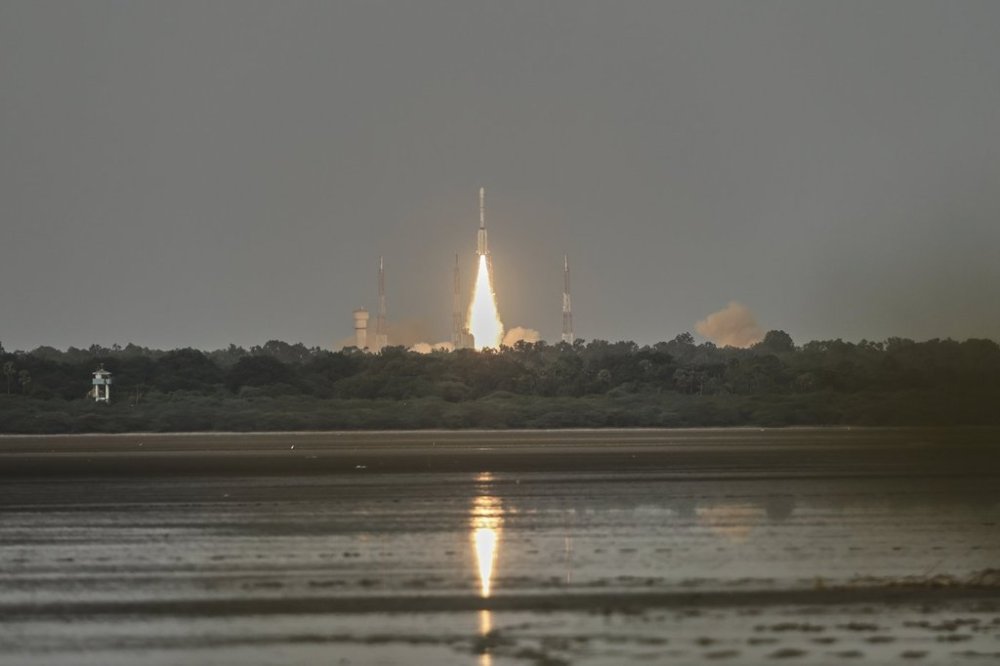

The NISAR satellite, a joint mission by NASA and ISRO, lifts off aboard a GSLV-F16 rocket, from the Satish Dhawan Space Centre in Sriharikota, India, Wednesday, July 30, 2025. (AP Photo/R. Parthibhan)
Report Error Submit a Tip

More Stories

A 22-year-old man is dead and an 18-year-old is in hospital in critical condition after a two-vehicle crash on Highway 8 on Thursday evening.

A Gimli RCMP officer was driving north on the highway, near Riverton, when he witnessed the collision at about 6:45 p.m.

A vehicle headed north had passed the Mountie at a high speed before colliding with an SUV that was turning west onto Provincial Road 329 from Highway 8.

The driver of the first vehicle, an 18-year-old man from Arborg, was rushed to hospital by a helicopter ambulance with injuries RCMP describe as serious and life-threatening.

Clock ticks down on destruction of records documenting residential school abuses

Marsha McLeod 13 minute read Preview

Clock ticks down on destruction of records documenting residential school abuses

Marsha McLeod 13 minute read Yesterday at 12:49 PM CDT

In less than a year, a private company is set to destroy the largest cache of records detailing the widespread abuse of Indigenous children at residential schools in Canada.

The destruction, which was ordered by an Ontario court in 2014 and later upheld by the Supreme Court, is set to take place on Sept. 19, 2027.

This countdown is igniting emotional conversations that seek to balance the immense historical value of the records alongside the confidentiality survivors were promised as part of the process of providing detailed testimony about abuses they’d suffered.

The records were created as part of the Indian Residential Schools Settlement Agreement, a class-action settlement stemming from survivors who began suing the federal government in the late 1990s over the harm they’d been subjected to at residential schools.

Read
Yesterday at 12:49 PM CDT

Blown lead spoils Jets opener

Mike McIntyre 7 minute read Preview

Blown lead spoils Jets opener

Mike McIntyre 7 minute read Yesterday at 11:09 PM CDT

Younger. Faster. Stronger.

They may still be a long ways from a finished product, but it’s safe to say the new-look Winnipeg Jets made a mostly favourable first impression on Friday night in front of a sold-out crowd at Canada Life Centre.

Sure, a 4-3 overtime loss to a hard-nosed Boston Bruins outfit is going to sting a little, especially since the home team was just 98 seconds away from a regulation victory.

But if the Jets can bottle up this kind of energy and effort, they should enjoy plenty of success over the course of the 84-game campaign.

Read
Yesterday at 11:09 PM CDT

U of W Collegiate students thank residential school survivors with the lessons they’ve learned

Maggie Macintosh 6 minute read Preview

U of W Collegiate students thank residential school survivors with the lessons they’ve learned

Maggie Macintosh 6 minute read Yesterday at 6:49 PM CDT

It’s become a back-to-school tradition for teachers to invite Indigenous elders to their classrooms to share first-hand accounts about the ongoing impacts of Canada’s residential school system.

This fall, the University of Winnipeg Collegiate was among the schools that sent an invitation — but its purpose wasn’t to educate students about the system’s horrors.

“Truth and Reconciliation week is so emotional and draining for residential school survivors,” said Christine M’Lot, a longtime instructor of the school’s Grade 9 truth and reconciliation course.

“I wanted to do something a little bit different and offer a thank you.”

Read
Yesterday at 6:49 PM CDT

Dynacare workers provide essential services that must be maintained during strike, labour board rules

Nicole Buffie 5 minute read Preview

Dynacare workers provide essential services that must be maintained during strike, labour board rules

Nicole Buffie 5 minute read Thursday, Oct. 1, 2026

The Manitoba Labour Board has ruled Dynacare workers are essential employees and their services must be maintained during a labour dispute.

Read
Thursday, Oct. 1, 2026

Board game company charts winning path

Aaron Epp 5 minute read Preview

Board game company charts winning path

Aaron Epp 5 minute read Yesterday at 7:09 PM CDT

Dennis Northcott has launched a game without frontiers.

The Winnipeg entrepreneur is the co-designer of Galactic Cruise, a board game published last year by Kinson Key Games LLC, the business he co-founded. Since its release, Galactic Cruise has been translated into 11 languages and sold around 50,000 copies worldwide.

It’s also one of three finalists for this year’s Deutsche Spiele Preis, a prestigious community-voted board game award. Northcott will travel to Essen, Germany, later this month, where the winner will be announced at Spiel Essen, an annual board game trade fair.

“It’s been amazing,” Northcott said of the response to Galactic Cruise during an interview in his Island Lakes neighbourhood home earlier this week. “The sales have been great, but it’s also been amazing in terms of people giving their reviews.”

Read
Yesterday at 7:09 PM CDT