Fireflies are lighting up summer skies. But the glowing bugs are still on the decline
Advertisement
Read this article for free:
or
Already have an account? Log in here »
To continue reading, please subscribe:
Digital Subscription
One year of digital access for only $1.44 a week*
- Enjoy unlimited reading on winnipegfreepress.com
- Read the E-Edition, our digital replica newspaper
- Access News Break, our award-winning app
- Play interactive puzzles
*Billed as $5.77 plus GST every four weeks. After 52 weeks, price increases to the regular rate of $19.95 plus GST every four weeks. Offer available to new and qualified returning subscribers only. Cancel any time.
To continue reading, please subscribe:
Add Free Press access to your Brandon Sun subscription for only an additional
$1 for the first 4 weeks*
- Enjoy unlimited reading on winnipegfreepress.com
- Read the E-Edition, our digital replica newspaper
- Access News Break, our award-winning app
- Play interactive puzzles
*Your next Brandon Sun subscription payment will increase by $1.00 and you will be charged $17.95 plus GST for four weeks. After four weeks, your payment will increase to $24.95 plus GST every four weeks.
Read unlimited articles for free today:
or
Already have an account? Log in here »
Hey there, time traveller!
This article was published 31/07/2025 (445 days ago), so information in it may no longer be current.
NEW YORK (AP) — Fireflies are lighting up summer evenings across the U.S. Northeast, putting on dazzling shows in backyards and city parks.
There’s no official count, but experts say a particularly wet spring may have created the ideal conditions for young fireflies to grow into adults to set summer nights aglow.
Fireflies light the night everywhere: There are over 2,000 known species across the globe. They use their characteristic flashes to communicate and find the perfect mate.
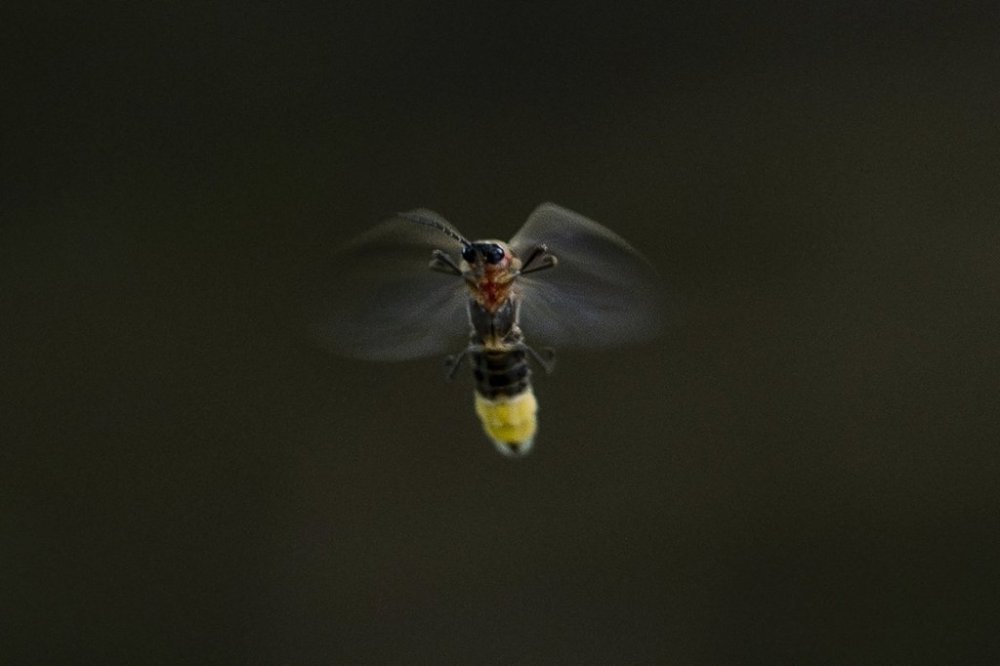
In New York City, the lightning bugs are out in the five boroughs, sparkling once the sun goes down in places like Central Park and Prospect Park. The summer months are ideal to spot them as they start to dwindle throughout the month of August.
While northeastern nights may seem brighter this summer, the bugs are still on the decline and they’re waning at a faster rate than ever before.
“It would be a mistake to say firefly populations are high this year, therefore there’s no decline,” said Matt Schlesinger with the New York Natural Heritage Program, who is part of an effort to count fireflies in state parks.
Some firefly species could be doing well this year, Schlesinger said, while others are still on the decline.
Habitat loss, pesticide use and light pollution are responsible. In cities, blaring lights from billboards, cars and storefronts can drown out the bugs’ glow, making it harder for them to find their kin and pass their genes onto the next generation.
Fireflies are part of the story of summer, said entomologist Jessica Ware with the American Museum of Natural History. Her children grew up seeing them flash in her backyard, but the bugs started to disappear once her kids hit their teenage years.
In the past few months, her family has seen the fireflies come back. Their return made her think about all the kids who are glimpsing the glowing bugs for the very first time.

“It shouldn’t be new,” Ware said. “It should be something that is a universal part of summer.”
To look out for fireflies, consider turning the lights off at night and avoid spraying front lawns with insecticides.
“We still need to do some work ourselves, to change our behavior, to really make sure that large populations can continue to stay large,” Ware said.
___
The Associated Press Health and Science Department receives support from the Howard Hughes Medical Institute’s Department of Science Education and the Robert Wood Johnson Foundation. The AP is solely responsible for all content.