Arizona, Nevada and Mexico will again get less Colorado River water in 2026
Advertisement
Read this article for free:
or
Already have an account? Log in here »
To continue reading, please subscribe:

Digital Subscription
One year of digital access for only $205*
- Enjoy unlimited reading on winnipegfreepress.com
- Read the E-Edition, our digital replica newspaper
- Access News Break, our award-winning app
- Play interactive puzzles
*First annual payment billed as $205.00 + GST for one year. This annual subscription will automatically renew at $233.00 + GST every 52 weeks (10% off the regular annual price of $259.35). Offer available to new and qualified returning subscribers only. Cancel any time.
To continue reading, please subscribe:
Add Free Press access to your Brandon Sun subscription for only an additional
$1 for the first 4 weeks*
- Enjoy unlimited reading on winnipegfreepress.com
- Read the E-Edition, our digital replica newspaper
- Access News Break, our award-winning app
- Play interactive puzzles
*Your next Brandon Sun subscription payment will increase by $1.00 and you will be charged $17.95 plus GST for four weeks. After four weeks, your payment will increase to $24.95 plus GST every four weeks.
Read unlimited articles for free today:
or
Already have an account? Log in here »
Hey there, time traveller!
This article was published 15/08/2025 (396 days ago), so information in it may no longer be current.
DENVER (AP) — Arizona, Nevada and Mexico will again live with less water from the Colorado River as drought lingers in the West, federal officials announced Friday.
The Colorado River is a critical lifeline to seven U.S. states, 30 Native American tribes, and two Mexican states. The cuts are based on projections for levels at federal reservoirs — chief among them Lake Powell and Lake Mead — released every August by the U.S. Bureau of Reclamation.
Arizona will again go without 18% of its total Colorado River allocation, while Mexico loses 5%. The reduction for Nevada — which receives far less water than Arizona, California or Mexico — will stay at 7%. California won’t face any cuts because it has senior water rights and is the last to lose in times of shortage.
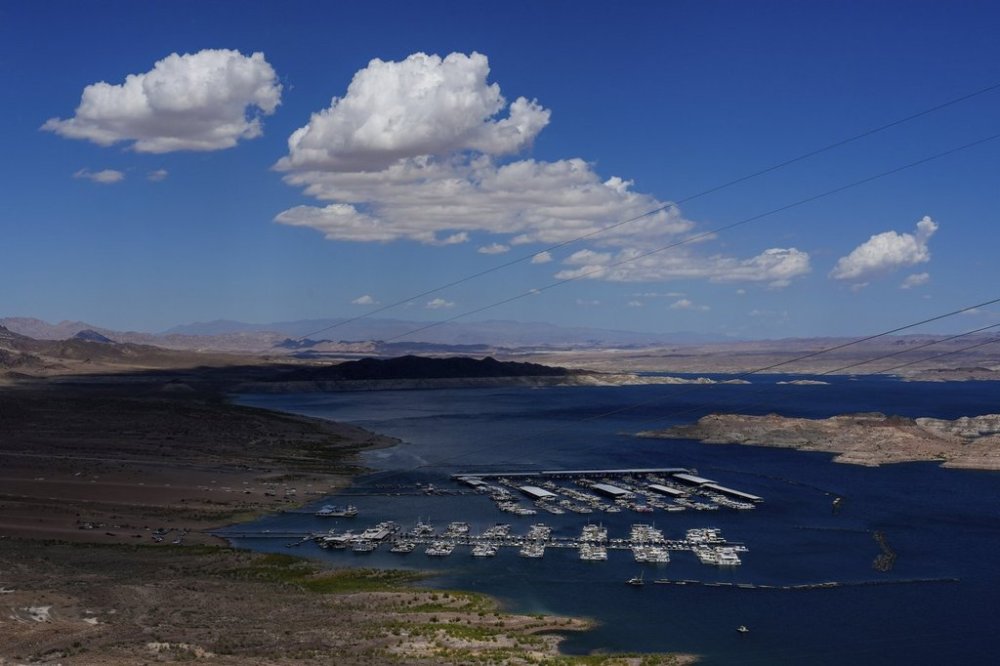
Decades of overuse and the effects of long-term drought worsened by climate change means there’s far more demand for water than what actually flows through the river. Low reservoir levels at Lake Mead have triggered mandatory cutbacks every year since 2022, with the deepest cuts in 2023, which hit farmers in Arizona the hardest.
Meanwhile, the states are working to reach agreement by next year on new long-term rules to govern the river in dry years. The Trump administration gave a mid-November deadline for states to reach a preliminary agreement, or risk federal intervention. Negotiations have faced delays as states push back against how much water they should each give up.
The original 1922 Colorado River Compact was calculated based on an amount of water that doesn’t exist in today’s climate. That leaves the Upper Basin states of New Mexico, Colorado, Wyoming and Utah to share far less water after the required amount is sent to the to the “Lower Basin” states of Nevada, Arizona and California. Lots of water is also lost to evaporation and leaky infrastructure.
Fairly splitting the river’s water in the era of climate change has been vexing for years, with all of the major users hesitant to give anything up as they anticipate a drier future. There has to be enough water in the reservoirs to reach the tunnels that usher water downstream, and ideally, even more water for hydropower generation. Key infrastructure like the Hoover Dam rely on certain water levels in Lake Mead to generate electricity.
Mandatory cuts and emergency water releases are “reactive,” said John Berggren, a regional policy manager at Western Resource Advocates, a nonprofit focused on climate change.
“If we are going to be able to have a sustainable Colorado River and not just be responding to crisis after crisis, we need large amounts of flexibility built into this new set of guidelines,” he said.
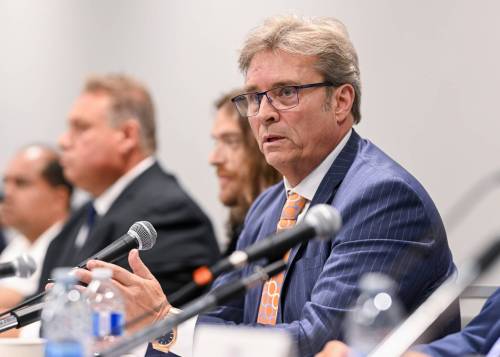
“We can and must do better. Nature isn’t waiting for us,” said Becky Mitchell, Colorado’s commissioner in the Upper Colorado River Commission.
States are considering a so-called natural flow approach to managing the river — where the Lower Basin would receive a certain percentage of the average natural flow from the prior few years.
The Lower Basin states have helped stave off deeper cuts by coming up with voluntary conservation plans.
“Absent all of those measures, the river would be in a very bad place,” said J.B. Hamby, chairman of the Colorado River Board of California and a board member for the Imperial Irrigation District, the largest user of the river’s water. Still, he knows California, like others, will likely have to give up more in the negotiations.
Dozens of conservation projects along for Upper Basin states and tribes are in limbo. President Donald Trump froze yet-to-be-distributed Inflation Reduction Act funds on his first day in office, which included nearly $400 million for those projects. The entire Colorado congressional delegation signed a letter earlier this month urging the release their portion of those funds.
___
This story has been corrected to remove a reference to the third year of cuts in the headline. The cuts announced Friday are set for 2026, which will be the fifth year. ___
Associated Press journalists Amy Taxin in Tustin, California, and Mead Gruver in Fort Collins, Colorado, contributed to this report.
___
The Associated Press receives support from the Walton Family Foundation for coverage of water and environmental policy. The AP is solely responsible for all content. For all of AP’s environmental coverage, visit https://apnews.com/hub/climate-and-environment