Google to pay $36M fine for anticompetitive deals with Australia’s largest telcos

Advertisement

Advertise with us

MELBOURNE, Austalia (AP) — Google has agreed to pay a 55 million Australian dollar ($36 million) fine for signing anticompetitive deals with Australia’s two largest telcos that banned the installation of competing search engines on some smartphones, the U.S. tech giant and Australia’s competition watchdog said.

Read this article for free:


or

Already have an account? Log in here »

To continue reading, please subscribe:

Subscribe and receive a limited-edition Free Press branded hat or tote.

Digital Subscription

One year of digital access for only $205*

  • Enjoy unlimited reading on winnipegfreepress.com
  • Read the E-Edition, our digital replica newspaper
  • Access News Break, our award-winning app
  • Play interactive puzzles

*First annual payment billed as $205.00 + GST for one year. This annual subscription will automatically renew at $233.00 + GST every 52 weeks (10% off the regular annual price of $259.35). Offer available to new and qualified returning subscribers only. Cancel any time.

To continue reading, please subscribe:

Add Free Press access to your Brandon Sun subscription for only an additional

$1 for the first 4 weeks*

  • Enjoy unlimited reading on winnipegfreepress.com
  • Read the E-Edition, our digital replica newspaper
  • Access News Break, our award-winning app
  • Play interactive puzzles
Start now

*Your next Brandon Sun subscription payment will increase by $1.00 and you will be charged $17.95 plus GST for four weeks. After four weeks, your payment will increase to $24.95 plus GST every four weeks.

Hey there, time traveller!
This article was published 18/08/2025 (397 days ago), so information in it may no longer be current.

MELBOURNE, Austalia (AP) — Google has agreed to pay a 55 million Australian dollar ($36 million) fine for signing anticompetitive deals with Australia’s two largest telcos that banned the installation of competing search engines on some smartphones, the U.S. tech giant and Australia’s competition watchdog said.

The Australian Competition and Consumer Commission said in a statement it had commenced proceedings in the Australian Federal Court on Monday against the Singapore-based Google Asia Pacific division. The court will decide whether the AU$50 million ($36 million) penalty is appropriate.

Under the anticompetitive agreements, which were in place for 15 months until March 2021, Telstra and Optus only pre-installed Google Search on Android phones sold to customers. Other search engines were excluded. In return, the telcos received a share of the advertisement revenue Google generated from those customers.

FILE - A woman walks by a giant screen with a logo at an event at the Paris Google Lab on the sidelines of the AI Action Summit in Paris, on Feb. 9, 2025. (AP Photo/Thibault Camus,File)

Google accepted that the agreements were likely to have the effect of “substantially lessening competition,” the commission said.

Google has also signed a court-enforceable undertaking that commits the company to removing certain pre-installation and default search engine restrictions from its contracts with Android phone manufacturers and telcos, the commission said.

The tech company said in a statement: “We’re pleased to resolve the ACCC’s concerns, which involved provisions that haven’t been in our commercial agreements for some time.”

Commissioner chair Gina-Cass Gottlieb said: “Conduct that restricts competition is illegal in Australia because it usually means less choice, higher costs or worse service for consumers.”

“Importantly, these changes come at a time when AI search tools are revolutionising how we search for information, creating new competition,” Cass-Gottlieb added.

Last year, Telstra, Optus and their smaller rival TPG agreed to court-enforceable undertakings with the commission that they would not renew or make similar deals with Google to limit search options.

Report Error Submit a Tip

More Stories

Not falling back means time loop remains unclosed

Jen Zoratti 4 minute read 2:01 AM CDT

I demand restitution. Where’s my hour?

In the traditional fall-back, spring-forward time change set up — you know, ol’ trusty that’s been effect for lo these 63 years — we lost an hour in the spring that we got back in the fall.

That was the social contract: you commit to feeling like you’re on cold medication for a week in March because you know a glorious extra hour of sleep will be returned to you in November. (Unless, of course, you have little kids, but look: we all make our choices.)

Well, that transaction, flawed as it was, isn’t happening this year. That hour you sacrificed to the sun gods in the spring? Gone. Not coming back. We’ve sprung forward and we shan’t be falling back — not in November, and (possibly) not ever. The scale shall remain unbalanced and the loop shall remain unclosed as Manitoba has adopted permanent daylight time.

Cabernet Sauvignon star of wine festival

Ben Sigurdson 5 minute read Preview

Cabernet Sauvignon star of wine festival

Ben Sigurdson 5 minute read 3:00 AM CDT

The Winnipeg Wine Festival will celebrate the king of red wine grapes next weekend — the theme of this year’s festival, which takes place Sept. 25 and 26 at the RBC Convention Centre, is Cabernet Sauvignon.

Cab Sauv, as it’s also known, is the world’s most widely planted wine grape of any colour, first coming to prominence in the 1800s in France’s Bordeaux region, where the grape is still popular. Rather than single-variety wines, Bordeaux reds tend to be blends, with those coming from the left bank of the Gironde estuary being Cabernet-dominant, while right-bank wines are Merlot-dominant, with Cabernet Sauvignon playing a supporting role. Cabernet and Merlot work well together and many other countries have followed suit in blending the two.

A team at University of California Davis put Cabernet Sauvignon through a DNA test in 1996 and discovered its parent grapes are Cabernet Franc and Sauvignon Blanc — it’s likely that at some point the two varieties, planted next to each other in some vineyard, crossed and mutated and became the grape we know today. (Someone growing grapes in the 19th century must have had an inkling of what was up, as the grape has been called Cabernet Sauvignon since long before the DNA test.)

Flavour-wise, most Cabernet Sauvignon wines are big and bold, with a core of deep dark berry flavours, some graphite and spice notes and relatively bright acidity. It’s a grape that is well-suited to barrel aging, with most examples seeing at least some time in wood.

Read
3:00 AM CDT

Grieving child builds backyard rocket ship

Harriet Zaidman 4 minute read 2:01 AM CDT

I Built a Rocket Ship (Kids Can Press, 32 pages, hardcover, $22) by Winnipegger Anna Lazowski is a tender story for children ages 4-8 about a little girl trying to make sense of her mother’s death. The child engages in conversation with her late mom, agreeing and disagreeing about things said as she carries objects (and of course, the cat) to the backyard. There, she is building a rocket ship she will pilot into the skies to find her mom again.

Jennica Lounsbury’s varied perspectives show the range of emotions the little girl experiences.

● ● ●

Northwoods Lullaby by Mary Casanova (University of Minnesota Press, 32 pages, hardover, $25) is a bedtime book for readers up to age eight, perfect to bring a busy, happy day to a close. Just like children who are listening to adults reading the book, all the animal babies are being tucked into their nests and burrows by loving parents: “Thump and scamper,/nimble clover./ Soon it’s time to rest. Baby loon/ nestles in/as Papa floats along.”

American Hostage stars recall warmth of Winnipeggers during brutal winter

Randall King 7 minute read Preview

American Hostage stars recall warmth of Winnipeggers during brutal winter

Randall King 7 minute read Yesterday at 6:13 PM CDT

TORONTO — When you stream the eight-part series American Hostage, a sense of familiarity may strike.

That’s because the show was shot in Winnipeg — especially in the Exchange District — from November of last year to the beginning of February, with Winnipeg portraying Indianapolis circa 1977.

The whole world seemed to be watching that midwest American city that year as a hostage crisis unfolded involving one Tony Kiritsis, an angry man who goes ballistic when a mortgage brokerage was poised to foreclose on property he had dreamed of developing into a shopping centre.

Kiritsis kidnapped his mortgage broker, Richard Hall, wiring a shotgun to the back of his head, and demanded a public airing of his grievances, with the reluctant help of popular radio broadcaster Fred Heckman.

Read
Yesterday at 6:13 PM CDT

United Way, other charities fight for dollars as donor base shrinks

Scott Billeck 7 minute read Preview

United Way, other charities fight for dollars as donor base shrinks

Scott Billeck 7 minute read Yesterday at 2:00 AM CDT

Winnipeg’s charitable sector is being squeezed from both sides: demand for help is growing while the pool of donors to meet that need is shrinking.

The imbalance is increasingly being carried by a relatively small group of deep-pocketed donors. Last year, 600 people — about three per cent of United Way Winnipeg’s individual donors — accounted for roughly $8 million, or 55 per cent of individual donations.

The fundraising pitch isn’t getting any easier.

Homelessness and public drug use have become increasingly visible, household budgets remain strained and the problems charities are trying to address can seem so entrenched that donors may reasonably wonder what difference another contribution can make.

Read
Yesterday at 2:00 AM CDT

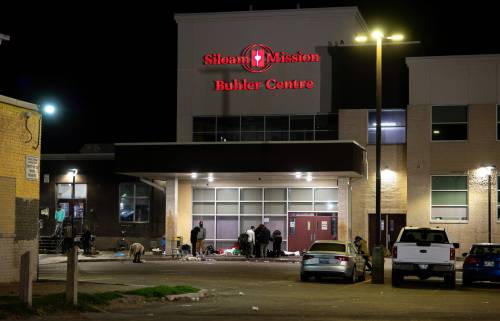
Siloam Mission, WFPS discussing on-site paramedic to reduce staggering number of emergency calls

Scott Billeck 4 minute read Preview

Siloam Mission, WFPS discussing on-site paramedic to reduce staggering number of emergency calls

Scott Billeck 4 minute read Yesterday at 2:00 AM CDT

Winnipeg’s fire-paramedic service and its largest homeless-serving organization are discussing what it would look like to station at least one paramedic at Siloam Mission, as emergency calls to the downtown facility surge.

The ongoing discussions come as Winnipeg Fire Paramedic Service crews were dispatched 1,771 times during the first eight months of the year to the two adjacent Siloam properties at 303 Stanley St. and 300 Princess St.

WFPS said most of the calls were related to overdoses or other consequences of substance use, with the total nearly double the 854 calls recorded over the same period last year. By comparison, there were 831 calls during the same span in 2024, and 591 in 2023.

“The number of emergency calls isn’t sustainable for us as a service, but it’s certainly not sustainable for them as an agency trying to provide services,” WFPS chief Ryan Sneath told the Free Press. “And they recognize that they’re impacting emergency services, not them specifically, but the site in a significant way.”

Read
Yesterday at 2:00 AM CDT