

What to know about China’s new regulations on rare earths
Advertisement
Read this article for free:
or
Already have an account? Log in here »
To continue reading, please subscribe:
Monthly Digital Subscription
$1 per week for 24 weeks*
- Enjoy unlimited reading on winnipegfreepress.com
- Read the E-Edition, our digital replica newspaper
- Access News Break, our award-winning app
- Play interactive puzzles
*Billed as $4.00 plus GST every four weeks. After 24 weeks, price increases to the regular rate of $19.95 plus GST every four weeks. Offer available to new and qualified returning subscribers only. Cancel any time.
Monthly Digital Subscription
$4.99/week*
- Enjoy unlimited reading on winnipegfreepress.com
- Read the E-Edition, our digital replica newspaper
- Access News Break, our award-winning app
- Play interactive puzzles
*Billed as $19.95 plus GST every four weeks. Cancel any time.
To continue reading, please subscribe:
Add Free Press access to your Brandon Sun subscription for only an additional
$1 for the first 4 weeks*
*Your next subscription payment will increase by $1.00 and you will be charged $16.99 plus GST for four weeks. After four weeks, your payment will increase to $23.99 plus GST every four weeks.
Read unlimited articles for free today:
or
Already have an account? Log in here »
Hey there, time traveller!
This article was published 22/08/2025 (220 days ago), so information in it may no longer be current.
BANGKOK (AP) — China released new interim measures Friday tightening controls on mining and processing of rare earths that are used in many high-tech products including electric vehicles, smartphones and fighter jets.
The rules released Friday by the Ministry of Industry and Information Technology apply both to rare earths originating in China and those that are sent to China for refining.
They require companies to comply with quotas for various minerals. Companies must have government approval to deal with rare earths and must accurately report the amount of rare earths products being handled. Violators will face legal penalties and also have their quotas for rare earths reduced.
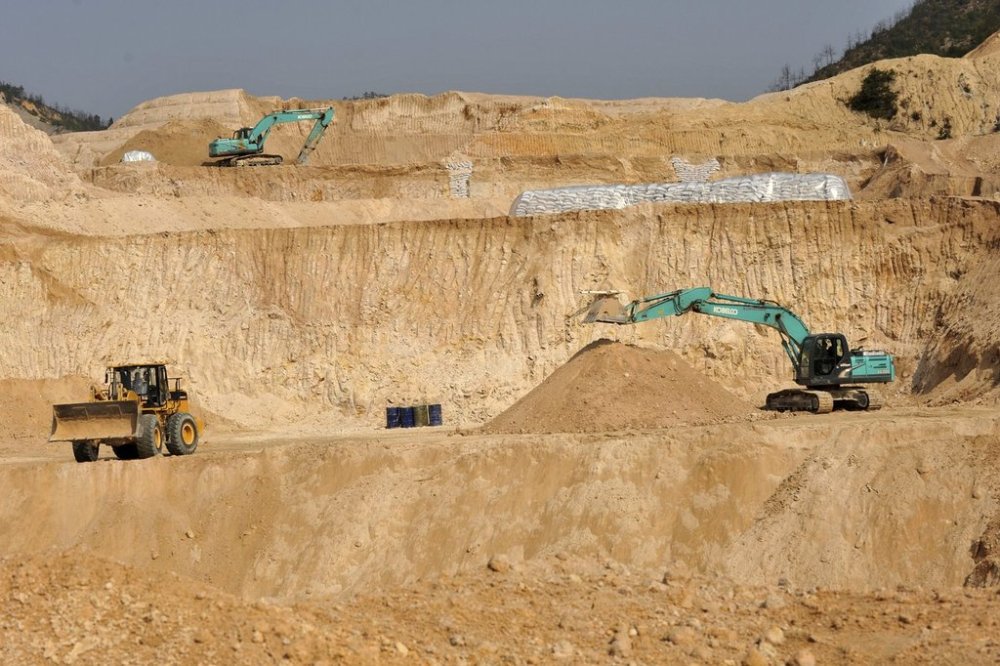
Here’s what to know.
Why China has tightened controls on rare earths
The 17 rare earth elements, including such minerals as germanium, gallium and titanium, aren’t actually rare. But they’re hard to find in a high enough concentration to make mining them worth the investment. China has been gradually tightening restrictions on exports of such materials, partly in response to U.S. controls on its access to American advanced technology.
In April, just after U.S. President Donald Trump announced a raft of tariffs on dozens of U.S. trading partners, Beijing announced permitting requirements for seven more rare earths: samarium, gadolinium, terbium, dysprosium, lutetium, scandium and yttrium, citing the need to “better safeguard national security and interests and to fulfill global duties of non-proliferation.”
Those limits raised worries that manufacturers in the U.S. and elsewhere would run short of vital materials needed for production, an issue in China-U.S. trade talks. In response to U.S. concessions on access to computer chip design software and jet engines, Beijing announced in June that it was speeding up approvals of rare earths exports.
In July, China’s Ministry of State Security said it was cracking down on alleged smuggling of rare earths materials that it said threatened national security, indicating Beijing was moving to exert more control.
China’s dominant role in the rare earths sector
Over the past several decades, China has come to dominate rare earths processing. It now supplies nearly 90% of the world’s rare earths, even though it mines only about 70% of such materials.
China holds nearly half of the world’s known reserves of rare earths, but it also imports significant amounts of rare earths from neighboring Myanmar for processing and export.
Since it controls technologies used for refining rare earth elements and has banned exporting that know-how, China holds a near-monopoly on smelting and separating them.
In 2024, the United States obtained 70% of the rare earths it used from China; 13% from Malaysia; 6% from Japan and 5% from Estonia. Some of the elements obtained from non-Chinese intermediate sources came from mineral concentrates processed in China and Australia, according to the U.S. Geologic Survey.
The impact of the new rules on rare earths trade is unclear
China has agreed to issue some permits for rare earth exports but not for military uses, and much uncertainty remains about their supply.
The rules released Friday spell out tighter controls on licensing of companies dealing in rare earths and centralize controls on mining, exports and processing. They also impose more stringent environmental standards for the industry.
Trump has made it a priority to try to reduce American reliance on China for rare earths, while pushing for Beijing to ease its controls.
China has opted to dial up or down the approval process as needed, while tightening overall controls on the industry.
The new regulations don’t spell out the quotas for production and export or specific rare earths elements, but strongly suggest Beijing is serious about exerting stronger control over the industry.