Oregon could join Hawaii in mandating pay-per-mile fees for EV owners as gas tax projections fall
Advertisement
Read this article for free:
or
Already have an account? Log in here »
To continue reading, please subscribe:
Digital Subscription
One year of digital access for only $1.44 a week*
- Enjoy unlimited reading on winnipegfreepress.com
- Read the E-Edition, our digital replica newspaper
- Access News Break, our award-winning app
- Play interactive puzzles
*Billed as $5.77 plus GST every four weeks. After 52 weeks, price increases to the regular rate of $19.95 plus GST every four weeks. Offer available to new and qualified returning subscribers only. Cancel any time.
To continue reading, please subscribe:
Add Free Press access to your Brandon Sun subscription for only an additional
$1 for the first 4 weeks*
- Enjoy unlimited reading on winnipegfreepress.com
- Read the E-Edition, our digital replica newspaper
- Access News Break, our award-winning app
- Play interactive puzzles
*Your next Brandon Sun subscription payment will increase by $1.00 and you will be charged $17.95 plus GST for four weeks. After four weeks, your payment will increase to $24.95 plus GST every four weeks.
Read unlimited articles for free today:
or
Already have an account? Log in here »
Hey there, time traveller!
This article was published 28/08/2025 (418 days ago), so information in it may no longer be current.
Oregon could become the second U.S. state to require electric vehicle owners to enroll in a pay-per-mile program as lawmakers began a special session Friday to fill a $300 million transportation budget hole that threatens basic services like snowplowing and road repairs.
However, the special session got off to a rocky start: The state Senate met as scheduled at 9 a.m., but the state House failed to reach the two-thirds quorum required to conduct business, leaving the session in limbo as of late Friday afternoon.
Legislators failed earlier this year to approve a transportation funding package. Hundreds of state workers’ jobs are at risk, and the proposal for a road usage charge for EV drivers was left on the table.
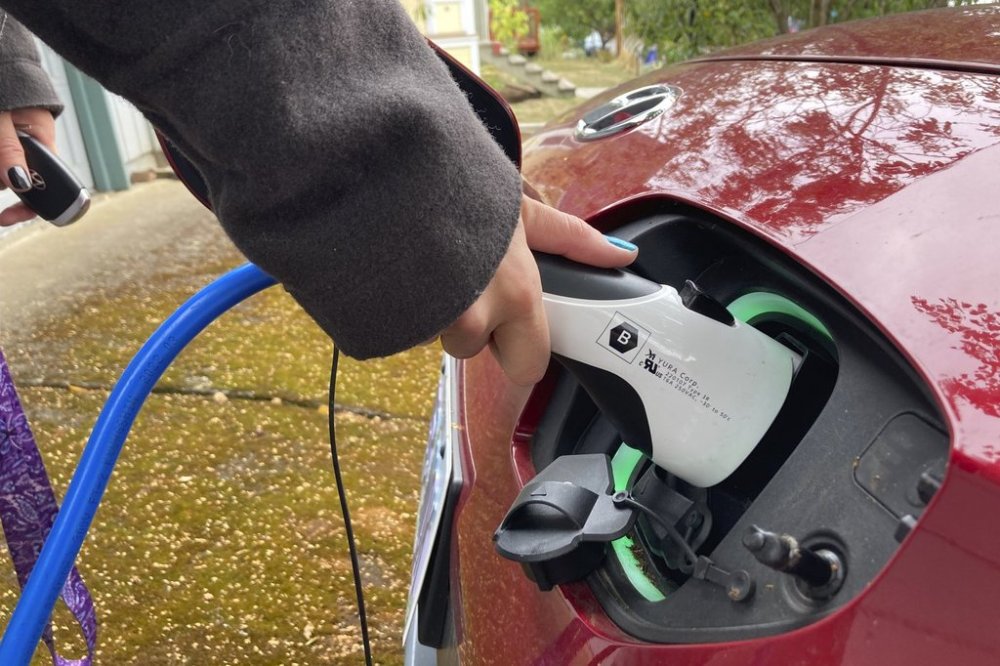
Hawaii in 2023 was the first state to create a mandatory road usage charge program to make up for projected decreases in fuel tax revenue due to the growing number of electric, hybrid and fuel-efficient cars. Many other states have studied the concept, and Oregon, Utah and Virginia have voluntary programs.
The concept has promise as a long-term funding solution, experts say. Others worry about privacy concerns and discouraging people from buying EVs, which can help reduce transportation emissions.
“This is a pretty major change,” said Liz Farmer, an analyst for The Pew Charitable Trusts’ state fiscal policy team, noting “the challenge in enacting something that’s dramatically different for most drivers.”
Oregon’s transportation woes
Oregon’s transportation department says the budget shortfall stems from inflation, projected declines in gas tax revenue and other spending limits. Over the summer, it sent layoff notices to nearly 500 workers and announced plans to close a dozen road maintenance stations.
Democratic Gov. Tina Kotek paused those moves and called the special session to find a solution. Republican lawmakers say the department mismanaging its money is a main issue.
Kotek’s proposal includes an EV road usage charge that is equivalent to 5% of the state’s gas tax. It also includes raising the gas tax by 6 cents to 46 cents per gallon, among other fee increases.
The usage charge would phase in starting in 2027 for certain EVs and expand to include hybrids in 2028. Should the gas tax increase be approved, EV drivers either would pay about 2.3 cents per mile, or choose an annual flat fee of $340. Drivers in the program wouldn’t have to pay supplemental registration fees.
Drivers would have several options for reporting mileage to private contractors, including a smartphone app or the vehicle’s telematics technology, said Scott Boardman, policy adviser for the transportation department who works on the state’s decade-old voluntary road usage charge program.
Republican lawmakers, who have opposed the tax and fee increases, unveiled a different proposal Friday that largely focuses on lifting funding restrictions to allow the transportation department to spend more money on maintenance operations, including by redirecting dollars earmarked for public transit and efforts to combat climate change toward such operations. It does not include a road usage charge.
As of May, there were over 84,000 EVs registered in Oregon, about 2% of the state’s total vehicles, he said.
Hawaii launches program
Under Hawaii’s program, which began phasing in last month, EV drivers can pay $8 per 1,000 miles driven, capped at $50, or an annual fee of $50.
In 2028, all EV drivers will be required to enroll in the pay-per-mile program, with odometers read at annual inspections. By 2033, the program is expected to expand to all light-duty vehicles.
Questions about privacy and fairness
In past surveys commissioned by Oregon’s transportation department, respondents cited privacy, GPS devices and data security as concerns about road usage charges.

Oregon’s voluntary program has sought to respond to such concerns by deleting mileage data 30 days after a payment is received, Boardman said. While plug-in GPS devices are an option in the program, transportation officials anticipate moving away from them because they’re more expensive and can be removed, he added.
Still, not everyone has embraced a road usage charge. Arizona voters will decide next year whether to ban state and local governments from implementing a tax or fee based on miles traveled after the measure was referred to the ballot by the Republican-majority Legislature.
Many people don’t realize that “both your vehicle and your cellphone capture immense amounts of data about your personal driving habits already,” said Brett Morgan, Oregon transportation policy director for the nonprofit Climate Solutions.
Morgan added that road usage charges exceeding what drivers of internal combustion engines would pay in gas taxes could dissuade people from buying electric and hybrid cars. Already, federal tax incentives for EVs are set to expire under the tax and spending cut bill recently passed by the GOP-controlled Congress.
“We are definitely supportive of a road usage charge that has EVs paying their fair share, but they should not be paying extra or a penalty,” Morgan said.