Nepal internet crackdown part of global trend toward suppressing online freedom
Advertisement
Read this article for free:
or
Already have an account? Log in here »
To continue reading, please subscribe:

Digital Subscription
One year of digital access for only $205*
- Enjoy unlimited reading on winnipegfreepress.com
- Read the E-Edition, our digital replica newspaper
- Access News Break, our award-winning app
- Play interactive puzzles
*First annual payment billed as $205.00 + GST for one year. This annual subscription will automatically renew at $233.00 + GST every 52 weeks (10% off the regular annual price of $259.35). Offer available to new and qualified returning subscribers only. Cancel any time.
To continue reading, please subscribe:
Add Free Press access to your Brandon Sun subscription for only an additional
$1 for the first 4 weeks*
- Enjoy unlimited reading on winnipegfreepress.com
- Read the E-Edition, our digital replica newspaper
- Access News Break, our award-winning app
- Play interactive puzzles
*Your next Brandon Sun subscription payment will increase by $1.00 and you will be charged $17.95 plus GST for four weeks. After four weeks, your payment will increase to $24.95 plus GST every four weeks.
Read unlimited articles for free today:
or
Already have an account? Log in here »
Hey there, time traveller!
This article was published 08/09/2025 (397 days ago), so information in it may no longer be current.
Nepal’s crackdown on social media companies, which led to protests and police killing at least 19 people, is part of a yearslong decline of internet freedoms around the world as even democracies seek to curtail online speech.
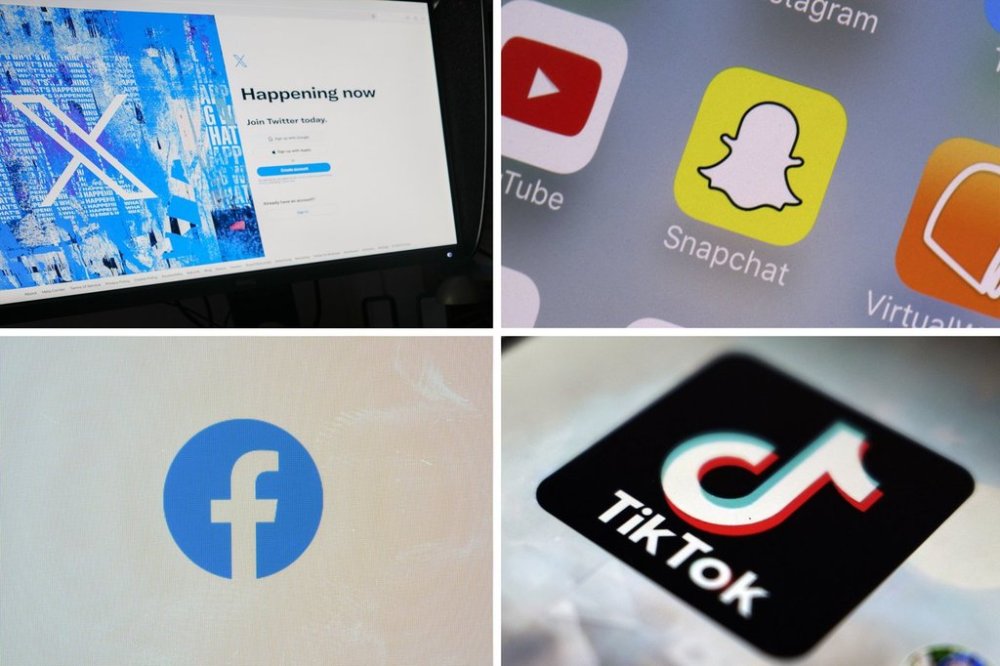
The Himalayan country’s government said last week it was blocking several social media platforms including Facebook, X and YouTube because the companies failed to comply with a requirement that they register with the government. The ban was lifted Tuesday a day after the deadly protests.
What’s happening in Nepal mirrors “this broader pattern of controlling the narrative and controlling of stories emerging from the ground,” said Aditya Vashistha, an assistant professor of information science at Cornell University. “This has happened several times in the neighboring countries India, Pakistan, Bangladesh. So this is nothing new — in fact, I would say this is taken from the playbook, which is now very established, of trying to control social media narratives.”
Not just Nepal
Like neighboring countries, Nepal’s government have been asking the companies to appoint a liaison in the country. Officials are calling for laws to to monitor social media and ensure both the users and operators are responsible and accountable for what they share. But the move has been criticized as a tool for censorship and punishing opponents who voice their protests online.
“Governments absolutely have a valid interest in seeking to regulate social media platforms. This is such a daily part of our lives and in our business. And it is certainly reasonable for authorities to sit down and say we want to develop rules for the road,” said Kian Vesteinsson, senior research analyst for technology and democracy at the Washington-based nonprofit Freedom House.
“But what we see in Nepal is that wholesale blocks as a means of enforcing a set of rules for social media companies results in wildly disproportionate harms. These measures that were put in place in Nepal (cut) tens of millions of people off from platforms that they used to express themselves, to conduct daily business, to speak with their families, to go to school, to get healthcare information.”
It’s not just Nepal. Freedom House has found that global internet freedom has declined for the 14th consecutive year in 2024, as governments crack down on dissent and people face arrest for expressing political, social or religious views online. While China consistently tops the list as the “world’s worst environment” for internet freedom, last year Myanmar shared this designation as well. The organization did not track Nepal.
India passed a telecommunications law in 2023 that gave its government “broad powers to restrict online communications and intercept communications,” according to Freedom House. Three years earlier, a sweeping internet law put digital platforms like Facebook under direct government oversight. Officials say the rules are needed to quell misinformation and hate speech and to give users more power to flag objectionable content. But critics cautioned it would lead to censorship in a country where digital freedoms have already been shrinking.
In January, meanwhile, Pakistan’s lower house of parliament passed a bill that gives the government sweeping controls on social media, including sending users to prison for spreading disinformation.
Online freedom and democracy
Calling internet freedom a “pillar of modern democracy,” Freedom House said a healthy 21st-century democracy cannot function without a trustworthy online environment, where people can access information and express themselves freely.
Increasingly, though, governments are putting up roadblocks.
Often, regulations are in the name of child safety, cyber crime or fraud, Vesteinsson said, “but unfortunately, a lot of this regulation comes hand in hand with restrictive measures.”
In the Nepali law, for instance, “the same provision of this law, directs social media platforms to restrict content relating to child trafficking and human trafficking and labor, a really important issue,” he added. “Two bullet points above that, it orders platforms to restrict people from posting anonymously.”
The Committee to Protect Journalists said Monday that the protests “underscore the widespread concerns over Nepal’s ban on social media and the pressing need for the government to drop its order. Such a sweeping ban not only restricts freedom of expression, it also severely hinders journalists’ work and the public’s right to know.”
Can VPNs help?
The crackdown appears to have spurred a surge in use of virtual private networks, or VPNs, according to Proton, which provides encrypted services. Signups for Proton’s VPN service in Nepal have jumped by 8,000% since Sept. 3, according to data the company posted online. A VPN is a service that allows users to mask their location in order to circumvent censorship or geography-based online viewing restrictions.
But experts caution that VPNs are not an end-all solution to government internet blocks. They can be expensive and out of reach for many people, Vashistha noted, and they can be slow and lead to lower-quality experiences when people try to access blocked social platforms.
Google, Meta, X and TikTok (which registered and continues to operate) didn’t respond to requests for comment.
Vesteinsson said companies can take important steps to safeguard privacy of their users — particularly human rights defenders and activists who might be a specific target for government repression in their countries.
“It’s enormously important for social media platforms to be responsible to their users in that way,” he said.
___
AP Business Writer Kelvin Chan and AP Technology Writer Matt O’Brien contributed to this report.
Related Articles
Protests against Nepal's social-media ban grow more violent as demonstrators set buildings on fire
Advertisement Advertise With Us
Advertisement Advertise With Us