Climate change made Atlantic Canada heat wave at least 10 times more likely: ECCC

Advertisement

Advertise with us

Human-caused climate change made a record-breaking heat wave in Atlantic Canada far more likely, federal climate scientists said Wednesday, as they released a new analysis of 10 of Canada's hottest heat events in July and August. 

Read this article for free:


or

Already have an account? Log in here »

To continue reading, please subscribe:

Subscribe and receive a limited-edition Free Press branded hat or tote.

Digital Subscription

One year of digital access for only $205*

  • Enjoy unlimited reading on winnipegfreepress.com
  • Read the E-Edition, our digital replica newspaper
  • Access News Break, our award-winning app
  • Play interactive puzzles

*First annual payment billed as $205.00 + GST for one year. This annual subscription will automatically renew at $233.00 + GST every 52 weeks (10% off the regular annual price of $259.35). Offer available to new and qualified returning subscribers only. Cancel any time.

To continue reading, please subscribe:

Add Free Press access to your Brandon Sun subscription for only an additional

$1 for the first 4 weeks*

  • Enjoy unlimited reading on winnipegfreepress.com
  • Read the E-Edition, our digital replica newspaper
  • Access News Break, our award-winning app
  • Play interactive puzzles
Start now

*Your next Brandon Sun subscription payment will increase by $1.00 and you will be charged $17.95 plus GST for four weeks. After four weeks, your payment will increase to $24.95 plus GST every four weeks.

Hey there, time traveller!
This article was published 17/09/2025 (361 days ago), so information in it may no longer be current.

Human-caused climate change made a record-breaking heat wave in Atlantic Canada far more likely, federal climate scientists said Wednesday, as they released a new analysis of 10 of Canada’s hottest heat events in July and August. 

The results suggest the weeklong heat wave over Atlantic Canada was made at least 10 times more likely because of climate change. That was more than any of the others, said Environment and Climate Change Canada research scientist Nathan Gillett.

Figuring out how much human influence — largely from the burning of fossil fuels — is increasing the likelihood of dangerous weather extremes can help decisionmakers “better plan for, better respond to and better (rebuild) following weather emergencies,” Gillett said.
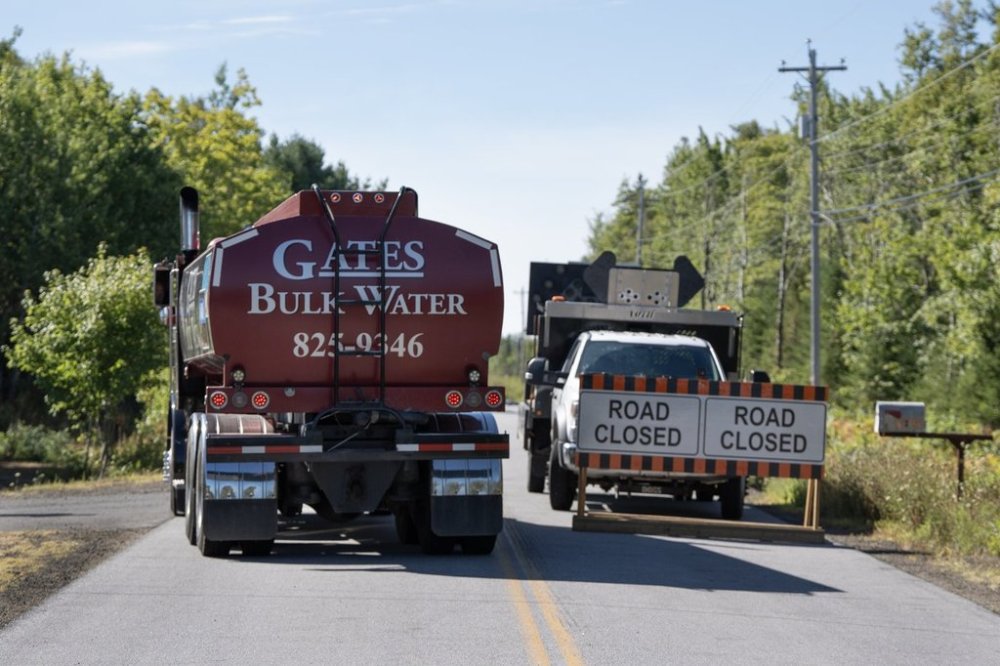
A bulk water delivery truck passes a checkpoint into the evacuation area where firefighters are battling the Long Lake wildfire in Nova Scotia's Annapolis County, outside the community of West Dalhousie, N.S., on Tuesday, Aug. 19, 2025. THE CANADIAN PRESS/Darren Calabrese

“Heat waves are one of the most dangerous, if not the most dangerous weather-related hazard both globally and in Canada,” he said Wednesday. 

“Understanding how the risks are changing can help inform decision-making to protect the health, safety and property of Canadians. And it can also help planning climate change adaptation efforts.”

The Atlantic Canada heat wave from Aug. 7 to 14 saw the region’s average peak daily temperatures soar almost 10 degrees above normal.

Maple Plains, P.E.I., set an all-time provincial temperature record on Aug. 12 when the mercury rocketed up to 38 C. Newfoundland’s Avalon Peninsula saw a record seven days of consecutive heat warnings. 

Scientists with ECCC came up with their results by comparing models of the Earth’s current and pre-industrial climate to see how carbon dioxide and other planet-warming emissions increased the chances of extreme heat. 

They break Canada down into 17 broad regions and will only analyze a heat wave when temperatures exceed the typical hottest day of the year for that region. 

The other nine heat waves analyzed in July and August were all made at least two to 10 times more likely due to climate change, Gillett said.

That included the late-August heat waves over Alberta and Fort Smith, N.W.T., and a three-day long July heat wave over northern Quebec. 

The federal scientists have also started to do similar studies of extreme precipitation, and plan to start releasing those results later this year. 

This report by The Canadian Press was first published Sept. 17, 2025. 

Report Error Submit a Tip

More Stories

Fallis’s comic thriller infiltrates book club

Ben Sigurdson 3 minute read Preview

Fallis’s comic thriller infiltrates book club

Ben Sigurdson 3 minute read Yesterday at 6:00 AM CDT

The Free Press Book Club and McNally Robinson Booksellers are pleased to welcome Toronto author Terry Fallis to the next virtual meeting on Tuesday, September 29 at 7 p.m. to read from and discuss his novel The Marionette.

Fallis, a former lawyer, bureaucrat and political consultant, is the author of 10 bestselling novels and the two-time winner of the Stephen Leacock Medal for Humour (in 2015 for No Relation and in 2008 for The Best Laid Plans, which also won CBC’s Canada Reads in 2011).

His 11th novel, An End In Itself, will be published in November by McClelland & Stewart, who also published The Marionette in October 2025 (and which was also longlisted for the Leacock medal).

The Marionette follows James Norval, bestselling author of a series of thrillers featuring fictional CIA agent Hunter Chase. While in Tajikistan researching his next Hunter Chase novel, Norval is detained by local officials and subsequently freed and ferried away by the Canadian Security Intelligence Service (CSIS).

Read
Yesterday at 6:00 AM CDT

Contact Us

6 minute read Monday, Jul. 27, 2026

Contact UsJUMP: Editorial

Delivery

Promotions

Advertising |Photo Reprints

Privacy Inquiries

Newsmedia Council

By TelephoneIf the number you need is not listed below, call the Winnipeg Free Press main switchboard, at 204-697-7000, it's open Monday to Friday 8 a.m. to 4 p.m. All numbers are area code204 unless otherwise noted.

E-Mailfpcirc@freepress.mb.ca |

Citizen reports help highlight connectivity issues across southwest Manitoba

Nicole Buffie 5 minute read Preview

Citizen reports help highlight connectivity issues across southwest Manitoba

Nicole Buffie 5 minute read Updated: Yesterday at 10:43 AM CDT

A southwestern Manitoba man has created a map to document cell service blackout spots in an effort to push for better access in rural areas.

Mark Custance compiled more than 300 citizen reports over the last few months to document where service in southwest Manitoba is strong, spotty or doesn’t exist at all.

“I’ve heard people complain and say, ‘cell service sucks’ or ‘this is not working.’ But what does the data actually say?” Custance said from his office in Melita, where he has installed a cell-service booster to maintain connectivity with the rest of the world.

Analyzing where service is good and poor, he cross-references it with the location of cellphone towers across the region.

Read
Updated: Yesterday at 10:43 AM CDT

Sunday-night auto aficionados work to steer away from unwelcome elements they say aren’t a part of their tradition

Zoe Pierce 12 minute read Preview

Sunday-night auto aficionados work to steer away from unwelcome elements they say aren’t a part of their tradition

Zoe Pierce 12 minute read Friday, Sep. 11, 2026

The red 1969 Dodge Coronet Super Bee out for a cruise on Portage Avenue draws admiring eyes from onlookers on a recent Sunday night, many of them seeing a specimen of the now-rare muscle car for the first time on a Winnipeg street. Or any other street, for that matter.

Longtime car enthusiast Bob Sudoma was behind the wheel, participating in the decades-old show-offy summer tradition.

The Sunday night cruise is built around a simple idea: proud car owners take their beloved vehicles for a spin to meet up with others of the same autophile ilk.

Less-fortunate appreciators, or just curious folks, also gather along the route to watch the highly-polished parade. Portage Avenue is one of cruise night’s best-known stretches.

Read
Friday, Sep. 11, 2026

The port of Churchill — but done right

Editorial 4 minute read Preview

The port of Churchill — but done right

Editorial 4 minute read Yesterday at 2:00 AM CDT

The seagoing grain carrier wasn’t christened with a champagne bottle. There was no confetti or streamers. Nevertheless, the Aug. 31 event marking the first shipment of grain to be loaded at the Port of Churchill since 2020 was celebrated like the launch of a brand new vessel.

The presence of the federal minister of northern and arctic affairs, provincial cabinet ministers and leaders and elders from several northern First Nations signalled that the fast-tracked process of refurbishing and buffing up Manitoba’s deep-water seaport gem is gaining momentum.

For OneNorth, the partnership of 29 First Nations and 12 northern communities which owns the Port of Churchill and the Hudson Bay Railway (both operated by the Arctic Gateway Group) the event heralded a new beginning. It’s been eight years since OneNorth purchased the port and railroad, and six years since grain was moved by rail through Manitoba and then by ship to European markets. Two more grain shipments, plus shipments of potash and critical minerals, will continue through the fall.

When Prime Minister Mark Carney solicited the premiers to suggest “nation-building” projects following his election in 2025, Premier Wab Kinew pitched a Manitoba trade corridor that would move wheat, critical minerals, potash and energy (oil or liquid natural gas) through the Port of Churchill.

Read
Yesterday at 2:00 AM CDT

Nifty neighbours also jonesing for geniality

Maureen Scurfield 4 minute read Yesterday at 2:01 AM CDT

DEAR MISS LONELYHEARTS: Recently, a new couple with no children moved onto our cul de sac, and everybody is taking notice! This attractive pair with no kids both drive amazing cars, work from home and leave their garage doors up a lot. Everybody on the street walks by to sneak a peek into the big garage at just about any time of day.

Lately, the man’s been out on his front lawn in a muscle shirt in the late afternoon, planting shrubs and putting up stylish fall-themed ornaments. At night they often leave the living-room curtains open. That makes for convenient viewing for curious neighbours like us!

A few days ago, my wife invited the new couple over for a barbecue and swim in our pool. They are really nice people, but mentioned that other people nearby have been pretty stand-offish. They wonder why. Should I tell them it’s probably just jealousy over their beautiful vehicles and enviable lifestyle, or should I just shut up?

—Wanting to Help, Sage Creek