

UN appeals to the Taliban to restore internet access across Afghanistan
Advertisement
Read this article for free:
or
Already have an account? Log in here »
To continue reading, please subscribe:
Monthly Digital Subscription
$1 per week for 24 weeks*
- Enjoy unlimited reading on winnipegfreepress.com
- Read the E-Edition, our digital replica newspaper
- Access News Break, our award-winning app
- Play interactive puzzles
*Billed as $4.00 plus GST every four weeks. After 24 weeks, price increases to the regular rate of $19.95 plus GST every four weeks. Offer available to new and qualified returning subscribers only. Cancel any time.
Monthly Digital Subscription
$4.99/week*
- Enjoy unlimited reading on winnipegfreepress.com
- Read the E-Edition, our digital replica newspaper
- Access News Break, our award-winning app
- Play interactive puzzles
*Billed as $19.95 plus GST every four weeks. Cancel any time.
To continue reading, please subscribe:
Add Free Press access to your Brandon Sun subscription for only an additional
$1 for the first 4 weeks*
*Your next subscription payment will increase by $1.00 and you will be charged $16.99 plus GST for four weeks. After four weeks, your payment will increase to $23.99 plus GST every four weeks.
Read unlimited articles for free today:
or
Already have an account? Log in here »
ISLAMABAD (AP) — The United Nations mission in Afghanistan urged the Taliban on Tuesday to restore internet and telecommunications access across the country, saying the blackout imposed by the government in Kabul has left the nation almost entirely cut off from the outside world.
The outage, reported Monday, was the first nationwide shutdown since the Taliban returned to power in August 2021, and was part of their professed crackdown on immorality. Earlier this month, several provinces lost their fiber-optic connections after Taliban leader Hibatullah Akhundzada issued a decree banning the service to prevent immorality.
There has been no official comment from the Taliban, who rely on messaging apps and social media for internal and external communications.
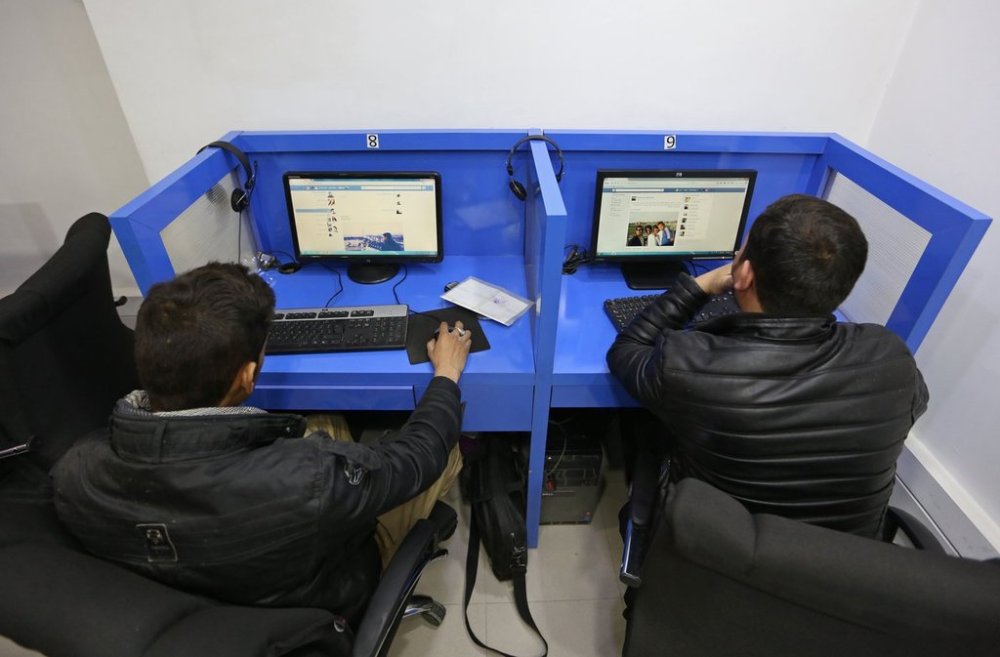
The internet disruption threatened economic stability and deepened one of the world’s worst humanitarian crises, said the U.N. Assistance Mission in Afghanistan.
It warned that the blackout is crippling banking and financial systems, isolating women and girls, limiting access to medical care and remittances, and disrupting aviation.
The U.N. said such restrictions further undermine freedom of expression and the right to information. It noted that telecommunications are also crucial during disasters — Afghanistan has recently suffered major earthquakes in the east and is struggling with mass forced returns from neighboring countries.
The U.N. mission said the internet outage spread since it was first imposed by the Taliban on Sept. 16 and became nationwide on Sept. 29. The mission said it would continue to press Afghanistan’s de facto authorities to restore access “in support of the Afghan people.”

Pakistan’s diplomatic missions have made alternative communication arrangements, including the use of satellite phones, according to an official in Islamabad. He spoke on condition of anonymity because he was not authorized to talk to the media.
South Asia analyst Michael Kugelman described the nationwide shutdown as one of the “most extreme and draconian steps” the Taliban had taken since returning to power.
“And it amplifies, in the starkest possible way, though certainly not for the first time, that the group has not become any more ideologically moderate than when it was in control in the 1990s,” he told The Associated Press.
___
Associated Press writer Riazat Butt contributed to this report.