

Trump signs executive order for AI project called Genesis Mission to boost scientific discoveries
Advertisement
Read this article for free:
or
Already have an account? Log in here »
To continue reading, please subscribe:
Monthly Digital Subscription
$1 per week for 24 weeks*
- Enjoy unlimited reading on winnipegfreepress.com
- Read the E-Edition, our digital replica newspaper
- Access News Break, our award-winning app
- Play interactive puzzles
*Billed as $4.00 plus GST every four weeks. After 24 weeks, price increases to the regular rate of $19.95 plus GST every four weeks. Offer available to new and qualified returning subscribers only. Cancel any time.
Monthly Digital Subscription
$4.99/week*
- Enjoy unlimited reading on winnipegfreepress.com
- Read the E-Edition, our digital replica newspaper
- Access News Break, our award-winning app
- Play interactive puzzles
*Billed as $19.95 plus GST every four weeks. Cancel any time.
To continue reading, please subscribe:
Add Free Press access to your Brandon Sun subscription for only an additional
$1 for the first 4 weeks*
*Your next subscription payment will increase by $1.00 and you will be charged $16.99 plus GST for four weeks. After four weeks, your payment will increase to $23.99 plus GST every four weeks.
Read unlimited articles for free today:
or
Already have an account? Log in here »
President Donald Trump is directing the federal government to combine efforts with tech companies and universities to convert government data into scientific discoveries, acting on his push to make artificial intelligence the engine of the nation’s economic future.
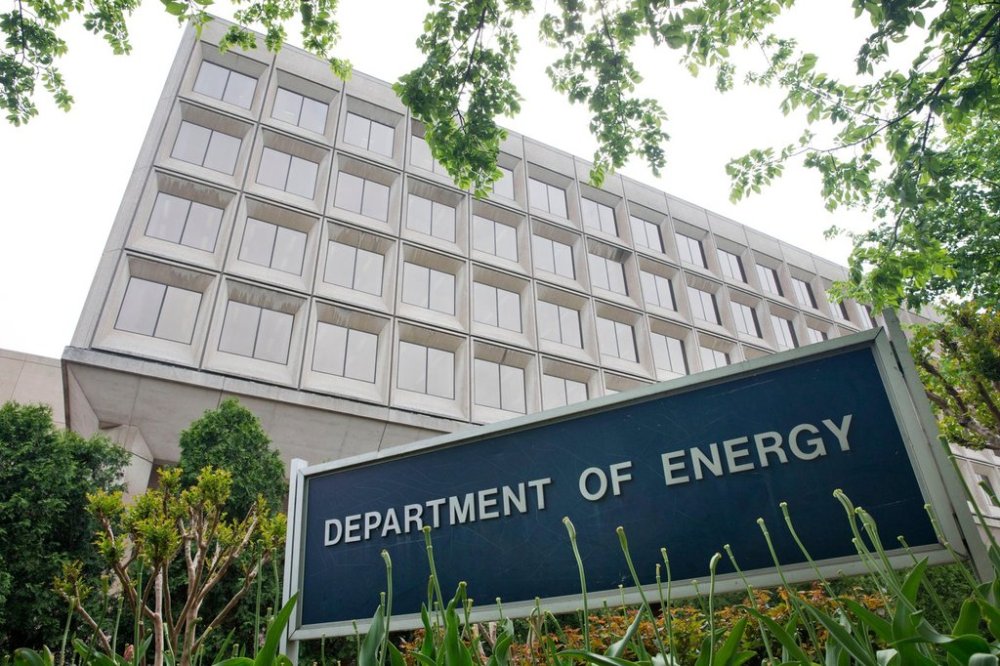
Trump unveiled the “Genesis Mission” as part of an executive order he signed Monday that directs the Department of Energy and national labs to build a digital platform to concentrate the nation’s scientific data in one place.
It solicits private sector and university partners to use their AI capability to help the government solve engineering, energy and national security problems, including streamlining the nation’s electric grid, according to White House officials who spoke to reporters on condition of anonymity to describe the order before it was signed. Officials made no specific mention of seeking medical advances as part of the project.
“The Genesis Mission will bring together our Nation’s research and development resources — combining the efforts of brilliant American scientists, including those at our national laboratories, with pioneering American businesses; world-renowned universities; and existing research infrastructure, data repositories, production plants, and national security sites — to achieve dramatic acceleration in AI development and utilization,” the executive order says.
The administration portrayed the effort as the government’s most ambitious marshaling of federal scientific resources since the Apollo space missions of the late 1960s and early 1970s, even as it had cut billions of dollars in federal funding for scientific research and thousands of scientists had lost their jobs and funding.
Trump is increasingly counting on the tech sector and the development of AI to power the U.S. economy, made clear last week as he hosted Saudi Arabia’s Crown Prince Mohammed bin Salman. The monarch has committed to investing $1 trillion, largely from the Arab nation’s oil and natural gas reserves, to pivot his nation into becoming an AI data hub.
For the U.S.’s part, funding was appropriated to the Energy Department as part of the massive tax-break and spending bill signed into law by Trump in July, White House officials said.
As AI raises concerns that its heavy use of electricity may be contributing to higher utility rates in the nearer term, which is a political risk for Trump, administration officials argued that rates will come down as the technology develops. They said the increased demand will build capacity in existing transmission lines and bring down costs per unit of electricity.
Data centers needed to fuel AI accounted for about 1.5% of the world’s electricity consumption last year, and those facilities’ energy consumption is predicted to more than double by 2030, according to the International Energy Agency. That increase could lead to burning more fossil fuels such as coal and natural gas, which release greenhouse gases that contribute to warming temperatures, sea level rise and extreme weather.
The project will rely on national labs’ supercomputers but will also use supercomputing capacity being developed in the private sector. The project’s use of public data including national security information along with private sector supercomputers prompted officials to issue assurances that there would be controls to respect protected information.