

How to watch one of the year’s best meteor showers, the Geminids
Advertisement
Read this article for free:
or
Already have an account? Log in here »
To continue reading, please subscribe:
Monthly Digital Subscription
$1 per week for 24 weeks*
- Enjoy unlimited reading on winnipegfreepress.com
- Read the E-Edition, our digital replica newspaper
- Access News Break, our award-winning app
- Play interactive puzzles
*Billed as $4.00 plus GST every four weeks. After 24 weeks, price increases to the regular rate of $19.95 plus GST every four weeks. Offer available to new and qualified returning subscribers only. Cancel any time.
Monthly Digital Subscription
$4.99/week*
- Enjoy unlimited reading on winnipegfreepress.com
- Read the E-Edition, our digital replica newspaper
- Access News Break, our award-winning app
- Play interactive puzzles
*Billed as $19.95 plus GST every four weeks. Cancel any time.
To continue reading, please subscribe:
Add Free Press access to your Brandon Sun subscription for only an additional
$1 for the first 4 weeks*
*Your next subscription payment will increase by $1.00 and you will be charged $16.99 plus GST for four weeks. After four weeks, your payment will increase to $23.99 plus GST every four weeks.
Read unlimited articles for free today:
or
Already have an account? Log in here »
NEW YORK (AP) — It’s time for one of the strongest meteor showers of the year.
The Geminids peak this weekend and are visible through mid-December, according to the American Meteor Society. The meteors tend to be yellow in color and can be seen across the globe, but the best viewing happens in the Northern Hemisphere.
Skygazers could see up to 120 meteors per hour under dark skies during the peak Saturday night into Sunday’s predawn hours, according to NASA.
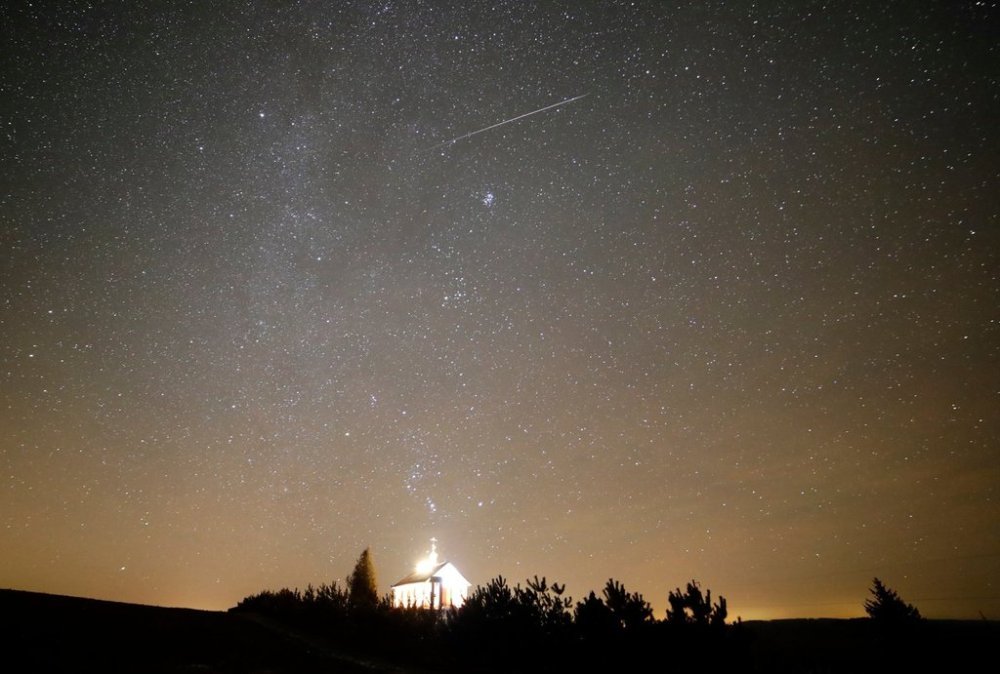
Meteor showers appear when fast-moving space rocks hit Earth’s atmosphere and burn up, leaving behind fiery tails — the end of a “shooting star.” Stray meteors are visible from Earth on any given night, but more prominent showers happen annually when the planet passes through crowded streams of cosmic debris.
How exciting a shower will look from Earth depends on many factors including the amount of debris and the brightness of the moon, which can overshadow the meteors’ glow. The Geminids have a good window for peak viewing before the moon crashes the party after midnight.
To enjoy the Geminid show, bundle up and venture away from city lights, which can drown out fireballs. The meteor shower will appear over the whole sky, so look to the darkest part or search for the Gemini constellation for which the shower is named.
Lie in a sleeping bag or lean back in a lawn chair and wait 15 to 20 minutes for your eyes to get used to the darkness. That’s when the meteors will appear as tiny glows streaking across the sky.

“The other stars are going to be all stationary, so you’ll see this moving across the sky and it’ll leave a little tail behind it,” said Bethany Cobb Kung, an astronomer with George Washington University.
Stay outside and take in the show for as long as the weather allows. Avoid bright lights from cellphones, which can make it harder for your eyes to adjust to nighttime darkness.
Most meteor showers come from the leftovers of comets, but the Geminids originate from the sun-orbiting asteroid 3200 Phaethon.
___
The Associated Press Health and Science Department receives support from the Howard Hughes Medical Institute’s Department of Science Education and the Robert Wood Johnson Foundation. The AP is solely responsible for all content.