NASA loses contact with its Maven spacecraft orbiting Mars for the past decade
Advertisement
Read this article for free:
or
Already have an account? Log in here »
To continue reading, please subscribe:

Digital Subscription
One year of digital access for only $205*
- Enjoy unlimited reading on winnipegfreepress.com
- Read the E-Edition, our digital replica newspaper
- Access News Break, our award-winning app
- Play interactive puzzles
*First annual payment billed as $205.00 + GST for one year. This annual subscription will automatically renew at $233.00 + GST every 52 weeks (10% off the regular annual price of $259.35). Offer available to new and qualified returning subscribers only. Cancel any time.
To continue reading, please subscribe:
Add Free Press access to your Brandon Sun subscription for only an additional
$1 for the first 4 weeks*
- Enjoy unlimited reading on winnipegfreepress.com
- Read the E-Edition, our digital replica newspaper
- Access News Break, our award-winning app
- Play interactive puzzles
*Your next Brandon Sun subscription payment will increase by $1.00 and you will be charged $17.95 plus GST for four weeks. After four weeks, your payment will increase to $24.95 plus GST every four weeks.
Read unlimited articles for free today:
or
Already have an account? Log in here »
Hey there, time traveller!
This article was published 10/12/2025 (286 days ago), so information in it may no longer be current.
CAPE CANAVERAL, Fla. (AP) — NASA has lost contact with a spacecraft that has orbited Mars for more than a decade.
Maven abruptly stopped communicating to ground stations over the weekend. NASA said this week that it was working fine before it went behind the red planet. When it reappeared, there was only silence.
Launched in 2013, Maven began studying the upper Martian atmosphere and its interaction with the solar wind once reaching the red planet the following year. Scientists ended up blaming the sun for Mars losing most of its atmosphere to space over the eons, turning it from wet and warm to the dry and cold world it is today.
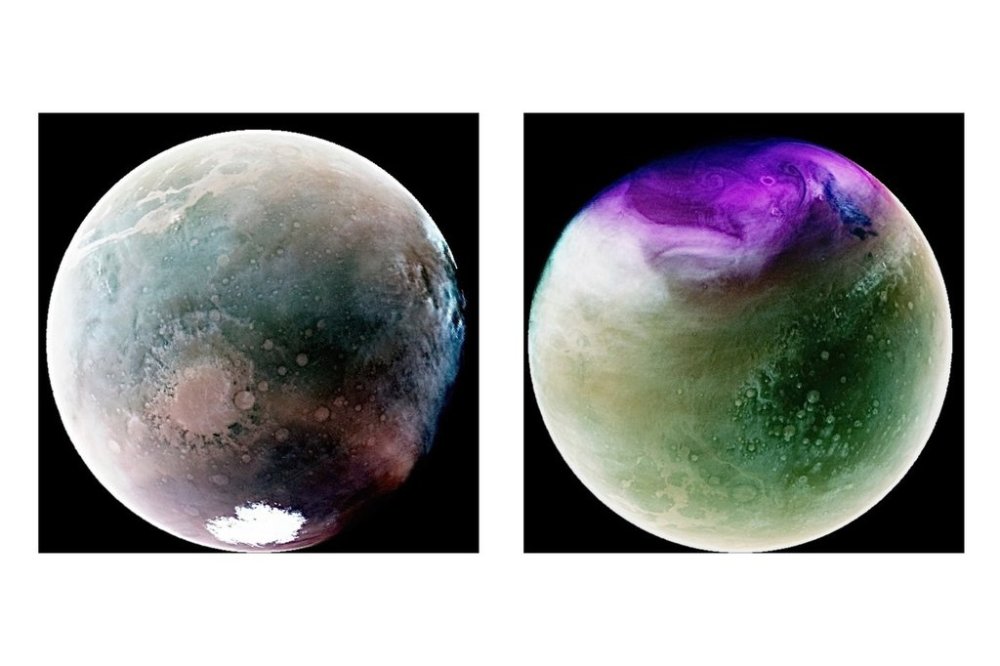
Maven also has served as a communication relay for NASA’s two Mars rovers, Curiosity and Perseverance.
Engineering investigations are underway, according to NASA.
NASA has two other spacecraft around Mars that are still active: Mars Reconnaissance Orbiter, launched in 2005, and Mars Odyssey, launched in 2001.
___
The Associated Press Health and Science Department receives support from the Howard Hughes Medical Institute’s Department of Science Education and the Robert Wood Johnson Foundation. The AP is solely responsible for all content.
Related Articles
NASA releases possible launch dates for Artemis II quest with Canada's Jeremy Hansen
Advertisement Advertise With Us