How to get in on the AI rally without taking on major risk
Advertisement
Read this article for free:
or
Already have an account? Log in here »
To continue reading, please subscribe:

Digital Subscription
One year of digital access for only $205*
- Enjoy unlimited reading on winnipegfreepress.com
- Read the E-Edition, our digital replica newspaper
- Access News Break, our award-winning app
- Play interactive puzzles
*First annual payment billed as $205.00 + GST for one year. This annual subscription will automatically renew at $233.00 + GST every 52 weeks (10% off the regular annual price of $259.35). Offer available to new and qualified returning subscribers only. Cancel any time.
To continue reading, please subscribe:
Add Free Press access to your Brandon Sun subscription for only an additional
$1 for the first 4 weeks*
- Enjoy unlimited reading on winnipegfreepress.com
- Read the E-Edition, our digital replica newspaper
- Access News Break, our award-winning app
- Play interactive puzzles
*Your next Brandon Sun subscription payment will increase by $1.00 and you will be charged $17.95 plus GST for four weeks. After four weeks, your payment will increase to $24.95 plus GST every four weeks.
Read unlimited articles for free today:
or
Already have an account? Log in here »
Hey there, time traveller!
This article was published 16/12/2025 (298 days ago), so information in it may no longer be current.
Three years after the ChatGPT-fuelled AI craze swept across markets and sent tech stocks soaring, some investors are looking at whether they can still get in on the rally.
Alim Dhanji, a certified financial planner at Assante Financial Management, is no stranger to young investors asking about how to start investing in AI stocks — and what the right exposure is.
“It comes up pretty much in every client meeting,” he said.
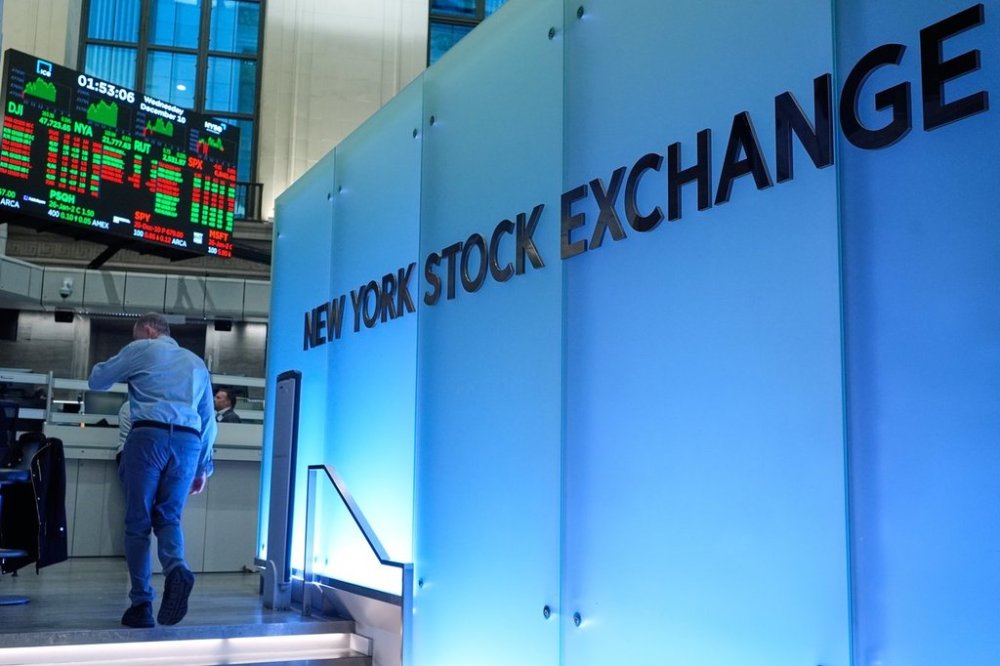
The tech sector has seen significant volatility recently, as speculation mounts on whether there’s an AI bubble percolating after a major rally. For young investors looking for a piece of the action, experts say with the right strategy, it’s possible to participate without risking it all.
Dhanji said he usually begins with the basics — assessing his client’s risk profile and financial goals.
“Not everyone can tolerate the risks of AI companies because they are more volatile,” Dhanji said.
Investing in AI no longer has to mean owning shares of big-name tech companies. Nvidia, Meta Platforms and AMD, among others, have been seen as proxies for the AI sector in recent years, but they are not the only options. Companies across the board have now bet huge sums of money on AI and its productivity promises.
If the client’s goals are long-term, such as retirement savings, then having some AI exposure in their portfolio can complement other asset classes, Dhanji said.
The volatility of AI stocks makes them unsuitable for short-term financial goals. For example, if you’re saving money to start a business or buy a house, it’s better to keep AI stocks out of the mix.
Another risk, he said, is that technology is evolving so quickly that what you own today may be outdated in a year’s time.
“You have to be careful in terms of what you’re investing in,” Dhanji said.
Most investors Ryan Lee hears from are aware of the volatility, but they want to buy in anyway.
Lee, a certified financial planner and founder of Twain Financial, said picking individual AI stocks to invest in can be an “overly risky” move.
He also said it’s important to keep in mind how those AI stocks fit in your long-term investment strategy.
Certain index funds in your portfolio might already have exposure to AI companies — such as an exchange-traded fund that tracks the Nasdaq.
“When you hold a diversified portfolio, you already have exposure,” he said.
Lee said it’s difficult nowadays to ignore AI stocks.
“There is AI in the future … and there is going to be growth,” Lee said. “But we just don’t know when that growth is going to happen or whether or not that growth is going to be higher than other industries.”
Instead of picking individual stocks, some investors might look to AI-centric ETFs, but Dhanji warned against over-concentration.
If a young investor has a long-term time horizon, Dhanji recommends 10 to 15 per cent of their portfolio can be allocated to the AI sector.
But if the investor is more conservative, Dhanji suggested capping their AI exposure to five per cent of the portfolio — or not holding any AI ETFs or stocks at all if that money will be needed in the next three years or so.
Whatever the financial goal and time horizon may be, Dhanji recommended shying away from AI names that are buzzy social media recommendations.

“My advice is to avoid the hype train,” Dhanji said.
“I’d rather people focus on the companies themselves, making sure they have strong balance sheets and cash flows.”
Dhanji said investing in quality companies with strong balance sheets will help your portfolio weather extreme fluctuations in the market long term, if the AI bubble were to burst.
“My recommendation is to have that financial plan in place, know what your cash flows look like, and instead of investing a lump sum all at once and timing the market, you can then dollar average into the market over time,” he said.
This report by The Canadian Press was first published Dec. 16, 2025.