

Supreme Court will decide on use of warrants that collect the location history of cellphone users
Advertisement
Read this article for free:
or
Already have an account? Log in here »
To continue reading, please subscribe:
Monthly Digital Subscription
$1 per week for 24 weeks*
- Enjoy unlimited reading on winnipegfreepress.com
- Read the E-Edition, our digital replica newspaper
- Access News Break, our award-winning app
- Play interactive puzzles
*Billed as $4.00 plus GST every four weeks. After 24 weeks, price increases to the regular rate of $19.95 plus GST every four weeks. Offer available to new and qualified returning subscribers only. Cancel any time.
Monthly Digital Subscription
$4.99/week*
- Enjoy unlimited reading on winnipegfreepress.com
- Read the E-Edition, our digital replica newspaper
- Access News Break, our award-winning app
- Play interactive puzzles
*Billed as $19.95 plus GST every four weeks. Cancel any time.
To continue reading, please subscribe:
Add Free Press access to your Brandon Sun subscription for only an additional
$1 for the first 4 weeks*
*Your next subscription payment will increase by $1.00 and you will be charged $16.99 plus GST for four weeks. After four weeks, your payment will increase to $23.99 plus GST every four weeks.
Read unlimited articles for free today:
or
Already have an account? Log in here »
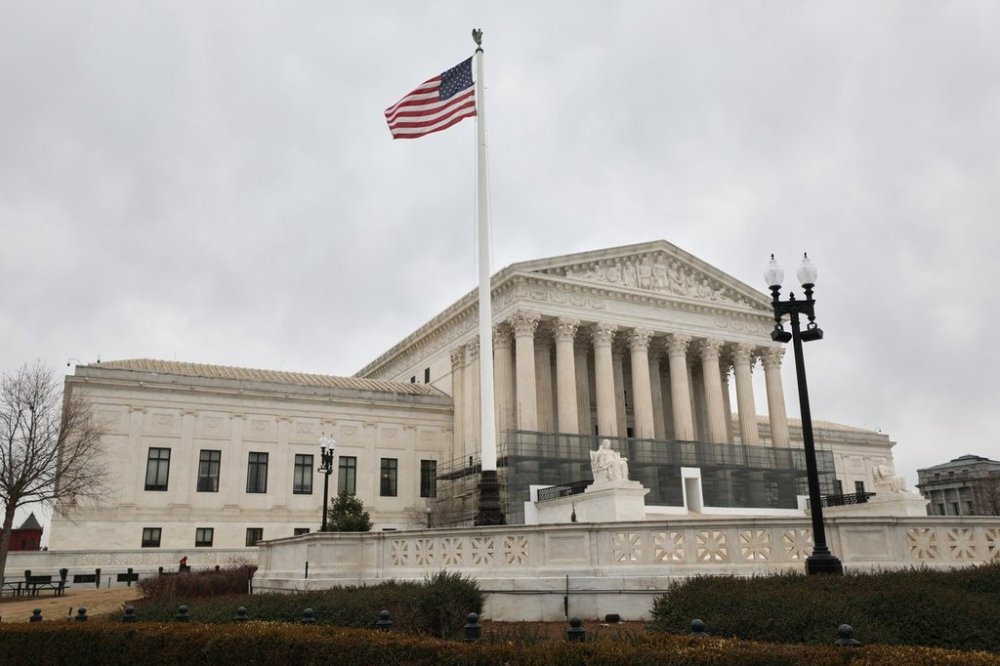
WASHINGTON (AP) — The Supreme Court agreed Friday to decide the constitutionality of broad search warrants that collect the location history of cellphone users to find people near crime scenes.
The case involves what is a known as a “geofence warrant” that was served on Google in a police hunt for a bank robber in suburban Richmond, Virginia. Geofence warrants, an increasingly popular investigative tool, seek location data on every person within a specific location over a certain period of time.
Police used the information to arrest Okello Chatrie in the 2019 robbery of the Call Federal Credit Union in Midlothian. Chatrie eventually pleaded guilty and was sentenced to nearly 12 years in prison.
Chatrie’s lawyers challenged the warrant as a violation of his privacy because it allowed authorities to gather the location history of people near the bank without having any evidence they had anything to do with the robbery. Prosecutors argued that Chatrie had no expectation of privacy because he voluntarily opted into Google’s Location History.
A federal judge agreed that the search violated Chatrie’s rights, but still allowed the evidence to be used because the officer who applied for the warrant reasonably believed he was acting properly.

The federal appeals court in Richmond upheld the conviction in a fractured ruling. In a separate case, the federal appeals court in New Orleans ruled that geofence warrants violate the Fourth Amendment’s ban on unreasonable searches.
The case is expected to be argued later this year, either in the spring or in October, at the start of the court’s next term.