Liberia’s largest gold miner repeatedly spilled dangerous chemicals, records show
Advertisement
Read this article for free:
or
Already have an account? Log in here »
To continue reading, please subscribe:

Digital Subscription
One year of digital access for only $205*
- Enjoy unlimited reading on winnipegfreepress.com
- Read the E-Edition, our digital replica newspaper
- Access News Break, our award-winning app
- Play interactive puzzles
*First annual payment billed as $205.00 + GST for one year. This annual subscription will automatically renew at $233.00 + GST every 52 weeks (10% off the regular annual price of $259.35). Offer available to new and qualified returning subscribers only. Cancel any time.
To continue reading, please subscribe:
Add Free Press access to your Brandon Sun subscription for only an additional
$1 for the first 4 weeks*
- Enjoy unlimited reading on winnipegfreepress.com
- Read the E-Edition, our digital replica newspaper
- Access News Break, our award-winning app
- Play interactive puzzles
*Your next Brandon Sun subscription payment will increase by $1.00 and you will be charged $17.95 plus GST for four weeks. After four weeks, your payment will increase to $24.95 plus GST every four weeks.
Read unlimited articles for free today:
or
Already have an account? Log in here »
Hey there, time traveller!
This article was published 30/01/2026 (259 days ago), so information in it may no longer be current.
JIKANDOR, Liberia (AP) — For generations, families in Jikandor village fished and drank from the river that runs through Liberia ’s dense rain forest. Now toxic pollution is making them leave.
They blame the largest gold miner in Liberia, Bea Mountain Mining Corporation. When dead fish float to the surface, they said, they know to tell authorities. But for years there has been little response.
“If we don’t move, we will die,” village chief Mustapha Pabai said.
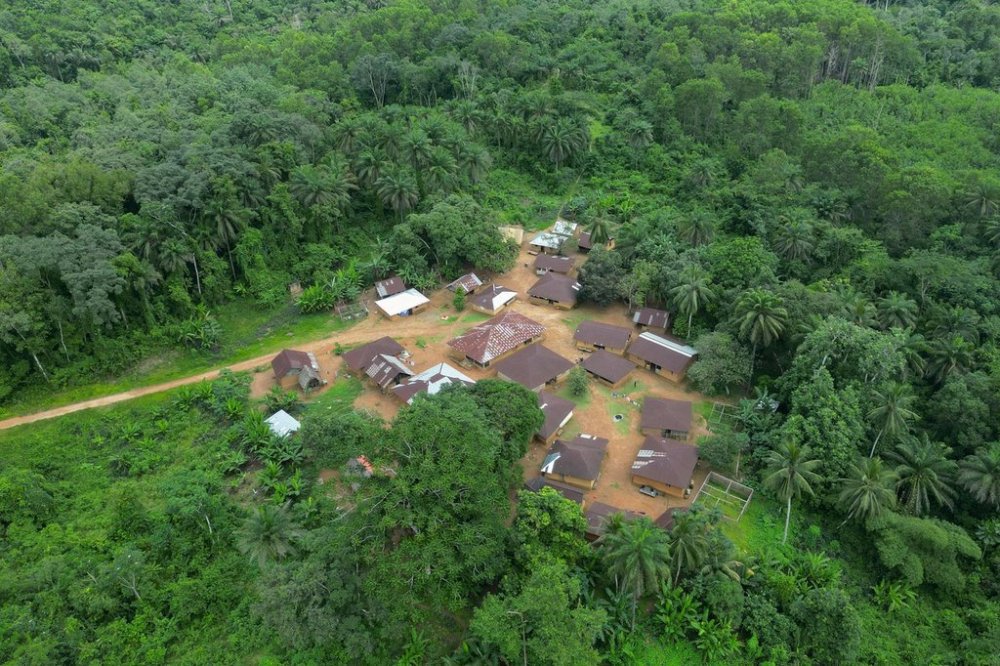
Over several years, cyanide, arsenic and copper repeatedly leaked from Bea Mountain’s substandard facilities at levels that Liberia’s Environmental Protection Agency described as above legal limits. That’s according to EPA reports that were taken down from its site but later retrieved, as well as interviews with government officials, experts and former company employees.
They provide the most comprehensive accounting yet of the spills. The EPA documents also show that Bea Mountain failed to alert regulators promptly after a spill in 2022 and previously blocked government inspectors as they tried to access the company’s laboratory and view results of testing.
___
This story was reported in collaboration with The Gecko Project, a nonprofit newsroom reporting on environmental issues. The reporting was supported by the Pulitzer Center. AP is solely responsible for all content. Find AP’s standards for working with philanthropies, a list of supporters, and funded coverage areas at AP.org.
___
The incidents point to failures in corporate responsibility that “can only be described as sustained negligence,” said Mandy Olsgard, a Canadian toxicologist who reviewed the EPA reports obtained in an investigation by The Associated Press and The Gecko Project.
The reports also expose the Liberian government’s failures to hold the company to account. The government holds a 5% stake in the mining operations. Under Liberian law, the state can suspend or terminate licenses if a miner doesn’t fulfill its obligations. But weak enforcement is common, with the World Bank citing limited government capacity.
In response to the investigation, the country’s recently dismissed minister of mines, Wilmot Paye, said he was “appalled by the harm being done to our country” and that the government was reviewing all concession agreements. The outspoken minister was dismissed in October.
The gold that Bea Mountain mines is sold to Swiss refiner MKS PAMP, which is in the supply chains of some of the world’s largest companies including Nvidia and Apple. The investigation could not confirm what companies ultimately used the gold.
MKS PAMP said it had commissioned an independent assessment of the New Liberty mine, the largest of five mines that Bea Mountain operates in Liberia, in early 2025, and said it found no basis to cut ties but identified areas for improvement related to health and safety. A follow-up visit is planned for 2026.
MKS PAMP declined to share the assessment’s findings, citing confidentiality. It said it would end the relationship if Bea Mountain doesn’t improve.
Between July 2021 and December 2022, the most recent period for which figures could be obtained, Bea Mountain exported more than $576 million worth of gold from Liberia. It contributed $37.8 million to government coffers during that time.
Bea Mountain is controlled by Murathan Günal through Avesoro Resources. Murathan is the son of Turkish billionaire Mehmet Nazif Günal, whose business interests include the Mapa Group. Avesoro Resources and Mapa Group did not respond to requests for comment.
Years of warnings
Extracting gold from ore often involves cyanide, a chemical that at high levels can cause severe neurological damage and can be fatal if ingested, inhaled or absorbed through the skin. Cyanide must be treated before it enters and when it leaves a tailings dam, a storage site for mining waste.
Other toxic substances, including arsenic, often found in gold mining also pose serious health risks if not properly controlled.
The Günals took over Bea Mountain in 2016, acquiring it from Aureus Mining, a UK-listed gold producer, after years of warnings.
In 2012, Canadian consultancy Golder Associates found a risk of contamination of local rivers from the New Liberty mine’s tailings dam and warned that seepage would breach Liberia’s drinking water standards. Two years later, the Digby Wells consultancy flagged cyanide and arsenic as key risks and suggested measures to prevent contamination.
In 2015, a year before production began, a third consultancy, SRK, warned that arsenic could exceed World Health Organization standards for drinking water if not properly managed.
Before production began, the International Finance Corporation, an arm of the World Bank, paid $19.2 million for an equity stake in Bea Mountain’s parent company to develop the New Liberty mine. But the U.S. representative on the IFC board abstained, warning in a 2014 letter that the project lacked basic safeguards and raising concerns about the tailings dam and gaps in the environmental assessment.
The IFC didn’t respond to questions. After publication of this story, the IFC said by email that it sold its stake in Bea Mountain’s parent company in January 2017.
Bea Mountain had pledged to follow strict water management rules and adopt the Cyanide Management Code, a global standard recommending pollution limits and requiring independent audits.
First month, first spill
The first spill documented by the EPA came in the first month of full production. In March 2016, just before the Günals’ purchase of Bea Mountain, cyanide and arsenic leaked from the New Liberty mine. Dead fish floated downstream. Residents reported skin rashes.
The company paused operations but publicly downplayed the spill, saying “there has been no adverse impact on any human settlement.”
It was the first of four EPA-confirmed cases at the mine in which Bea Mountain exceeded government pollution limits.
In June 2020, EPA inspectors found Bea Mountain operating an unapproved wastewater system, and detected water contaminated with high levels of copper and iron. When inspectors tried to look at the company’s water testing data, Bea Mountain refused.
“Physical access to the laboratory was also not approved,” the EPA said in one report.
That month, Bea Mountain withdrew from the Cyanide Management Code without ever undergoing an audit, said Eric Schwamberger, a senior official at the International Cyanide Management Institute that oversees the code. He called such withdrawals uncommon.
In May 2022, dead fish drifted down Marvoe Creek, which flows past Jikandor village and into the Mafa River that runs to the Atlantic. The EPA reported that a spill from Bea Mountain’s tailings dam had suffocated the fish “due to exposure to higher than permissible limits” of cyanide.
The company knew about the pollution but failed to notify the community and the EPA “until downstream communities first started observing dead fish species,” the EPA report said. Companies are required to report such spills within 72 hours.
More than 10 miles (16 kilometers) downstream in Wangekor village, residents said they hauled in dead fish before any warning reached them. They believed the bounty was “a gift from God,” said Philip Zodua, a representative of communities along the river.
Six residents of villages downstream of the Bea Mountain mine asserted that they and their families fell ill after eating fish from the river in June 2022.
One villager, Korto Tokpa, said she saw children collecting dead and dying fish. “They all were sick, vomiting, throwing up and going to the toilet the whole night” after consuming them, she said.
However, no tests were carried out on the villagers. Independent environmental scientists and toxicology experts said there is insufficient evidence to identify pollution as the cause of the reported illnesses.
“Without proper testing and transparent data, the true risks cannot be understood, and communities are left carrying all the uncertainty,” said Olsgard, the toxicologist. “It is the company’s responsibility to fill these gaps urgently.”
When EPA inspectors arrived at the mine to test the water days after the spill, they found arsenic and cyanide levels well above legal limits.
Schwamberger said the cyanide concentrations reported by the EPA, from water flowing out of the tailings dam, were more than 10 times the concentration “that would typically be considered to be lethal to fish.”
In February 2023, another spill occurred. The EPA documented “a huge quantity of raw copper sulfate” leaking into the environment. Six of nine water samples breached legal limits for cyanide and copper.
An EPA official involved in the May 2022 investigation, speaking on condition of anonymity because they were not authorized to discuss the matter, said the mine’s tailings dam had been originally built too small, a design flaw that later caused it to overflow.
A $25,000 fine
While EPA inspectors repeatedly recommended fines after the spills, only one penalty was issued by the regulator, a $99,999 fine in 2018 that was later reduced to $25,000. It was not clear why.
In a written response to questions from the AP and The Gecko Project, the EPA acknowledged three “pollution incidents” between 2016 and 2023 in which laboratory tests found “higher than permissible levels” of cyanide. It also confirmed fish deaths were caused by cyanide, copper sulfate and arsenic leaking from the mine’s tailings dam. It was not clear why the EPA did not acknowledge the fourth spill.
The EPA said the spills it documented occurred before the agency’s current leadership took office in 2024. It said it had ordered Bea Mountain to hire an EPA-certified consultant and reinforce the tailings dam, and that the measures were implemented. It did not say when that occurred.

“No entity is above the law,” the agency said.
Following an EPA recommendation, a legally binding agreement was reached in May 2025 for Bea Mountain to relocate and compensate Jikandor village, the community closest to the mine.
Bea Mountain is now exploring new gold reserves elsewhere in Liberia.
___
Aviram reported from London.