Cryptocurrency and AI industries tested their influence in Illinois. It didn’t go that well
Advertisement
Read this article for free:
or
Already have an account? Log in here »
To continue reading, please subscribe:

Digital Subscription
One year of digital access for only $205*
- Enjoy unlimited reading on winnipegfreepress.com
- Read the E-Edition, our digital replica newspaper
- Access News Break, our award-winning app
- Play interactive puzzles
*First annual payment billed as $205.00 + GST for one year. This annual subscription will automatically renew at $233.00 + GST every 52 weeks (10% off the regular annual price of $259.35). Offer available to new and qualified returning subscribers only. Cancel any time.
To continue reading, please subscribe:
Add Free Press access to your Brandon Sun subscription for only an additional
$1 for the first 4 weeks*
- Enjoy unlimited reading on winnipegfreepress.com
- Read the E-Edition, our digital replica newspaper
- Access News Break, our award-winning app
- Play interactive puzzles
*Your next Brandon Sun subscription payment will increase by $1.00 and you will be charged $17.95 plus GST for four weeks. After four weeks, your payment will increase to $24.95 plus GST every four weeks.
Read unlimited articles for free today:
or
Already have an account? Log in here »
WASHINGTON (AP) — The artificial intelligence and cryptocurrency industries spent big and lost often in this week’s Illinois primaries, an early setback for technology firms that are trying to reshape the midterm elections and establish themselves as power players in American politics.
The companies flooded the state’s Democratic primaries with millions of dollars to promote candidates they believed would have a light touch when it came to regulating technologies that have begun to upend how people do their jobs and manage their finances.
Using super PACs that are allowed to spend unlimited sums of money, they ran television advertising and distributed campaign fliers that only occasionally alluded to their industries. Instead, the messaging focused on promises to combat President Donald Trump’s administration and support liberal policies, a strategy used by other organizations like the American Israel Public Affairs Committee.
But the coy strategy did not stop the AI and crypto industries’ interventions from becoming a lightning rod in the rowdy primaries in Illinois, where there was a rare glut of open seats that led to competitive races.
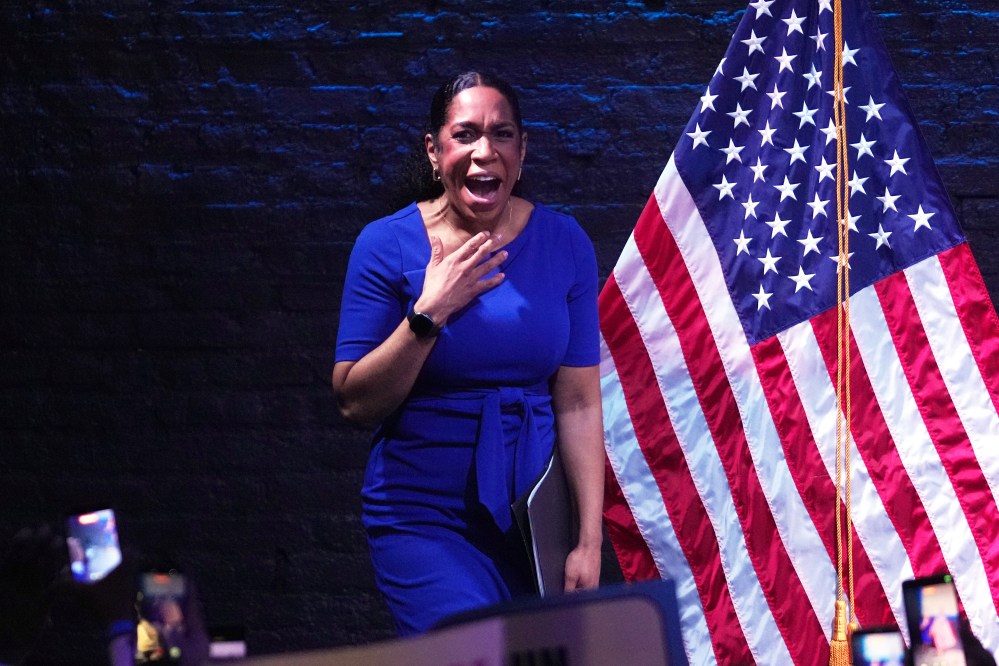
The crypto-backed political action committee Fairshake spent more than $10 million against Illinois Lt. Gov. Juliana Stratton, who ultimately won the Democratic nomination to succeed Sen. Dick Durbin, D-Ill.
Fairshake and Protect Progress, which is also tied to the crypto industry, spent millions more to unsuccessfully support Stratton’s main rivals, U.S. Reps. Raja Krishnamoorthi and Robin Kelly, according to filings with the Federal Election Commission.
In Illinois’ U.S. House primaries, the tech-backed groups’ campaign spending had mixed results.
State Rep. La Shawn Ford, who had supported state legislation regulating the AI and crypto industries, won the Democratic primary to succeed U.S. Rep. Danny Davis. Fairshake spent nearly $2.5 million opposing Ford’s candidacy in a race that featured at least four other political groups spending against the progressive lawmaker or for his opponents.
Meanwhile, Cook County Commissioner Donna Miller prevailed in the Democratic primary to succeed Kelly after Fairshake spent more than $800,000 against state Sen. Robert Peters, another progressive who supported legislation to regulate the crypto industry.
That race also saw the AI-backed spending at loggerheads.
The AI-backed Think Big PAC invested more than $1 million to boost the candidacy of Jesse Jackson Jr., a former congressman who pleaded guilty in a fraud scandal in 2013. But Jobs and Democracy PAC, another AI-backed group, also mounted about $1 million in negative campaign spending against Jackson during the race.
Think Big is a subsidiary of Leading the Future, a political group that is funded by major Silicon Valley executives, including the venture capitalist Marc Andreessen. Andreessen opposes federal regulations for AI and has been a staunch backer of the Republican president’s AI policies.
Jobs and Democracy PAC, by contrast, is funded by the AI company Anthropic, which favors some safety regulations on AI as the technology develops. Both PACs opposed progressive candidates who called for relatively heavy regulations on the technologies and higher taxes on wealthy Americans.
In a bright spot for the AI industry, former congresswoman Melissa Bean won the nomination to reclaim her old seat after a crowded and intense primary. Bean was supported by about $1 million in funding from AI-backed groups.
“She recognizes that the United States must work toward a national regulatory framework on AI that creates jobs, helps us stay ahead of China, and protects the safety of kids, users, and the community,” said Josh Vlasto, a political strategist for Leading the Future, an umbrella organization for AI political groups. “Leading the Future was proud to support her campaign and looks forward to working with leaders who will prioritize innovation over doomerism.”
The late-stage infusions of cash into the Illinois races totaled almost $20 million across races and served as a declaration of both industries’ political ambitions, raising the stakes in primaries that were already hotly contested.
“Corporate money is being used to paint corporate-backed candidates as fearless progressives,” said Adam Green, co-founder of the Progressive Change Campaign Committee, a political group that works to elect anti-corporate progressives.
“The question for the Democratic Party is whether we elect people who actually believe in these positions or will we elect milquetoast candidates who give lip service to these values but don’t back them in actual policy,” Green said.
Campaign finance experts and rank-and-file voters alike are still struggling with what to make of the technology industry’s political influence.
“They’re so new to the game that public opinion isn’t very well formed about them,” said Brian Gaines, a political science professor at the University of Illinois Urbana-Champaign. “You don’t get a clear signal for who is the progressive and who is the moderate on AI and crypto policies.”
“People are wary of the technology,” Gaines said, “but they don’t know what to think yet.”
___
Maya Sweedler contributed to this report.
___
Follow the AP’s coverage of the 2026 elections at https://apnews.com/hub/elections.