Plug-in solar panels can help lower electric bills. Will CT make them legal?
Advertisement
Read this article for free:
or
Already have an account? Log in here »
To continue reading, please subscribe:
Digital Subscription
One year of digital access for only $1.44 a week*
- Enjoy unlimited reading on winnipegfreepress.com
- Read the E-Edition, our digital replica newspaper
- Access News Break, our award-winning app
- Play interactive puzzles
*Billed as $5.77 plus GST every four weeks. After 52 weeks, price increases to the regular rate of $19.95 plus GST every four weeks. Offer available to new and qualified returning subscribers only. Cancel any time.
To continue reading, please subscribe:
Add Free Press access to your Brandon Sun subscription for only an additional
$1 for the first 4 weeks*
- Enjoy unlimited reading on winnipegfreepress.com
- Read the E-Edition, our digital replica newspaper
- Access News Break, our award-winning app
- Play interactive puzzles
*Your next Brandon Sun subscription payment will increase by $1.00 and you will be charged $17.95 plus GST for four weeks. After four weeks, your payment will increase to $24.95 plus GST every four weeks.
Read unlimited articles for free today:
or
Already have an account? Log in here »
Hey there, time traveller!
This article was published 25/03/2026 (211 days ago), so information in it may no longer be current.
Connecticut lawmakers are considering whether to lift restrictions on the installation of portable, plug-in solar panels that have piqued the interest of many utility customers struggling with high electric bills.
While there is no law in Connecticut explicitly prohibiting the use of plug-in panels, also known as balcony solar, the need for interconnection agreements with local utilities and a lack of clear regulations has effectively stifled their widespread adoption, experts say.
That could soon change under language included in House Bill 5340, a more far-reaching solar bill that is working its way through the General Assembly.
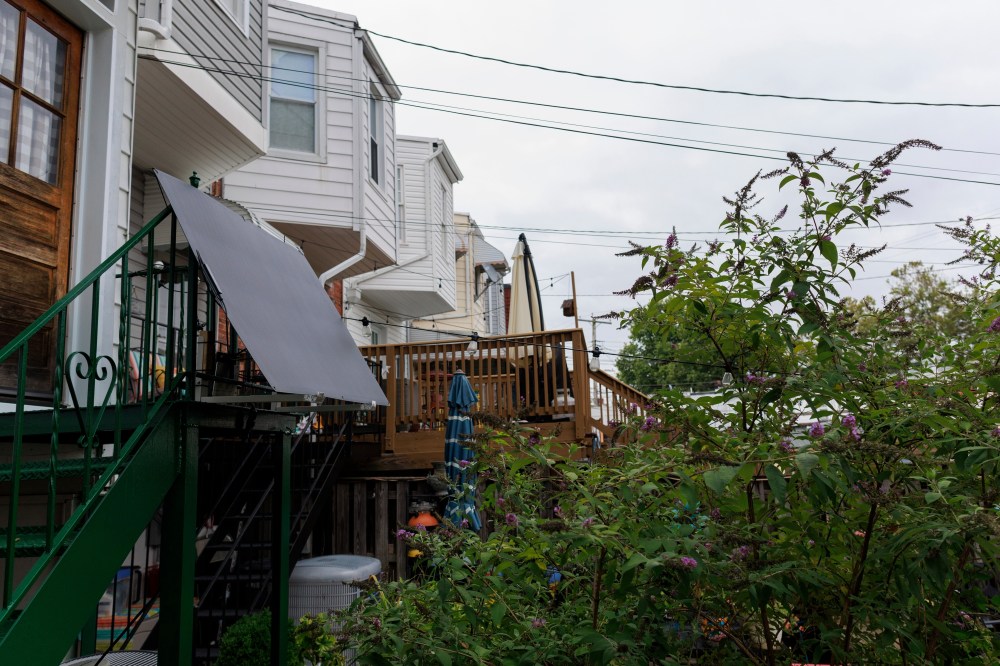
The legislation would allow customers to utilize plug-in solar panels with an output of up to 1,200 watts without the approval of their local electric utility — so long as the devices meet certain safety and consumer protection requirements. Panels of the size allowed under the law would be capable of powering several electronic devices, or a single appliance such as a refrigerator.
While the U.S. has been slow to adopt plug-in solar, the smaller panels are already widely used in other countries, such as Germany, where they can help renters offset a portion of their monthly electric bills.
Last year, Utah became the first state in the country to pass legislation eliminating regulatory hurdles for the installation of plug-in solar panels. Virginia followed suit earlier this year, and more than two dozen states are weighing similar laws, according to an analysis by Canary Media.
“The advantages are for the consumer, for one, you’re able to charge or power some of your biggest (appliances) like a refrigerator,” said Connor Yakaitis, deputy director of the Connecticut League of Conservation Voters and a supporter of the bill.
“I think it ties in very well to energy efficiency,” he added. “If people are aware of even a little amount of power that they’re producing, they’re more conscious of the power that they’re using.”
H.B. 5340 was passed out of the legislature’s Energy and Technology Committee last week on a party-line vote. Republicans’ stated objections to the bill, however, dealt mostly with other sections that were unrelated to the legality of plug-in solar devices.
“I’m intrigued by the plug-in solar,” said state Rep. John Piscopo, R-Thomaston. “If that were a standalone bill, we could take a look at that and the ramifications around that and how we could maybe take our first steps to implement that kind of a system.”
Despite the bipartisan interest in the legislation, concerns have been raised about the safety of the devices and their ability to work within existing electrical setups.
In written testimony on the bill earlier this month, Andrew Belden, Eversource’s vice president of renewable programs and strategy, said that anti-tampering features on most of the utility’s meters wouldn’t recognize any excess electricity unregistered panels might feed back onto the grid, resulting in customers being charged for the extra power they produce.
While homes with rooftop solar panels are typically equipped with bidirectional meters that can overcome that problem, the company’s rollout of newer “advanced” meter technology has faced delays amid regulatory disputes. An Eversource spokesperson said Monday that the utility is not aware of any customers who have sought permission to use plug-in solar devices.
United Illuminating did not weigh in on the plug-in solar provisions of H.B. 5340, and a spokesperson for the company did not respond to a request for comment in time for publication.
In order to address safety concerns, the Connecticut bill would require that any plug-in solar devices conform to the state’s building code and undergo testing and certification by a national product safety group, such as UL Solutions. While the company announced in January that it had begun a certification process for plug-in solar, it has yet to approve any systems for the U.S. market.
Still, plug-in panels are currently available for sale online for prices ranging from a few hundred to several thousand dollars. Much of the buzz around the technology has centered on a California nonprofit, Bright Saver, which began shipping a limited number of small solar systems to customers last year. The organization has also advocated on behalf of legislation lifting restrictions on plug-in solar, including in Connecticut.
Cora Stryker, cofounder of Bright Saver, said the organization halted its initial pilot after getting pushback from utility officials, and it currently only ships to existing solar customers in California who she said exist outside the devices’ “regulatory gray area.”
Still, Skryker said Bright Saver plans to resume shipping its smaller kits to customers in states that have authorized their use.
“We are just trying to knock down the barriers, because we know people want this stuff and we want them to be safe and installing certified systems,” she said.
The co-chair of the legislature’s Energy and Technology Committee, state Rep. Jonathan Steinberg, D-Westport, said that the sudden interest in plug-in solar has left lawmakers scrambling to get up to speed on the technology and the implications for consumers.
“There’s a general consensus that this is becoming popular, but we’re not all convinced the safety standards are being met,” he said.

Both the state Department of Energy and Environmental Protection and the state’s Office of Consumer Counsel, which advocates on behalf of utility customers, have also called for further analysis before lawmakers open the door to plug-in solar. Steinberg said officials at each agency, along with the Public Utilities Regulatory Authority, met with lawmakers on Tuesday to discuss the legislation.
As a potential fallback, Steinberg said lawmakers could always approve a legislative study on the topic, in effect delaying passage of a new law for at least a year. For now, however, he said there is still hope of working out the details before this year’s session adjourns in early May.
“We want to be able to do this, we really do,” Steinberg said. “But we’re not sure we’re there yet.”
___
This story was originally published by The Connecticut Mirror and distributed through a partnership with The Associated Press.