Baltimore’s Samuel Basallo makes MLB’s first game-ending robo-ump challenge
Advertisement
Read this article for free:
or
Already have an account? Log in here »
To continue reading, please subscribe:

Digital Subscription
One year of digital access for only $205*
- Enjoy unlimited reading on winnipegfreepress.com
- Read the E-Edition, our digital replica newspaper
- Access News Break, our award-winning app
- Play interactive puzzles
*First annual payment billed as $205.00 + GST for one year. This annual subscription will automatically renew at $233.00 + GST every 52 weeks (10% off the regular annual price of $259.35). Offer available to new and qualified returning subscribers only. Cancel any time.
To continue reading, please subscribe:
Add Free Press access to your Brandon Sun subscription for only an additional
$1 for the first 4 weeks*
- Enjoy unlimited reading on winnipegfreepress.com
- Read the E-Edition, our digital replica newspaper
- Access News Break, our award-winning app
- Play interactive puzzles
*Your next Brandon Sun subscription payment will increase by $1.00 and you will be charged $17.95 plus GST for four weeks. After four weeks, your payment will increase to $24.95 plus GST every four weeks.
Read unlimited articles for free today:
or
Already have an account? Log in here »
BALTIMORE (AP) — Samuel Basallo made a little history when the Baltimore catcher became the first major leaguer to end a game with a successful challenge via the Automated Ball-Strike System.
No word on whether he got to keep the ball.
Albert Suárez was on the mound for the Orioles in the top of the ninth inning against Texas when his 1-2 pitch to Evan Carter with two outs was called a ball by plate umpire Manny Gonzalez. Basallo challenged, the replay showed most of the ball catching the upper outside corner of the strike zone, and Baltimore’s 8-3 win was in the books.
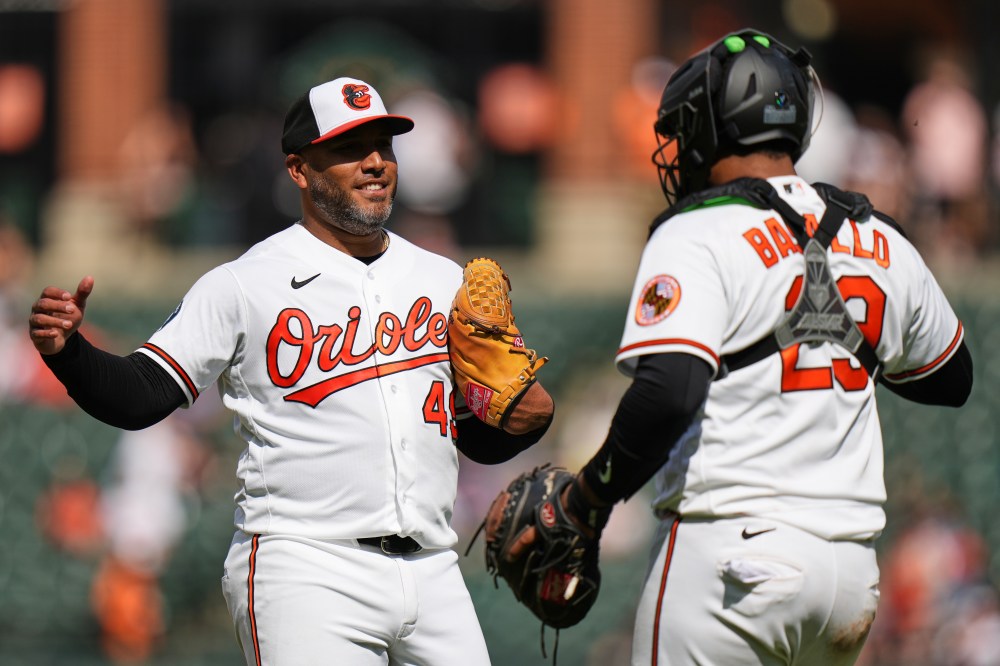
“I think we had two (challenges left) at that point,” the 21-year-old Basallo said through a translator. “I thought why not use it? Better to use it and see what happens instead of holding onto it.”
Basallo, who also hit a 437-foot homer Wednesday, used a little body English while the replay was in progress, then headed toward the mound for a hug with Suárez, who pitched three innings for his first save since 2017.
“I wasn’t thinking it was a strike, and then when he challenged I was like, ‘OK, let’s see,’” Suárez said. “Good thing we got it.”
This is the first season this technology is being used in regular-season big league games.
The Orioles used a challenge in a crucial ninth-inning spot Sunday, turning a full-count walk into a strikeout as they held off Minnesota 8-6. Twins manager Derek Shelton was ejected after that one — he thought the challenge signal didn’t come fast enough.
Suárez was called back to the majors after Zach Eflin had to leave Tuesday’s start with elbow discomfort. After an early flight Wednesday, he was able to give the rest of the bullpen a rest.
The 36-year-old Suárez was asked his view on the ABS in general.
“I think I like it more after what happened today,” Suárez said.
___
AP MLB: https://apnews.com/mlb
Related Articles
Konnor Griffin called up by Pirates, first MLB teenage position player since Juan Soto









Advertisement Advertise With Us