ChatGPT maker OpenAI shifts its focus to business users amid Anthropic pressure
Advertisement
Read this article for free:
or
Already have an account? Log in here »
To continue reading, please subscribe:

Digital Subscription
One year of digital access for only $205*
- Enjoy unlimited reading on winnipegfreepress.com
- Read the E-Edition, our digital replica newspaper
- Access News Break, our award-winning app
- Play interactive puzzles
*First annual payment billed as $205.00 + GST for one year. This annual subscription will automatically renew at $233.00 + GST every 52 weeks (10% off the regular annual price of $259.35). Offer available to new and qualified returning subscribers only. Cancel any time.
To continue reading, please subscribe:
Add Free Press access to your Brandon Sun subscription for only an additional
$1 for the first 4 weeks*
- Enjoy unlimited reading on winnipegfreepress.com
- Read the E-Edition, our digital replica newspaper
- Access News Break, our award-winning app
- Play interactive puzzles
*Your next Brandon Sun subscription payment will increase by $1.00 and you will be charged $17.95 plus GST for four weeks. After four weeks, your payment will increase to $24.95 plus GST every four weeks.
Read unlimited articles for free today:
or
Already have an account? Log in here »
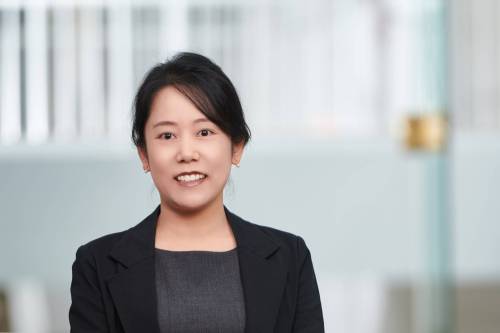
The same ChatGPT chatbot that gave OpenAI’s chief financial officer Sarah Friar a tilapia recipe for a recent Sunday night dinner at home is also now doing her most mundane tasks at work like summarizing her emails and Slack messages.
Friar and other company executives are banking OpenAI’s future on more of the latter as it shifts its focus to business-oriented products while shedding some of its consumer offerings as a pathway to profitability.
OpenAI says it will introduce a new artificial intelligence model for “high-value professional work” as the company faces heightened competition with rival Anthropic in attracting corporate customers to adopt AI assistants in their workplaces.
“You’ll see a new model coming from us in short order. We feel very excited about it,” Friar said in an interview with The Associated Press.
OpenAI boasts of more than 900 million weekly users of its core ChatGPT product, and Friar said about 95% of them “don’t pay anything” for the popular chatbot. But while all those interactions build habits and reliance, they also strain the costly computing resources needed to power the company’s AI systems and highlight the need for big business customers to help pay the bills.
OpenAI, valued at $852 billion, and Anthropic, valued at $380 billion, both lose more money than they make, putting the privately-owned San Francisco-based AI research laboratories in a fierce competition to generate more revenue as they race toward becoming publicly traded on Wall Street.
A push to improve performance and sales of OpenAI’s business-oriented products — already Anthropic’s bread and butter — has driven OpenAI to abandon some consumer initiatives, like the AI video generator app Sora.
“I think it was a little heartbreaking, but we’re like, OK, it’s not the main event right now,” Friar said. “We need to make sure that our new model that’s coming has enough compute.”
Codenamed Spud, OpenAI says its “smartest model yet” offers “stronger reasoning, better understanding of intent and dependencies, better follow-through and more reliable output in production.” It will be part of OpenAI’s answer to Anthropic’s new Claude Mythos, which Anthropic claims is so “strikingly capable” that it is limiting its use to select customers because of its apparent ability to surpass human cybersecurity experts in finding or exploiting computer vulnerabilities.
While most people can’t use Mythos, Anthropic also on Thursday released Opus 4.7, describing it as its most powerful “generally available” model. OpenAI hours later introduced its own new specialized model called GPT-Rosalind, named after scientist Rosalind Franklin, that’s designed to advance drug discovery and other life sciences research.
Friar, the former CEO of neighborhood social platform Nextdoor, said business customers accounted for about 20% of OpenAI’s revenue when she was hired in 2024 as chief financial officer. She said it’s now 40% and expected to account for half of OpenAI’s sales by the end of the year.
It’s a sharp turnaround from late last year, when OpenAI co-founder and CEO Sam Altman was promoting a now-shuttered Sora partnership with Disney, launching a plan to sell ads on ChatGPT and floating the idea of letting ChatGPT engage in erotica with paid adult users.
Altman said on the “Mostly Human” podcast earlier this month that a sharper focus was needed — and Friar agrees.
“Tech companies, when they’re growing, it’s just this natural thing that happens. There’s so many cool things you could do,” she said, adding that companies can end up doing “really badly” if they do too many things, while “great companies are very good at, in a reasonable period of time, kind of doing that winnowing down and refocusing and it’s super painful.”
Signaling that shift was the hiring three months ago of Slack CEO Denise Dresser to be OpenAI’s first chief revenue officer.
Dresser said in a recent AP interview that she has been laser-focused on meeting with corporate leaders and positioning OpenAI as the go-to platform for workplaces employing AI agents to automate a variety of computer-based job tasks.
“It’s really clear to me that companies are past the experimentation phase and they’re into using AI to do real work,” Dresser said. “Leaders at companies are recognizing that AI is probably the most consequential shift of their lifetime.”
But those leaders also have a choice, namely Anthropic’s Claude that has become widely used by software professionals. Founded in 2021 by a group of ex-OpenAI leaders who said they wanted to prioritize AI safety, Anthropic has positioned itself as the more responsible AI vendor. The distinction drew attention when President Donald Trump’s administration punished the startup after a contract dispute over AI use in the military, and Altman used the opportunity to cement OpenAI’s own deal with the Pentagon.
Consumer interest in Anthropic surged and the company said its annualized revenues hit $30 billion, a higher number than what OpenAI has reported, though they measure it differently. Friar and Dresser declined to reveal OpenAI’s latest sales but both have suggested that Anthropic’s number is inflated because it doesn’t account for revenue it must share with cloud computing providers Amazon and Google.
Even so, it remains a tight competition that’s also tied to the health of the stock market and the future of the economy.
“They’re likely quite close,” said Luke Emberson, a researcher at nonprofit institute Epoch AI. “Certainly the trends show Anthropic is growing much faster than OpenAI. If that continues, they’re likely to cross soon.”
The urgency led Dresser to send a memo to OpenAI employees on Sunday, first reported by The Verge, that asserted that Anthropic’s coding focus “gave them an early wedge” but expressing confidence that OpenAI has the “real structural advantage” as AI usage expands beyond software developers and OpenAI builds enough computing capacity to operate its AI systems.

“Their story is built on fear, restriction, and the idea that a small group of elites should control AI,” Dresser’s memo said of Anthropic. “Our positive message will win over time: build powerful systems, put in the right safeguards, expand access, and help people do more.”
But for skeptics of the financial viability of the AI industry, the trajectory of both money-losing companies is alarming as smaller startups increasingly become dependent on their AI tools. Anthropic has imposed rate limits on heavy users, forcing some to wait for hours to use Claude, and both companies have set up service tiers that reward premium payers, said author and AI critic Ed Zitron.
“It’s what I call the subprime AI crisis,” Zitron said. “People built their lives and they built their businesses on top of these companies that, as they try and save money, will start turning the screws.”
One thing that both AI leaders and critics agree on is that it is an expensive technology, though whether it is worth the cost in electricity-hungry AI computers remains to be seen.
“People will say, well, ‘Once they go public, they’re safe.’ That’s not true,” Zitron said. “Public companies can and will die, especially ones that are dependent on $100 billion to $200 billion every year or so, just to keep breathing.”

Advertisement Advertise With Us
Advertisement Advertise With Us