In a B.C. industrial zone, a new link forged in Canada’s crucial lithium supply chain
Advertisement
Read this article for free:
or
Already have an account? Log in here »
To continue reading, please subscribe:

Digital Subscription
One year of digital access for only $205*
- Enjoy unlimited reading on winnipegfreepress.com
- Read the E-Edition, our digital replica newspaper
- Access News Break, our award-winning app
- Play interactive puzzles
*First annual payment billed as $205.00 + GST for one year. This annual subscription will automatically renew at $233.00 + GST every 52 weeks (10% off the regular annual price of $259.35). Offer available to new and qualified returning subscribers only. Cancel any time.
To continue reading, please subscribe:
Add Free Press access to your Brandon Sun subscription for only an additional
$1 for the first 4 weeks*
- Enjoy unlimited reading on winnipegfreepress.com
- Read the E-Edition, our digital replica newspaper
- Access News Break, our award-winning app
- Play interactive puzzles
*Your next Brandon Sun subscription payment will increase by $1.00 and you will be charged $17.95 plus GST for four weeks. After four weeks, your payment will increase to $24.95 plus GST every four weeks.
Read unlimited articles for free today:
or
Already have an account? Log in here »
DELTA –
Nestled in a series of unassuming industrial buildings in Delta, B.C., among companies specializing in plumbing supplies, ladders and fitness equipment, sits North America’s first electrochemical lithium refining facility.
It’s an unlikely location for Canada to challenge China’s hegemonic control of the refining of lithium, a critical mineral whose supply chains have emerged as a key concern from the White House to Ottawa and beyond.
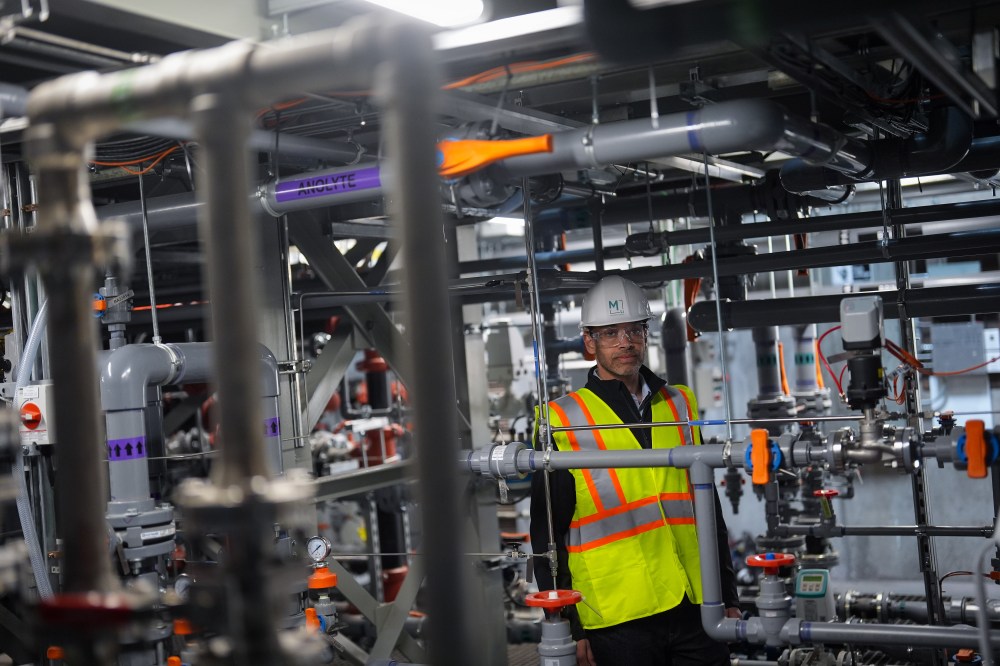
Mangrove Lithium CEO and founder Saad Dara joked that the facility is like a “clown building,” as he conducted a private tour.
“It just keeps going,” he said over the noise of machinery, as he pointed to areas of the facility, including the company’s research and development lab.
The company held an official ribbon-cutting ceremony Thursday, but Dara said it had been a “long journey” to get to this point. He said the idea began as a “one-man operation” and his own thesis project in 2013, which he spun into a company in 2018 and has been working to “commercialize the technology ever since.”
There are now about 75 employees at the facility, Dara said.
“We’ve been working on the design and construction of this first-of-a-kind plant where we’ve taken the work that we’ve done from our piloting operations and converted those into a fully operational facility,” Dara said.
“We anticipate production of first natural-grade materials over the summer and into the fall, and really getting to a point where the technology is fully commercialized.”
It comes as countries look to secure supply chains amid rising trade tensions, and growing demand for key metals like copper, nickel and lithium, needed for priorities like electrification and defence.
The federal government has designated lithium as a critical mineral because of its importance in battery production and the renewable energy transition. Canada has two mines in Manitoba and Quebec.
But, Dara said, about 75 per cent of the world’s lithium is mined in South America and Australia, and about 75 per cent of it is refined in China — including most of the lithium extracted in Canada.
“The lithium market is six segments. There’s mining, refining, active materials, battery assembly, EV assembly, and then recycling,” he said, noting China has “all six segments.”
China began investing about 15 years ago, he said, which is why it is so far ahead.
While Canada produces lithium, it does not have EV assembly, active materials or recycling, Dara said.
“We’re trying to do that but it will take some time,” he said.
But he said, with their refinery coming online, Canada is “starting to develop a lithium supply chain that has been missing.”
Geoff McCarney, associate professor of environment and development in the school of international development and global studies at the University of Ottawa, agreed.
He said one of the “core challenges” in critical mineral production needed for energy transition, including lithium, is that “China tends to control the market.”
“They produce a lot, but more than on the production side, they really control the refining capacity,” he said.
“So, you have a real challenge of supply bottlenecks if China ever decided to restrict supply, which we saw them threaten to do last fall in response to Trump tariffs where they threatened to bring in export controls in October, including lithium products, EV batteries things like that.”
McCarney, who is also the executive director of research at the Smart Prosperity Institute, said China ultimately backed off, but it shows how global unrest poses a “real concern” for the lithium that is currently being produced in Eastern Canada.
“It has to be refined, exported effectively to China or somebody else who refined and then brought back domestically, so we have a real constraint even if we are able to increase our mining of lithium ourselves,” he said.
McCarney said, in that context, the opening of the plant is a “big deal” because it increases Canada’s resiliency.
“It’s a first drop in the bucket but it’s important in that regard to demonstrate we do have technologies, we are making the investments (and) we can start to bring this kind of thing online in Canada to secure our own transition.”
The largest global use of lithium, accounting for 87 per cent of total demand, is the manufacturing of rechargeable batteries for electronics, electric vehicles and grid storage, a federal government website says.
Mangrove’s Delta facility, Dara said, has the capacity to produce enough battery-grade lithium for about 25,000 electric vehicles per year.
It uses the company’s proprietary electrochemical refining technology to convert extracted lithium into battery-grade material.
Dara explained it is a more sustainable way of refining lithium, compared with traditional practices done in places like China which he said were “chemical invasive.”
“For every tonne of material, they can often produce two-and-a-half tonnes of waste byproduct,” he said in an interview Wednesday.
Electrochemistry, he said, “uses electricity to do the same things that chemicals would do, and this allows us to eliminate the chemicals, and it allows us eliminate the wastes, and essentially it creates a cost-competitive solution that is also very sustainable.”
He said the company’s goal is not only to create a new standard in lithium processing and refining, but to develop a supply chain option outside of China that is cost-competitive.
B.C.’s jobs and economic growth ministry said in a statement that the new facility “puts B.C. at the forefront of clean technology, while helping reduce reliance on foreign refining.”
The province provided $3 million in support to Mangrove Lithium.
Associate Minister of National Defence Jill McKnight said in a news release that the opening “marks a turning point for Canada’s critical minerals value chain.”
“This project strengthens our energy security, supports good Canadian jobs, and advances a made-in-Canada battery supply chain that will power the clean economy and deliver lasting benefits for Canadians.”
Mangrove has also announced plans for a facility in Eastern Canada that would expand the country’s lithium supply.

That facility, it said, would be able to supply 500,000 electric vehicle annually.
McCarney said the Canadian plants will curb the country’s vulnerability to market volatility, but they also highlights concern about where Canada will source the lithium.
“That raises a lot of questions about new mining approvals, sourcing of new mines — are we doing that properly, working with Indigenous rights and title, all those sorts of things. That’s not what this plant’s doing but they’ll need a raw source from somewhere,” he said.
He noted there’s likely some capacity to restart previously existing mines, but said it usually takes about 10 to 18 years to open new mines.
This report by The Canadian Press was first published April 16, 2026.