A crowd scientist is helping the Boston Marathon manage a growing field of 30,000-plus runners
Advertisement
Read this article for free:
or
Already have an account? Log in here »
To continue reading, please subscribe:

Digital Subscription
One year of digital access for only $205*
- Enjoy unlimited reading on winnipegfreepress.com
- Read the E-Edition, our digital replica newspaper
- Access News Break, our award-winning app
- Play interactive puzzles
*First annual payment billed as $205.00 + GST for one year. This annual subscription will automatically renew at $233.00 + GST every 52 weeks (10% off the regular annual price of $259.35). Offer available to new and qualified returning subscribers only. Cancel any time.
To continue reading, please subscribe:
Add Free Press access to your Brandon Sun subscription for only an additional
$1 for the first 4 weeks*
- Enjoy unlimited reading on winnipegfreepress.com
- Read the E-Edition, our digital replica newspaper
- Access News Break, our award-winning app
- Play interactive puzzles
*Your next Brandon Sun subscription payment will increase by $1.00 and you will be charged $17.95 plus GST for four weeks. After four weeks, your payment will increase to $24.95 plus GST every four weeks.
Read unlimited articles for free today:
or
Already have an account? Log in here »
BOSTON (AP) — Running the Boston Marathon is tough enough without having to jostle your way from Hopkinton to Copley Square.
So race organizers this year turned to an expert in crowd science to help them manage the field of more than 32,000 as it travels the 26.2 miles (42.195 kilometers) through eight Massachusetts cities and towns — some of it on narrow streets laid out during Colonial times.
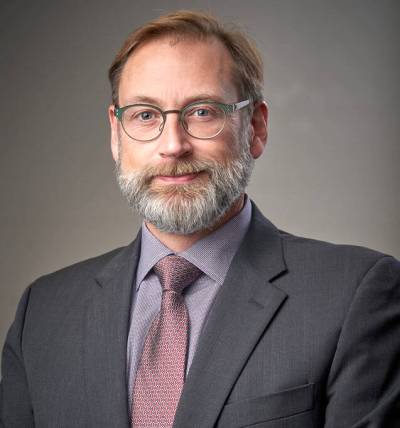
“There are certain things that we can’t change — that we don’t want to change — because they make the Boston Marathon,” said Marcel Altenburg, a senior lecturer of crowd science at Manchester Metropolitan University in Britain. “Like, I’m a scientist, but I can’t be too science-y about the race. It should stay what it is because that’s what I love. That’s what the runners love.”

The world’s oldest and most prestigious annual marathon, the Boston race was inspired by the endurance test that made its debut at the inaugural modern Olympics in 1896 — itself a tribute to the route covered by the messenger Pheidippides, who ran to Athens with news of the Greek victory over the Persians in Marathon.
After sharing the news — “Rejoice, we conquer!” — Pheidippides dropped dead.
Organizers of the Boston race would prefer a more pleasant experience for their runners, even as the field has ballooned from 15 in 1897 to as many as 38,000 to meet demand for the 100th edition in 1996. It has settled at around 30,000 since 2015.
As the race grew, it tested the limits of the narrow New England roads and the host cities and towns, which are eager to reopen their streets for regular commutes and commerce as quickly as possible.
“It would be kind of great someday to be able to grow the race a little bit more,” race director Dave McGillivray said. “The problem with this race is that it’s about two things: time and space. We don’t have either. … So, we’re trying to be innovative.”
That’s where Altenburg comes in.
A former German army captain who runs ultra marathons himself, Altenburg has worked with all of the major races, other large sporting events, and airports and exhibitions that tend to attract large crowds on ways to keep things safe and flowing smoothly.
For the Boston Marathon, which draws hundreds of thousands of spectators in addition to the runners, his models allow him to run simulations that help him see how the race might play out under different conditions.
“We have simulated the Boston Marathon more than 100 times to run it once for real. That is the one that counts,” Altenburg said in a telephone interview. “They gave me, pretty much, all creative freedom to simulate more waves, simulate more runners and — within the existing time window — they allowed me to change pretty much anything for the betterment of the running experience.
“And then we checked every aid station, every mile, the finish, every important point, (asking): Is the result better for the runner? Is that something that we should explore further?”
The most noticeable difference on Monday will be that the runners are starting in six waves — groups organized by qualifying time — instead of four. The waves, which were first used in Boston in 2011, help spread things out so that runners don’t have to walk after the start, when Main Street in Hopkinton squeezes to just 39 feet wide.
Other, less obvious changes involve the unloading of the buses at the start, the placement of the water and aid stations, and the finish line chutes, where runners get their medals, perhaps a mylar blanket or a banana, and any medical treatment they might need.
“For an event that’s as old as ours, 130 years, it allowed us to be a startup all over again,” said Lauren Proshan, the chief of race operations and production for the Boston Athletic Association.
“The change isn’t meant to be earth-shattering. It’s to be a smooth experience from start to finish,” she said. “It’s one of those things that you work really, really hard behind the scenes and hope that no one notices — a behind-the-curtain change that makes you feel as if you’re just floating and having a great day.”
Shorter porta potty lines would also be nice.
“What I loved about working with the BAA was how aware they are of what the Boston Marathon is. And they won’t change anything lightly,” Altenburg said. “So it was very detailed work from literally the moment the race last year ended to now. That we check every single option. That we really make sure that if we change something about this historic race, then we know what we’re doing.”
The BAA will look at the feedback over the next three years before deciding about expansion or other changes.
“Fingers crossed, hope for the best, but we’ll get feedback from the participants,” McGillivray said. “And they’ll let us know whether or not it worked or not.”
But keeping the course open longer isn’t an option. And the route isn’t going to change. So there’s only so much that crowd science can help with at one of the toughest tests in sports.

“I can talk. I’m a scientist. I just press a button and it’s going to be,” Altenburg said. “But the runners still have to do it.”
___
AP sports: https://apnews.com/hub/sports
___
This story has been corrected to show there were previously four waves, not three.