

The Supreme Court seems likely to shut down a lawsuit by Falun Gong over Cisco’s aid to China
Advertisement
Read this article for free:
or
Already have an account? Log in here »
To continue reading, please subscribe:
Digital Subscription
One year of digital access for only $1.44 a week*
- Enjoy unlimited reading on winnipegfreepress.com
- Read the E-Edition, our digital replica newspaper
- Access News Break, our award-winning app
- Play interactive puzzles
*Billed as $5.77 plus GST every four weeks. After 52 weeks, price increases to the regular rate of $19.95 plus GST every four weeks. Offer available to new and qualified returning subscribers only. Cancel any time.
To continue reading, please subscribe:
Add Free Press access to your Brandon Sun subscription for only an additional
$1 for the first 4 weeks*
- Enjoy unlimited reading on winnipegfreepress.com
- Read the E-Edition, our digital replica newspaper
- Access News Break, our award-winning app
- Play interactive puzzles
*Your next Brandon Sun subscription payment will increase by $1.00 and you will be charged $17.95 plus GST for four weeks. After four weeks, your payment will increase to $24.95 plus GST every four weeks.
Read unlimited articles for free today:
or
Already have an account? Log in here »
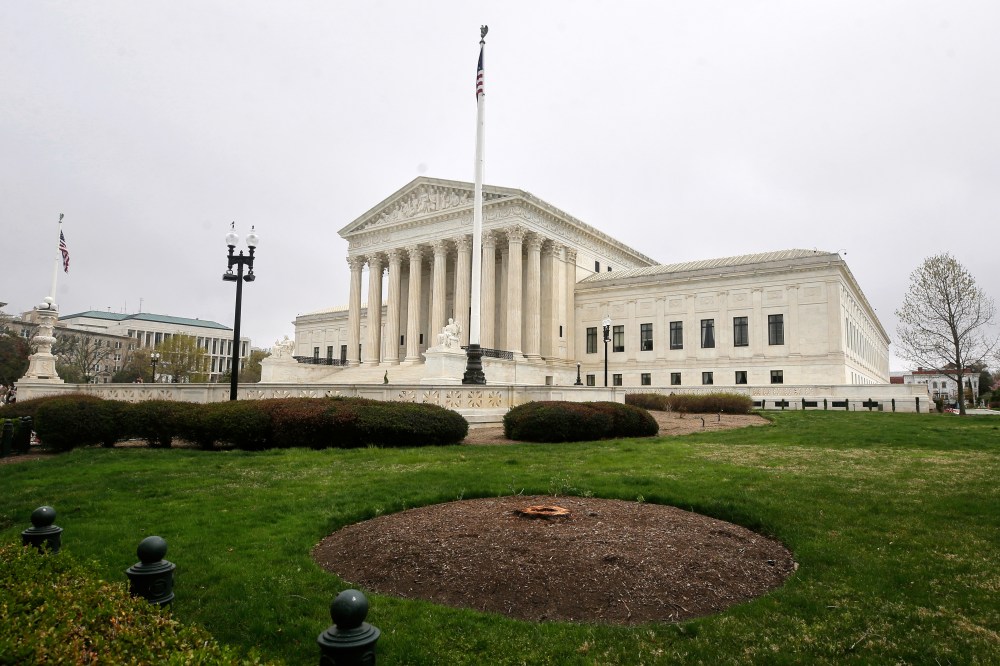
WASHINGTON (AP) — The Supreme Court on Tuesday seemed likely to grant tech giant Cisco’s bid to shut down a lawsuit claiming that the company’s technology was used to persecute members of the Falun Gong spiritual movement in China.
The justices are reviewing an appellate ruling that would allow the lawsuit against Cisco to go forward in U.S. courts.
The company argues that it cannot be held liable under two separate laws for aiding and abetting human rights violations. The laws are the 18th-century Alien Tort Statute (ATS) and the Torture Victim Protection Act (TVPA), first enacted in 1991.
The main questions among the court’s conservative majority seemed to be how broadly to rule for Cisco and whether lower courts are allowing too many similar suits to proceed. Justice Neil Gorsuch at one point asked whether the courthouse door is “not closely guarded.”
In recent years, the Supreme Court and presidential administrations of both parties have been skeptical of lawsuits seeking to use U.S. courts as a venue to seek justice over the acts of foreign governments, especially those that took place abroad. To try to overcome that skepticism, Falun Gong members have argued that a substantial portion of Cisco’s activities involving China took place in the United States.
An Associated Press investigation last year showed that American tech companies, to a large degree, designed and built China’s surveillance state, encouraged by Republican and Democratic administrations, even as activists warned such tools were being used to quash dissent, persecute religious groups and target minorities.
In 2008, documents leaked to the press showed Cisco saw the “Golden Shield,” China’s internet censorship effort, as a sales opportunity. The company quoted a Chinese official calling the Falun Gong an “evil cult.” A Cisco presentation reviewed by AP from the same year said its products could identify over 90% of Falun Gong material on the web.
Other presentations reviewed by AP show that Cisco represented Falun Gong material as a “threat” and built out a national information system to track Falun Gong believers. In 2011, Falun Gong members sued Cisco, alleging the company tailored technology for Beijing that it knew would be used to track, detain and torture believers.
Justices Sonia Sotomayor and Ketanji Brown Jackson seemed most willing to allow the lawsuit to continue.
Cisco was a willing partner with the Chinese government, Sotomayor said. “It knew that those people will be tortured,” she said.
Not true, said Cisco lawyer Kannon Shanmugam. “Cisco vigorously disputes those allegations,” Shanmugam told the justices.
A decision is expected late June.