Canadian company’s winning innovation a giant leap for drinking water on the moon
Advertisement
Read this article for free:
or
Already have an account? Log in here »
To continue reading, please subscribe:

Digital Subscription
One year of digital access for only $205*
- Enjoy unlimited reading on winnipegfreepress.com
- Read the E-Edition, our digital replica newspaper
- Access News Break, our award-winning app
- Play interactive puzzles
*First annual payment billed as $205.00 + GST for one year. This annual subscription will automatically renew at $233.00 + GST every 52 weeks (10% off the regular annual price of $259.35). Offer available to new and qualified returning subscribers only. Cancel any time.
To continue reading, please subscribe:
Add Free Press access to your Brandon Sun subscription for only an additional
$1 for the first 4 weeks*
- Enjoy unlimited reading on winnipegfreepress.com
- Read the E-Edition, our digital replica newspaper
- Access News Break, our award-winning app
- Play interactive puzzles
*Your next Brandon Sun subscription payment will increase by $1.00 and you will be charged $17.95 plus GST for four weeks. After four weeks, your payment will increase to $24.95 plus GST every four weeks.
Read unlimited articles for free today:
or
Already have an account? Log in here »
MONTREAL – On the moon, access to drinking water could mean the difference between short visits and a permanent human presence, and a Canadian company’s award-winning invention has made colonizing Earth’s natural satellite more within reach.
“There’s no shortage of challenges to purifying water in space,” Daniel Sax, CEO of Canadian Strategic Missions Corporation, said in a recent interview. ”We were able to develop a system designed to operate in the moon’s extreme conditions.”
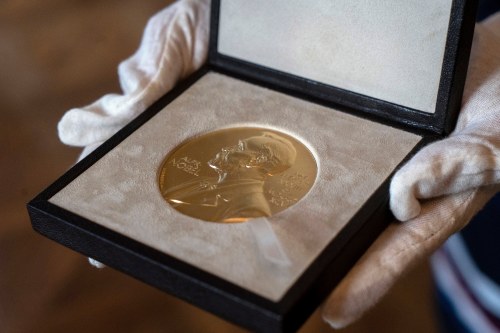
His company’s invention — called LunaPure — won a competition in April run by the Canadian Space Agency, which had invited companies across the country to design technologies capable of extracting and purifying water on the moon.
Every kilogram sent into space carries extraordinary cost, and the stakes are high: a viable solution for accessible drinking water could drastically cut the need for resupply missions — and help turn the idea of long-term lunar living into reality.
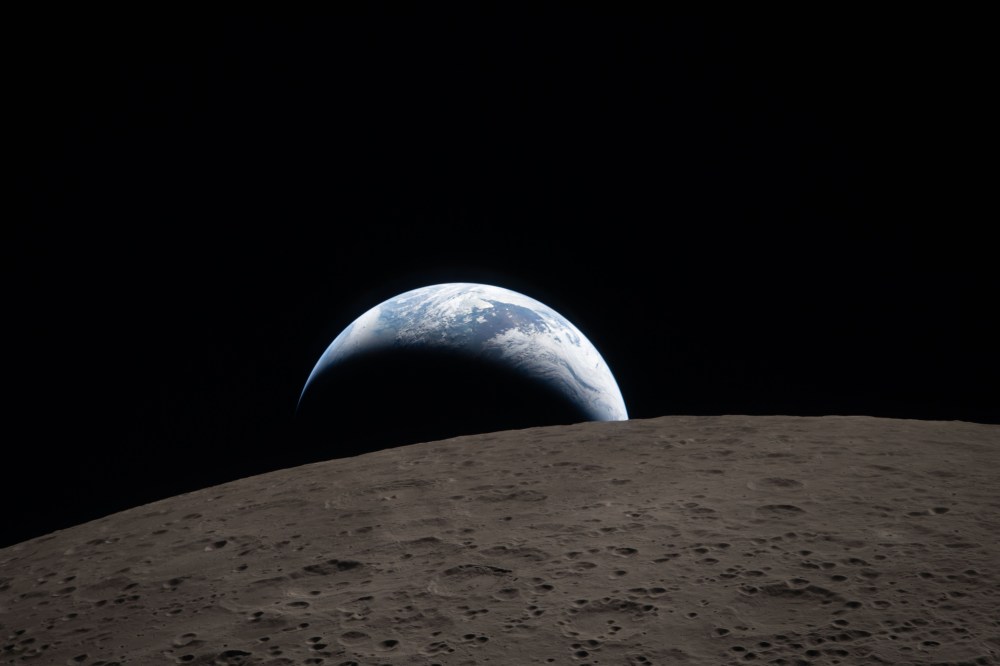
And the real-world application for LunaPure is becoming increasingly realistic. NASA’s Artemis program, developed in partnership with Canada’s space agency, aims to land a crew on the moon’s surface in 2028 and to eventually start construction of a lunar base that could support astronauts for weeks or even months at a time. The Artemis II mission saw four crew — including Canadian Jeremy Hansen — return to Earth April 10 after a 10-day trip around the moon.
The goal of the Canadian Space Agency’s Aqualunar Challenge was to identify a technology that was technically feasible, innovative and had long-term potential for future moon missions. Jury member, Marc Guilbert, who holds a PhD in theoretical physics and now works as an entrepreneur, said Sax’s proposal could realistically be adapted and be commercialized in the near future.
“We evaluated around 45 submissions,” Guilbert said in a recent interview. “Even in something as extreme as water extraction on the moon, there were multiple fundamentally different ways to tackle the problem.”
The winning proposal — Sax describes his prototype as no larger than a “box of books” — earned the competition’s grand prize of $400,000. It works by using heat from solar energy to melt ice and trigger a chemical process that removes contaminants, producing clean water.
Dr. Tara Hayden, a lunar geoscientist at Western University who worked with the Canadian Space Agency through the Artemis II and Artemis III programs, says technologies like LunaPure could also be used for producing rocket fuel.
Moving from ice to rocket fuel ”works by extracting hydrogen and oxygen from water through electrolysis,” said Hayden, who is a post-doctoral associate at Western’s department of earth sciences. Electrolysis is a process that uses electricity to ”split” water; the gases can then be compressed into liquid form and used as rocket propellant, she explained.
But accessing water on the moon is far from being straightforward — water is so scarce its presence is counted in parts per million. “It is not like Earth, you cannot assume easy access to water.”
Scientific understanding of lunar water has shifted significantly in recent years. With samples taken during Apollo moon missions, “we thought the moon was bone dry,” said Hayden. But Hayden says her research shows that water is ”present in multiple reservoirs — we now believe there is around 600 billion kilograms of water in the form of ice (on the moon).”
Hayden says current missions are focused on ice trapped in permanently shadowed regions — deep craters where sunlight never reaches. These areas, among the coldest on the moon, have acted as “cold traps” over billions of years, allowing water to accumulate and remain frozen.
Upcoming Artemis missions aim to locate these deposits remotely, then eventually to collect samples from them. “We don’t know exactly where the ice is,” Hayden said.
Even once located, extracting lunar ice presents major engineering challenges. That complexity, said Sax, is exactly what technologies like the Aqualunar-winning system aim to address. He said the technology was designed under strict constraints, including limits on mass, power, and self-sufficiency — all critical considerations for space missions.
“Everything in space is mass and power limited,” he said. “It costs millions (of dollars) per kilogram to launch materials, so the system has to be extremely efficient.”
Purification adds another layer of difficulty. “You are dealing with contaminants and highly variable composition,” Sax said. While the LunaPure system has achieved high levels of purification in testing, he added that it would still need further refinement before being used for human consumption or fuel production.

“We’re getting significantly closer,” Hayden said. “Now, we just need to test (the technologies) specifically in the lunar environment to see if it would be sustainable for helping our long-term cohabitation there.” Trials are expected to unfold over the next few years.
Deploying such technology on the moon will likely require international collaboration, said Sax.
”If we are lucky and play our cards right, our technology could be part of future lunar missions,” he said, adding the system could one day become “one of the processes … humans are using to purify water on the moon for the next 100 years.”
Beyond enabling human life on the moon, Hayden said, the technology could also have applications on Earth. “We could use it to locate and access water that isn’t easily available, particularly in regions facing scarcity,” she said.
This report by The Canadian Press was first published May, 6 2026.