Gamification and memes lure young people to sports wagering apps, prediction markets
Advertisement
Read this article for free:
or
Already have an account? Log in here »
To continue reading, please subscribe:

Digital Subscription
One year of digital access for only $205*
- Enjoy unlimited reading on winnipegfreepress.com
- Read the E-Edition, our digital replica newspaper
- Access News Break, our award-winning app
- Play interactive puzzles
*First annual payment billed as $205.00 + GST for one year. This annual subscription will automatically renew at $233.00 + GST every 52 weeks (10% off the regular annual price of $259.35). Offer available to new and qualified returning subscribers only. Cancel any time.
To continue reading, please subscribe:
Add Free Press access to your Brandon Sun subscription for only an additional
$1 for the first 4 weeks*
- Enjoy unlimited reading on winnipegfreepress.com
- Read the E-Edition, our digital replica newspaper
- Access News Break, our award-winning app
- Play interactive puzzles
*Your next Brandon Sun subscription payment will increase by $1.00 and you will be charged $17.95 plus GST for four weeks. After four weeks, your payment will increase to $24.95 plus GST every four weeks.
Read unlimited articles for free today:
or
Already have an account? Log in here »
When Rory McIlroy won the Masters for the second year in a row, Kalshi shared a photo of him on Instagram with the words, “Wait he’s goated.” When a video of NBA player Damian Lillard recovering from an injury circulated online, Kalshi’s main competitor Polymarket posted, “The league is cooked.”
If you don’t know what either of those phrases mean, it’s because you may not be the target audience.
The posts and hundreds of others like it are exposing younger people to prediction market platforms, where users can put money on the line for the outcomes of real-world events — or absurd ones like when the U.S. will confirm that aliens exist or whether Jesus Christ will return before 2027.
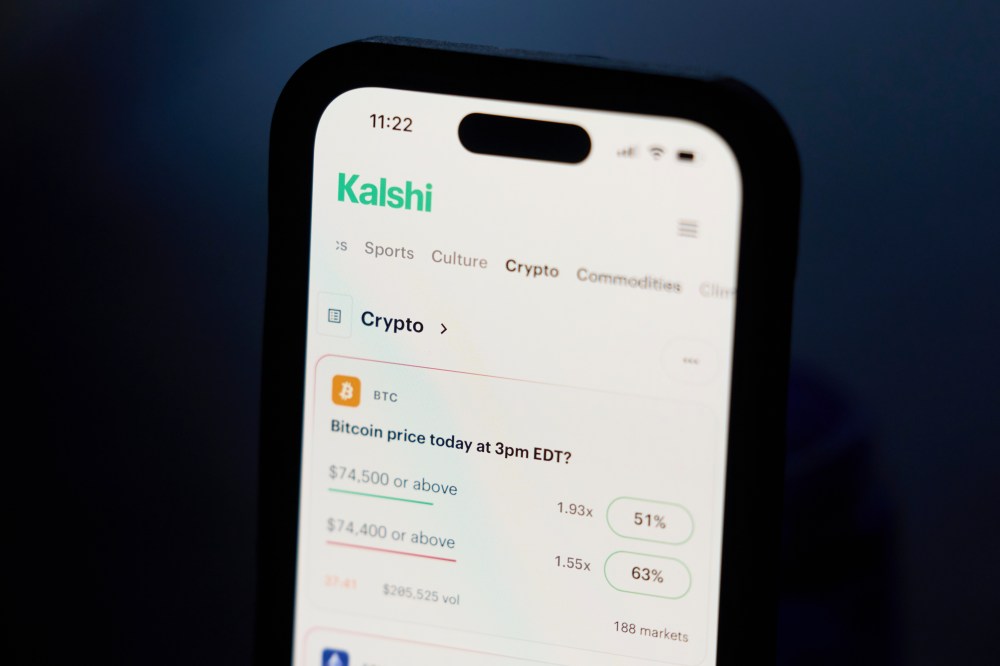
Once on the platforms, companies keep users hooked with what they market as low-stakes, casual opportunities to make an easy buck, creating an environment that some say feels more like a game and less like a risky financial transaction with potentially harmful consequences. Indeed, recent academic research looking at 588 million trades on Polymarket found that profits were concentrated to just a very small group of top traders while the majority of users — 69% — lost money.
Kalshi, Polymarket and some sports wagering platforms are available to users starting at 18, mirroring the minimum age requirement for investing in the stock market but younger than the age limit of 21 for gambling in most U.S. states. That three-year window is critical to cognitive development, according to some experts, who note that teens and young adults are more vulnerable to developing problematic gambling behavior and addiction than older adults.
“The adults in the room are not taking the fact this is meant to be an adult activity seriously, so when adults don’t take it seriously, why would the kids?” said Dr. Timothy Fong, an addiction psychiatrist and the co-director of the UCLA Gambling Studies Program, who notes that the “velocity of gambling” combined with the “frictionless” access to it creates a dangerous slope for young people.
Sen. Katie Britt, R-Ala., introduced legislation last week with Sen. Richard Blumenthal, D-Con., that would bar social media companies and advertisers from showing sports betting ads to minors. Blumenthal said sportsbooks and prediction markets are “treating young people like a gold rush, flooding the internet with advertisements and promotions to hook them on gambling when they’re young.”
Hot air balloon diving, chimps and memes
The humorous, meme-driven approach by both prediction markets and sports wagering platforms is not simply in pursuit of social media clout but a deliberate, carefully curated strategy to reach young people, says Jason Levin, the founder of Memelord Technologies. His company offers marketing tools like meme templates he says both Polymarket and Kalshi have used.
“If you want to attract a younger audience, you’re going to use memes. You’re going to use unhinged humor,” Levin said. “You’re going to try to get in front of them by any means necessary.”
One recent Polymarket ad on Meta’s social media platforms shows an influencer hanging off a hot air balloon before letting go and plummeting. Another from Kalshi shows chimpanzees wearing suits in party settings. And Fliff — a free-to-play platform that calls itself a “social sportsbook” — uses a common meme template of a car dashing to make an exit on the highway. Ads for these platforms also appear on mobile games and in several other places online where they can reach young people.
Kalshi spokesperson Jack Such told The Associated Press memes are “just a part of corporate branding nowadays” and their usage isn’t necessarily related to the age of potential viewers. The average age of a Kalshi user is 33, Such said. Polymarket declined to comment.
‘The hardest wager to get is the first wager’
About 3 in 10 of American adults under 30 said they placed a sports bet in the past year, according to a Pew Research Center survey conducted in summer 2025. About 2 in 10 Americans under 30 — including 21% of men and 16% of women in that age group — said they wagered online in that period, up from 7% three years earlier.
Prediction markets have tried to distinguish themselves from gambling by emphasizing that their users aren’t placing bets; they’re making a prediction on the probable outcome of an event. And because the platforms are regulated by the federal government via the the Commodity Futures Trading Commission, they are not subject to state-level restrictions or bans in place for traditional gambling and sports betting, including higher age limits.
But even some online sports wagering platforms are open to users starting at 18, including Fliff, which doesn’t require users to pay to participate, emphasizing the entertainment value instead. Many of these platforms operate on a sweepstakes-based model, making them accessible to users 18 and older in many U.S. states. Users are not technically required to pay to use these platforms but are often incentivized to do so if they want to see a real-money payout.
Stephen Findeisen, a YouTuber with more than 4 million subscribers who goes by Coffeezilla online and investigates internet scams, said the motivation behind appealing to young users is the possibility of gaining loyal, long-term customers.
“If you’re one of these platforms, you are incentivized to try to target them as soon as you can get them as a customer, so you can be the first kind of business they engage with in that space,” Findeisen said. Many platforms also offer a low monetary entry point for placing bets or making predictions to “lower the friction of getting involved” since “the hardest wager to get is the first wager,” he said.
For young people, that can come with big downsides. Paris Woods, an author and financial educator, said that around age 18 is the most important time to start becoming financially stable and building long-term wealth. But gambling and trading on prediction markets can create a “cycle of addiction and debt.”
“It’s not just eroding the present and sort of taking their hard-earned money out of their hands at 18 or 19, but it’s actually taking money out of that 40 or 50-year-old version of themselves,” Woods said.
Borrowing from video game features
Risky financial behaviors like sports wagering are reinforced by the rush of a win, or simply if they’re fun. Gamified features such as leaderboards, challenges and rewards, and other video game-like tools are built into some sports wagering platforms. Those, in turn, keep people on platforms longer and more intensely engaged, said Adrian Hon, a game designer and author of “You’ve Been Played.”
“They tighten the loop of setting a bet and getting the feedback,” Hon said. “And so it does make it more visceral. It makes it more exciting. It makes it more real-time.”
Fliff, for instance, is designed with bright colors and engaging art. Users can customize an avatar to represent themselves and write a bio on their account page where their statistics are displayed. They can gain followers, chat with others, move up the leaderboard and earn achievement badges.
Fliff said in a statement that it provides a “fun, social and rewarding experience” for users to compete in free-to-play games, while also “taking measures to ensure this activity is done responsibly.” The average age of a user who makes a purchase is 26, the company said.

The “social gaming experience” on Fliff has many “no-cost avenues for users to participate in predictions and engage in friendly competition,” the statement continued. “Our in-app social features are similar to those that exist more broadly within many consumer applications.”
Kalshi and Polymarket each have leaderboards on their platforms as well as comment sections where users can interact with each other through text and even GIFs. Kalshi’s Such said those functions help users make trades with as much information as possible and called them “core elements” of the platform.
The company has rejected proposals to include more gamified features like confetti appearing on screen when a user confirms a trade, Such said. Kalshi has also put in safeguards to prevent kids from accessing the platform, including asking some new users for a live selfie before they are approved for an account and using facial recognition when signing in.
Intentional or not, wagering platforms and prediction markets expose young users to “highly stimulating, highly novel, highly intense things,” said Fong of the UCLA Gambling Studies Program — and that carries consequences.
“A young brain that’s not fully formed — that’s going to leave a significant mark,” he said. “And that brain is going to want it again.”