Pigeons may be navigating with their liver, study suggests

Advertisement

Advertise with us

NEW YORK (AP) — A surprising gut feeling may help pigeons find their way home.

Read this article for free:


or

Already have an account? Log in here »

To continue reading, please subscribe:

Subscribe and receive a limited-edition Free Press branded hat or tote.

Digital Subscription

One year of digital access for only $205*

  • Enjoy unlimited reading on winnipegfreepress.com
  • Read the E-Edition, our digital replica newspaper
  • Access News Break, our award-winning app
  • Play interactive puzzles

*First annual payment billed as $205.00 + GST for one year. This annual subscription will automatically renew at $233.00 + GST every 52 weeks (10% off the regular annual price of $259.35). Offer available to new and qualified returning subscribers only. Cancel any time.

To continue reading, please subscribe:

Add Free Press access to your Brandon Sun subscription for only an additional

$1 for the first 4 weeks*

  • Enjoy unlimited reading on winnipegfreepress.com
  • Read the E-Edition, our digital replica newspaper
  • Access News Break, our award-winning app
  • Play interactive puzzles
Start now

*Your next Brandon Sun subscription payment will increase by $1.00 and you will be charged $17.95 plus GST for four weeks. After four weeks, your payment will increase to $24.95 plus GST every four weeks.

NEW YORK (AP) — A surprising gut feeling may help pigeons find their way home.

Animals use various techniques to navigate including following the stars and remembering key landmarks. Birds, fish and turtles orient themselves using Earth’s magnetic field as a compass. But it’s not yet clear how exactly they do this.

Pigeons are a well-known group of frequent flyers that can traverse hundreds of miles (hundreds of kilometers) in a single day. For thousands of years, humans have used them to carry news, notes and military messages.

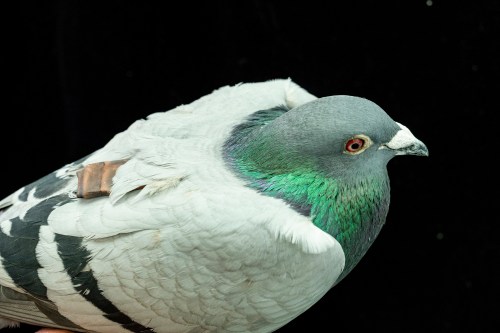
This image provided by the Max Planck Institute of Animal Behavior shows a pigeon wearing a tag used to track its movement in May, 2026, in Konstanz, Germany. (Christian Ziegler/Max Planck Institute of Animal Behavior via AP)

Scientists have long tried to untangle how pigeons travel without getting lost. Some think the birds detect magnetic cues using light-sensitive molecules in their eyes, while others suggest it happens in the beak or inner ear.

“The magnetic sense has been this mystery for almost 100 years,” said Martin Wikelski with the Max Planck Institute of Animal Behavior in Germany.

In a new study, Wikelski and other researchers decided to draw back the curtain on pigeons’ navigational secrets. They searched for magnetic clues in the birds’ organs and found a strong signal in an unexpected place: the liver.

Specialized immune cells in the pigeon’s liver break down red blood cells and store iron. When scientists temporarily stripped pigeons of those immune cells and let them fly, the birds “just couldn’t find their way,” said Christian Kurts with the University of Bonn in Germany. That suggested the iron-rich liver cells might play a role in their sense of direction.

The birds’ magnetic compasses only got scrambled on overcast days. That’s because they also use the sun as a navigational guide.

Scientists have previously wondered whether immune cells could be involved in magnetic sensing, but the new study published Thursday in the journal Science is the first to present a full-fledged theory.

“I would never have guessed it, but once it was explained to me, it makes sense,” said behavioral ecologist Albert Kao with the University of Massachusetts Boston, who had no role in the study.

The immune cells are located near nerve fibers in the liver. That might be how they transmit their “magnetic sense” to the brain “and help the pigeons to navigate,” said study co-author Clivia Lisowski with the University of Bonn.

The researchers think other birds and animals like mice could operate using a similar magnetic GPS. But outside experts say more work is needed to verify the pigeons navigate this way and to firm up how these signals get to the brain. While the researchers found the strongest magnetic signal in the pigeons’ livers, such immune cells have also been spotted in other areas including the beak and spleen.

It’s possible this magnetic puzzle doesn’t have a single answer, wrote veterinary pathologist Simon Spiro and biologist Hal Drakesmith in an accompanying editorial. The birds could use different techniques to sense magnetic fields depending on the task, be it traveling long distances or finding a specific destination.

“Indeed, it could be prudent to have more than one way of getting home in the dark,” they wrote.

—-

The Associated Press Health and Science Department receives support from the Howard Hughes Medical Institute’s Department of Science Education and the Robert Wood Johnson Foundation. The AP is solely responsible for all content.

Report Error Submit a Tip

More Stories

Ramifications of the high cost of pet care

Editorial 4 minute read Preview

Ramifications of the high cost of pet care

Editorial 4 minute read 2:00 AM CDT

They are widely considered to be, as the timeless adage reminds, our best friends. In most cases and contexts, there’s almost nothing we wouldn’t do to ensure they’re safe, healthy and happy.

But caring for a pet has become decidedly more complicated and burdensome of late, owing in part to the rising cost of the veterinary care that is now an inevitable element of the pet-ownership experience.

Recent reporting shows a sharp increase in the number of pets being surrendered to animal shelters as a result of their owners’ inability to cover the costs of veterinary bills while dealing with the overall increase in the cost of living.

A spokesperson for the Winnipeg Humane Society said 150 animals were surrendered there in July alone, primarily because their owners could not afford vet care. The Winnipeg Pet Rescue Shelter reports at least 200 pets surrendered this year by owners who cited finances as the reason for their difficult decision.

Read
2:00 AM CDT

ATV, generator stolen from Manitoba cottage

1 minute read Yesterday at 9:53 AM CDT

RCMP are seeking the public’s help to identify a person of interest after an all-terrain vehicle and other belongings were stolen from a cottage in southern Manitoba.

The theft happened near near Provincial Road 440 in the Rural Municipality of Louise, about 150 kilometres southwest of Winnipeg, on Aug. 11.

Police said surveillance video showed a man walking onto the property at about 2:30 p.m. while covering his face and holding power tools.

A grinder was used to open a locked shipping container, where a 1982 Honda ATC200 all-terrain vehicle, a Honda EU2000i generator and a Stihl FS90 trimmer were among the items stolen, RCMP said. One of two Spypoint trail cameras was also reported stolen.

Mole Mobile on move for your dermatological needs

Sheldon Birnie 4 minute read Preview

Mole Mobile on move for your dermatological needs

Sheldon Birnie 4 minute read 6:00 AM CDT

After soaking up the summer sun, there’s no better time to get a skin checkup.

This weekend, the Mole Mobile will set up shop at three Winnipeg Walmart locations. The mobile clinic, which receives support from the Canadian Dermatology Association, will have certified dermatologists on site to screen suspicious-looking moles or lesions for skin cancer on a first-come, first-served basis.

First launched in 2023 in Ontario, the Mole Mobile is intended to promote prevention and early detection of skin cancer. Last weekend, the clinic visited Brandon, Portage la Prairie and Selkirk, a first for Manitoba.

“We saw a number of patients who had spots that they weren’t sure if they were normal or not,” says Dr. Alexis Botkin, a local dermatologist working the Manitoba Mole Mobile stops. “It was wonderful to provide that skin screening for people who were on a wait list (to see a specialist), as well as those who don’t have a primary care provider.”

Read
6:00 AM CDT

Everyone must play the long game

Editorial 4 minute read Preview

Everyone must play the long game

Editorial 4 minute read Yesterday at 2:00 AM CDT

Today’s decision is just one small point on a continuum that will go on until Trump is no longer president or, as a nation, we manage to disentangle our economy from our nearest neighbour to the greatest extent possible.

Read
Yesterday at 2:00 AM CDT

Somali refugee admits he helped to smuggle African migrants into Manitoba for money

Erik Pindera 6 minute read Preview

Somali refugee admits he helped to smuggle African migrants into Manitoba for money

Erik Pindera 6 minute read Yesterday at 5:54 PM CDT

A Somali refugee who was twice caught by RCMP assisting in the smuggling of desperate African migrants into Manitoba during the frigid winter — including while out on bail, months after he was first arrested with eight foreign nationals in his vehicle — has admitted he did so for money.

Read
Yesterday at 5:54 PM CDT

Pharmacist who failed to disclose addiction, couldn’t account for ‘staggering’ amount of drugs fined $100K by disciplinary panel

Scott Billeck 4 minute read Preview

Pharmacist who failed to disclose addiction, couldn’t account for ‘staggering’ amount of drugs fined $100K by disciplinary panel

Scott Billeck 4 minute read Tuesday, Aug. 18, 2026

A June 9 disciplinary decision found more than 39,000 doses went unaccounted for while Glen Pauch, who worked at a Portage la Prairie pharmacy, was consuming drugs and improperly dispensing controlled substances — including opioids oxycodone and hydromorphone, and Concerta, a stimulant prescribed for ADHD — to 11 patients.

Read
Tuesday, Aug. 18, 2026