Dead humpback whale brought to shore in Denmark with autopsy set next week
Advertisement
Read this article for free:
or
Already have an account? Log in here »
To continue reading, please subscribe:

Digital Subscription
One year of digital access for only $205*
- Enjoy unlimited reading on winnipegfreepress.com
- Read the E-Edition, our digital replica newspaper
- Access News Break, our award-winning app
- Play interactive puzzles
*First annual payment billed as $205.00 + GST for one year. This annual subscription will automatically renew at $233.00 + GST every 52 weeks (10% off the regular annual price of $259.35). Offer available to new and qualified returning subscribers only. Cancel any time.
To continue reading, please subscribe:
Add Free Press access to your Brandon Sun subscription for only an additional
$1 for the first 4 weeks*
- Enjoy unlimited reading on winnipegfreepress.com
- Read the E-Edition, our digital replica newspaper
- Access News Break, our award-winning app
- Play interactive puzzles
*Your next Brandon Sun subscription payment will increase by $1.00 and you will be charged $17.95 plus GST for four weeks. After four weeks, your payment will increase to $24.95 plus GST every four weeks.
Read unlimited articles for free today:
or
Already have an account? Log in here »
ANHOLT, Denmark (AP) — The carcass of a humpback whale, whose life and death captivated Germans for months as the mammal became repeatedly stranded in the Baltic Sea, was dragged Saturday onto a Danish beach after two weeks of the body languishing in shallow waters.
The whale had gained the nicknames “Timmy” and “Hope” as German media outlets sent push alerts and updated live blogs with the status of its health since it was first spotted off the German coast on March 3.
The whale was found dead on May 14, stranded just off the small island of Anholt in the Kattegat, the broad strait between Denmark and Sweden that connects the Baltic Sea to the North Sea.
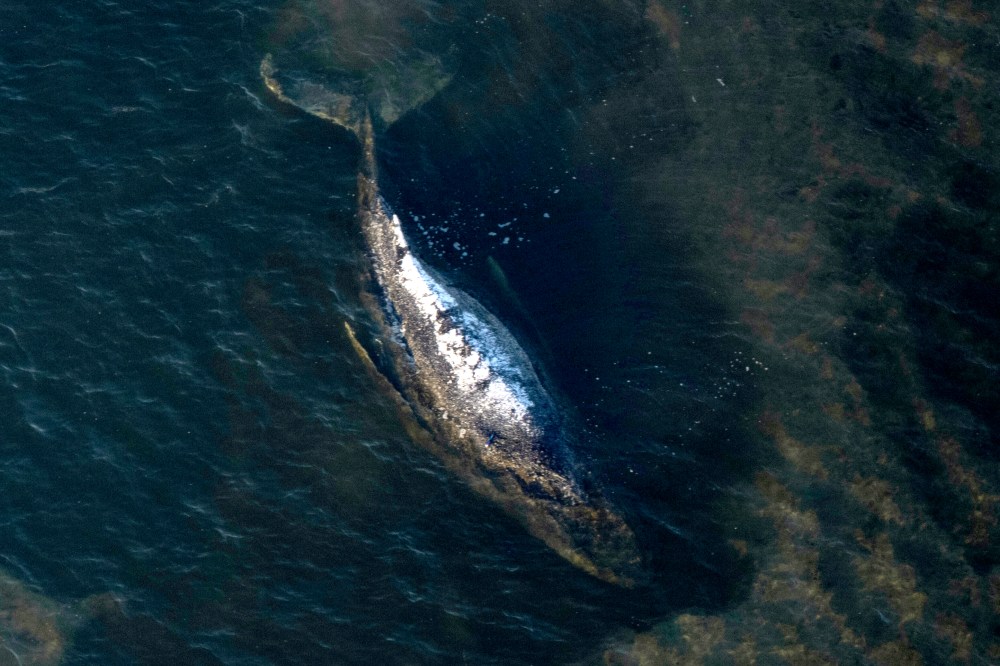
The whale’s death ended months of a spectacular and contentious rescue effort that culminated May 2, when the mammal was transported toward the North Sea in a barge in a final effort to guide it back to its natural habitat in the Atlantic Ocean.
The carcass will be examined next week to determine the cause of death, according to the Danish Environmental Protection Agency.

Danish news outlet “News5” on Saturday published a livestream of the carcass being dragged onto the shoreline by a cable attached to a truck on the beach.
It’s not clear why it swam into the Baltic Sea, which is far from its habitat and it wasn’t suited to, although some experts said it may have lost its way while swimming after a shoal of herring or during migration.