

8 crested ibises released in Japanese town decades after extinction in Japan
Advertisement
Read this article for free:
or
Already have an account? Log in here »
To continue reading, please subscribe:
Digital Subscription
One year of digital access for only $1.44 a week*
- Enjoy unlimited reading on winnipegfreepress.com
- Read the E-Edition, our digital replica newspaper
- Access News Break, our award-winning app
- Play interactive puzzles
*Billed as $5.77 plus GST every four weeks. After 52 weeks, price increases to the regular rate of $19.95 plus GST every four weeks. Offer available to new and qualified returning subscribers only. Cancel any time.
To continue reading, please subscribe:
Add Free Press access to your Brandon Sun subscription for only an additional
$1 for the first 4 weeks*
- Enjoy unlimited reading on winnipegfreepress.com
- Read the E-Edition, our digital replica newspaper
- Access News Break, our award-winning app
- Play interactive puzzles
*Your next Brandon Sun subscription payment will increase by $1.00 and you will be charged $17.95 plus GST for four weeks. After four weeks, your payment will increase to $24.95 plus GST every four weeks.
Read unlimited articles for free today:
or
Already have an account? Log in here »
TOKYO (AP) — Eight crested ibises were released into the wild in a north-central Japanese town, decades after the birds went extinct in the country.
The endangered birds took off from each of their wooden cages at a ceremony Sunday in Hakui city in the Noto region, where they were last seen in the wild.
Residents cheered when the birds soared into the sky the moment Crown Prince Akishino, his wife Kiko and other officials cut a ribbon around the cages.
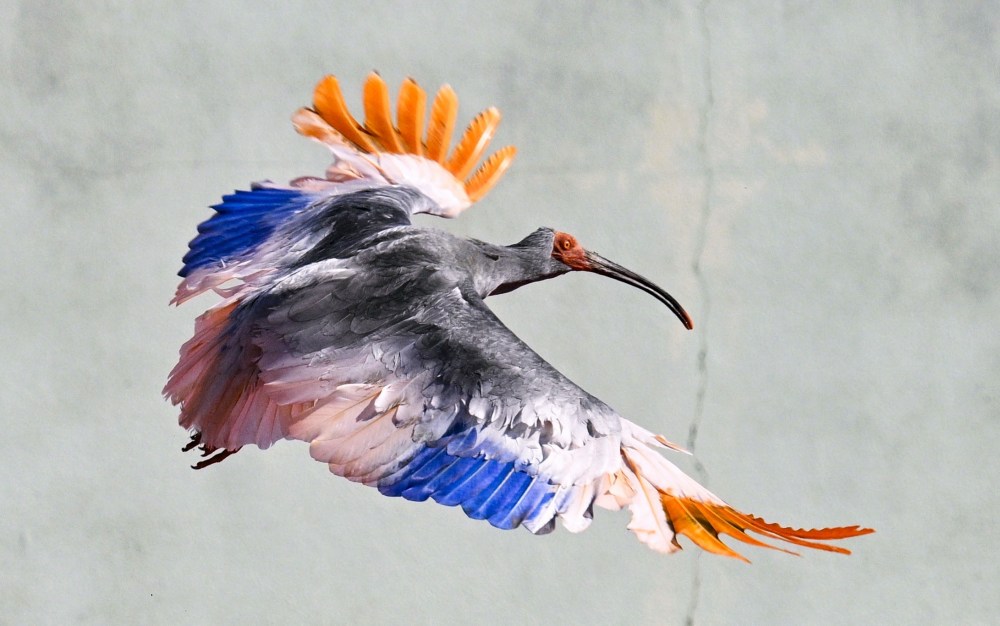
The eight birds have been raised at a conservation center on Sado Island in the neighboring prefecture of Niigata following a successful captive-breeding program. Ten more birds are waiting to be released.
The white birds, called Toki in Japan, are native to East Asia and admired for their orange-pink hues under their wings and bright red marks around their eyes.
The birds went extinct on the Honshu main island in the 1970s, threatened by overhunting and environmental degradation. The last remaining Japanese native ibis died in 2003 on Sado Island.
But the birds came back to life thanks to China’s support for breeding. In 1999, artificial breeding by a pair donated from China successfully led to the first Japanese crested ibis chick born in captivity, according to the Environment Ministry.
The breeding and conservation efforts have since helped the recovery of the birds’ population. In 2008, 10 of the birds raised at the Sado conservation center were released into the wild on the island, where their population has increased to around 500, the ministry says.
The release of the beloved birds on Sunday was also seen as a good omen for the Noto region, which is still recovering from the deadly 2024 earthquake.