Americans are inundated with suspected scams. New polling shows why few victims report them
Advertisement
Read this article for free:
or
Already have an account? Log in here »
To continue reading, please subscribe:

Digital Subscription
One year of digital access for only $205*
- Enjoy unlimited reading on winnipegfreepress.com
- Read the E-Edition, our digital replica newspaper
- Access News Break, our award-winning app
- Play interactive puzzles
*First annual payment billed as $205.00 + GST for one year. This annual subscription will automatically renew at $233.00 + GST every 52 weeks (10% off the regular annual price of $259.35). Offer available to new and qualified returning subscribers only. Cancel any time.
To continue reading, please subscribe:
Add Free Press access to your Brandon Sun subscription for only an additional
$1 for the first 4 weeks*
- Enjoy unlimited reading on winnipegfreepress.com
- Read the E-Edition, our digital replica newspaper
- Access News Break, our award-winning app
- Play interactive puzzles
*Your next Brandon Sun subscription payment will increase by $1.00 and you will be charged $17.95 plus GST for four weeks. After four weeks, your payment will increase to $24.95 plus GST every four weeks.
Read unlimited articles for free today:
or
Already have an account? Log in here »
WASHINGTON (AP) — Most Americans are inundated with scam attempts on a daily basis — and about 3 in 10 have personally lost money or personal information to scams, according to a new AP-NORC survey.
The poll, conducted by The Associated Press-NORC Center for Public Affairs Research in February, highlights the obstacle course that U.S. adults navigate daily as they screen calls, ignore messages or try to puzzle out if that urgent request from their cellphone provider is legitimate.
A separate survey conducted by Gallup and the Stop Scams Alliance that was provided exclusively to the AP found that last year alone, about 1 in 10 U.S. adults said they or someone else from their household was deceived by a scammer into losing money or providing access to a financial account, with nearly half saying they lost more than $500.
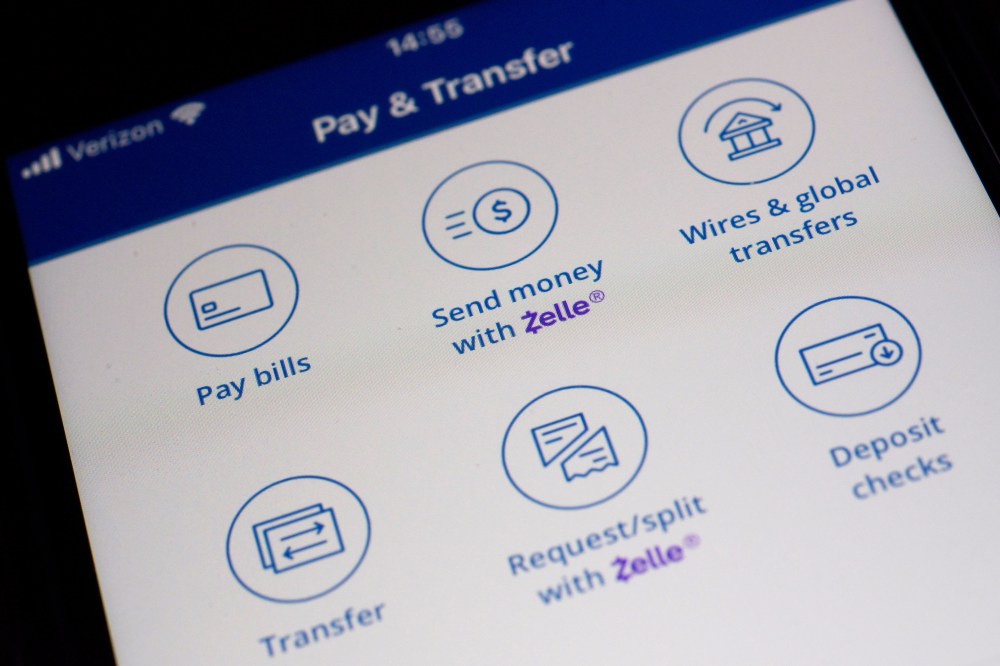
That leaves many Americans feeling like they’re constantly at risk of falling for a scam, often without a sense of recourse. In both surveys, few victims said they reported the scam to the federal government or local law enforcement. Many victims didn’t report the scam, Gallup found, because they didn’t think it would make a difference in getting money back.
“You’ve got to be pretty sophisticated these days,” said Adam Pratter, 42. He has run into problems on dating apps — and once ended up sending money to a person who claimed they were overseas because of a military deployment and needed money to buy food. He realized it was a scam when the requests didn’t stop.
Pratter thinks banks and social media companies have a responsibility to help people who have been scammed, but also believes the government needs to do more.
“If federal regulation wanted to step in and make deals with these companies to get these people their money back, they could,” he said.
For many Americans, scam attempts are constant
Americans are flooded with scam attempts, according to both surveys. More than half, 58%, of U.S. adults in the AP-NORC poll said they receive daily text messages, phone calls, emails, online messages or online advertisements that they suspect are scams, while the Gallup survey found last year that about 4 in 10 experienced attempted scams on a daily basis.
Porschel Smith, 22, gets multiple scam calls every day, and receives even more scam emails. Some of the scams are easy for her to identify. “They mention different types of programs that I know are nonexistent,” she said.
But sometimes she ends up engaging with the scammer before realizing that something is wrong. “Some of them hack your account and pretend as if they’re someone that you know,” she said. “But then I get to asking questions and realize they’re scams.”
Older people are more likely to say they receive scam attempts daily, according to the AP-NORC poll. About 7 in 10 U.S. adults ages 60 and older say they are contacted by a suspected scammer at least once a day, compared to about 4 in 10 Americans under 30.
Among those who have received suspected scam attempts, the AP-NORC poll found that outreach involving package shipments or banking were among the most common methods. About 4 in 10 people who were contacted by scammers say at least one of the attempts they received over the past few years were through Facebook or Facebook Messenger, while about 2 in 10 said they were on WhatsApp, and a similar share said they were on Instagram.
Around 30% of US adults say they’ve been scammed personally
The impact of scams is far-reaching. About half, 51%, of U.S. adults know someone personally — such as a friend or family member — who has ever lost money as the result of a scam, the AP-NORC poll found, while about 3 in 10 U.S. adults say they have personally been scammed into giving away money or personal information.
The Gallup survey found that about 1 in 10 U.S. adults said they or a member of their household was scammed out of money in 2025, with 6% saying they had been personally scammed.
About half of people whose household experienced scams last year reported losing between $125 and $2,000, according to Gallup.
About 1 in 10 U.S. adults have been scammed multiple times, Gallup found.
“It’s not easy. They know what they’re doing,” said Towonna Harris, 50. Her son was once contacted by scammers who promised to give him money for tuition if he authorized a nominal credit card charge, which quickly spiraled into a much bigger set of charges.
She’s experienced other kinds of scams on a smaller scale, too. “I ordered some stuff. I never got it,” she said. “I thought it was a legitimate company. And then I saw all these reviews saying it was a scam.”
Few scam victims report to law enforcement
Virtually all U.S. adults believe that scams pose a “major” or “minor” threat to individuals in the U.S., but few think the government is doing enough to solve the problem. About 8 in 10 Americans say the government is “definitely” or “probably” doing too little to prevent scams, according to the Gallup survey, including large majorities of Republicans and Democrats.
When people are scammed, both surveys found that victims are much likelier to reach out to financial institutions than the federal government or local law enforcement. About half, 55%, of people who were scammed last year reported to a bank, credit union or other financial institution, the Gallup poll found, but only 18% contacted state or local law enforcement, while 13% reported to either federal law enforcement or the Federal Trade Commission.
Many victims don’t make a report because they don’t think it will help, or don’t know where to go, Gallup found. Among people who were scammed in 2025, 75% said they didn’t report because they thought it wouldn’t make a difference in getting their money back, while 58% were uncertain where to report.
More broadly, Americans express very low confidence that they’d know how to report a scam to the government if they needed to. According to the AP-NORC poll, most Americans, 55%, say they are “extremely” or “very” confident that if they were scammed, they’d know how to report it to banks or credit card companies, but only about one-quarter are similarly confident that they’d know how to report to federal or state law enforcement.
Only about one-third of U.S. adults said they would know where to make a report if they lost $5,000 in a scam today, Gallup found.
Max Anderson, 23, said that his parents are small business owners who were the victims of a costly and complex scam. “A scammer successfully imitated one of their employees and changed their direct deposit information. This went on for about 3 months. It went to $15,000,” he said.
Eventually, Anderson’s father got help from the FBI, he said.
“I do like that the government stepped in with my parents, and I feel like that’s the way it should be,” he said. “It’s a big enough problem at this point that it falls to the government and companies to do something about it.”
___
Associated Press reporters Mary Rajkumar, Juliet Linderman and Erika Kinetz contributed to this report. Northwestern University Medill School of Journalism student Molly Wallace contributed to this report.
___
The AP-NORC poll of 1,133 adults was conducted Feb. 19-23 using a sample drawn from NORC’s probability-based AmeriSpeak Panel, which is designed to be representative of the U.S. population. The margin of sampling error for adults overall is plus or minus 4.0 percentage points.
The Stop Scams Alliance-Gallup poll of 5,173 adults was conducted Jan. 8-Feb. 18 using a sample drawn from Gallup’s probability-based Gallup Panel. The margin of sampling error for adults overall is plus or minus 1.4 percentage points.