Amazon will launch its satellite internet in South Africa, seemingly beating Musk in his homeland
Advertisement
Read this article for free:
or
Already have an account? Log in here »
To continue reading, please subscribe:

Digital Subscription
One year of digital access for only $205*
- Enjoy unlimited reading on winnipegfreepress.com
- Read the E-Edition, our digital replica newspaper
- Access News Break, our award-winning app
- Play interactive puzzles
*First annual payment billed as $205.00 + GST for one year. This annual subscription will automatically renew at $233.00 + GST every 52 weeks (10% off the regular annual price of $259.35). Offer available to new and qualified returning subscribers only. Cancel any time.
To continue reading, please subscribe:
Add Free Press access to your Brandon Sun subscription for only an additional
$1 for the first 4 weeks*
- Enjoy unlimited reading on winnipegfreepress.com
- Read the E-Edition, our digital replica newspaper
- Access News Break, our award-winning app
- Play interactive puzzles
*Your next Brandon Sun subscription payment will increase by $1.00 and you will be charged $17.95 plus GST for four weeks. After four weeks, your payment will increase to $24.95 plus GST every four weeks.
Read unlimited articles for free today:
or
Already have an account? Log in here »
CAPE TOWN, South Africa (AP) — Amazon said Wednesday that the technology company will launch its new satellite internet service Amazon Leo in South Africa in 2027, seemingly pushing ahead of Elon Musk’s rival Starlink to win business in Africa’s most advanced economy.
Amazon, which was founded by Jeff Bezos, said that it would partner with South African internet provider Herotel to launch a new service in the country of 62 million people. Amazon said that it was its first satellite internet agreement on the African continent.
No financial details were initially disclosed.
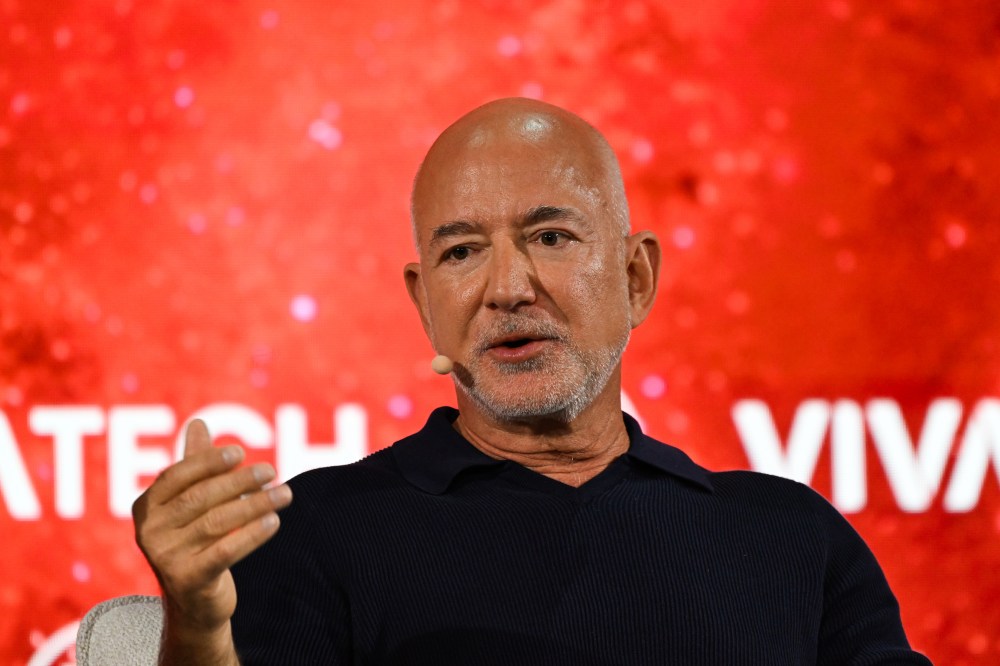
Amazon’s announcement follows Musk’s bitter criticism of the government in his country of birth. The world’s richest man has said that South African regulations have prevented him from launching Starlink there because he’s white, and has accused the government of racism.
He was referring to South Africa’s affirmative action policies, which require foreign companies operating in the communications sector to give a minority share of their local entities to Black or other non-white owners in order to acquire a license.
The regulations are meant to provide opportunities that were denied non-white people under the country’s previous apartheid system of white minority rule.
The South African government has backed the Amazon deal, with Communications Minister Solly Malatsi joining Amazon and Herotel representatives to announce the agreement.
Amazon launched its first low orbit internet satellites last year and says it has more than 390 currently operational.
Starlink’s first operational satellites were launched in 2019 and it now has more than 10,000 in orbit. Starlink’s satellite internet has launched in around two dozen other African countries, but Musk has refused to follow South Africa’s affirmative action regulations.
Amazon said Wednesday that the South African deal was the start of its effort to roll out across Africa, where it would also partner with Vanu Inc., a Lexington, Massachusetts-based company specializing in mobile internet in developing countries.
There’s a large potential market for satellite internet in Africa, a continent of more than 1.5 billion people where many live in rural and other areas without fixed internet connections.
Amazon Leo, which was previously called Project Kuiper, has already signed deals to launch in Thailand, Kazakhstan, Australia, Argentina, Brazil, Chile, Colombia, Ecuador, Peru and Uruguay, according to announcements from the company and local operators it’s teaming up with.

Starlink, though, is well ahead and says it’s now operating in more than 160 countries.
___
AP Business Writer Kelvin Chan contributed to this report from Toronto.
___
AP Africa news: https://apnews.com/hub/africa