French President Macron refuses minister’s resignation after dispute over pesticide bill
Advertisement
Read this article for free:
or
Already have an account? Log in here »
To continue reading, please subscribe:

Digital Subscription
One year of digital access for only $205*
- Enjoy unlimited reading on winnipegfreepress.com
- Read the E-Edition, our digital replica newspaper
- Access News Break, our award-winning app
- Play interactive puzzles
*First annual payment billed as $205.00 + GST for one year. This annual subscription will automatically renew at $233.00 + GST every 52 weeks (10% off the regular annual price of $259.35). Offer available to new and qualified returning subscribers only. Cancel any time.
To continue reading, please subscribe:
Add Free Press access to your Brandon Sun subscription for only an additional
$1 for the first 4 weeks*
- Enjoy unlimited reading on winnipegfreepress.com
- Read the E-Edition, our digital replica newspaper
- Access News Break, our award-winning app
- Play interactive puzzles
*Your next Brandon Sun subscription payment will increase by $1.00 and you will be charged $17.95 plus GST for four weeks. After four weeks, your payment will increase to $24.95 plus GST every four weeks.
Read unlimited articles for free today:
or
Already have an account? Log in here »
PARIS (AP) — The French minister for environmental transition backpedaled Wednesday and stayed in office after a meeting with President Emmanuel Macron, who did not accept her resignation.
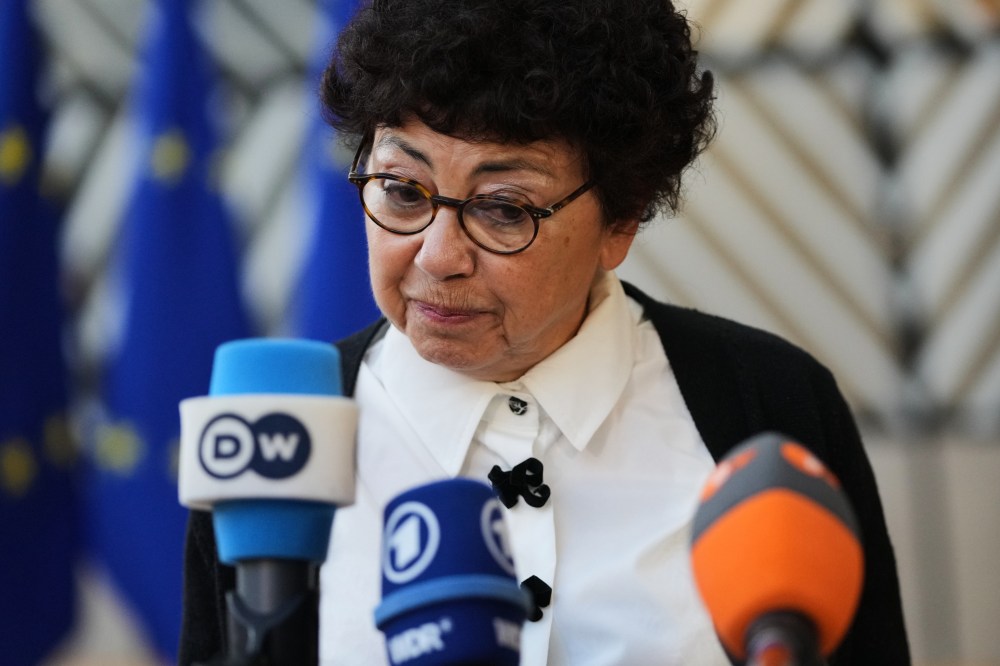
Monique Barbut, who was appointed in October, had announced a few hours earlier that she would step down over a controversial emergency agriculture bill granting temporary exemptions for the use of restricted pesticides that scientists say are harmful to bees.
Barbut and Macron acknowledged their disagreement regarding the law’s final version passed by Parliament, according to French government spokesperson Maud Bregeon, who added that Barbut has support for her continued mission from Macron and Prime Minister Sebastien Lecornu.
The legislation passed by French lawmakers Tuesday allows the French food, environmental and occupational health agency to exceptionally authorize the use of acetamiprid and flupyradifurone for a few struggling agricultural sectors.
“Over the past nine months, I have defended those who do not march, who do not vote, and who do not shout: the silence of our forests, the quality of our water, the purity of our air, the richness of our soils, and the diversity of life,” Barbut wrote in a social media message before meeting Macron.
“Today, I must acknowledge that the forces opposing these goals have become so powerful that I no longer have the means to carry this ambition through,” she wrote.
The two pesticides, part of a class of agrochemicals known as neonicotinoids, are permitted under European Union rules, but are currently banned in France. They are being authorized for use on sugar beet, apples, hazelnuts and cherries.

“Contrary to the commitments that had been made to me, the government prevented any debate on removing this provision,” Barbut said.
The political tangle came a year after France’s highest court blocked a key part of a contentious farming law that would have brought back acetamiprid, a pesticide banned in France since 2018 for its role in harming bees and other pollinators. The court said that the measure failed to protect the environment and future generations.