‘Bright’ future: RCAF chief says spike in defence spending is boosting flight times
Advertisement
Read this article for free:
or
Already have an account? Log in here »
To continue reading, please subscribe:

Digital Subscription
One year of digital access for only $205*
- Enjoy unlimited reading on winnipegfreepress.com
- Read the E-Edition, our digital replica newspaper
- Access News Break, our award-winning app
- Play interactive puzzles
*First annual payment billed as $205.00 + GST for one year. This annual subscription will automatically renew at $233.00 + GST every 52 weeks (10% off the regular annual price of $259.35). Offer available to new and qualified returning subscribers only. Cancel any time.
To continue reading, please subscribe:
Add Free Press access to your Brandon Sun subscription for only an additional
$1 for the first 4 weeks*
- Enjoy unlimited reading on winnipegfreepress.com
- Read the E-Edition, our digital replica newspaper
- Access News Break, our award-winning app
- Play interactive puzzles
*Your next Brandon Sun subscription payment will increase by $1.00 and you will be charged $17.95 plus GST for four weeks. After four weeks, your payment will increase to $24.95 plus GST every four weeks.
Read unlimited articles for free today:
or
Already have an account? Log in here »
OTTAWA – One year into her new job as commander of the Royal Canadian Air Force, Lt.-Gen. Jamie Speiser-Blanchet said she could see an immediate effect of the federal government’s defence spending boost: RCAF pilots are spending more time in the air.
In a recent interview with The Canadian Press, Speiser-Blanchet also acknowledged that preparing the entire service for what she described as a rapid and “giant transformation” — rebuilding the whole plane while it’s flying, so to speak — sometimes gives her pause.
“It’s that pace of change sometimes that worries me a little,” she said.
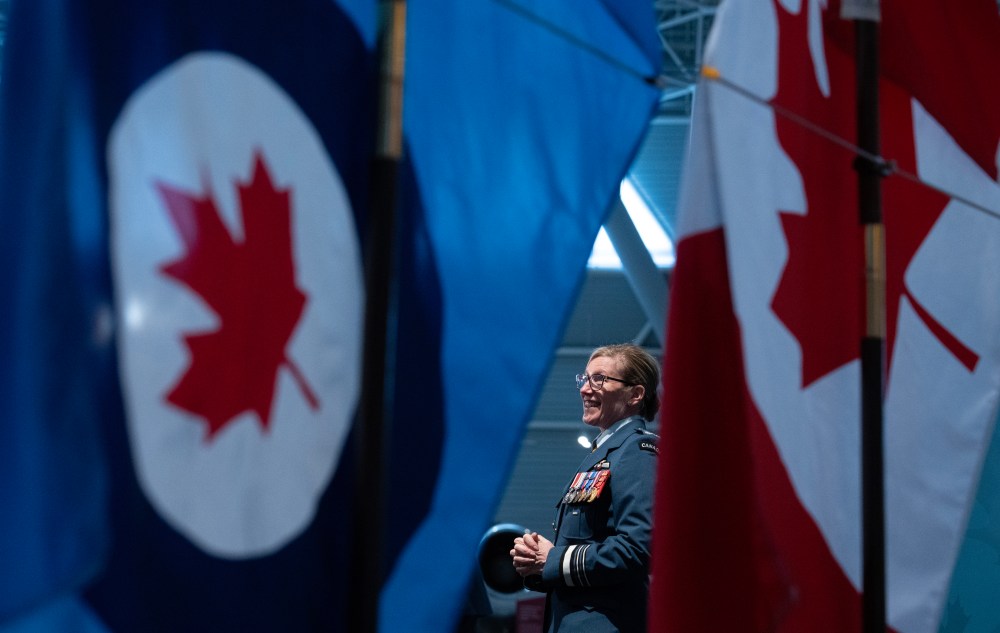
She said while she’s “very comfortable” with the decisions made preparing for modernization, it’s “the thought that there’s something we should be doing now to make sure that we’re set up for success in the future and that we’re missing it” that keeps her up at night.
The former Griffon helicopter pilot was sworn in as the first woman to lead the air force last July. She said the service is now pivoting from planning to execution mode as it brings a dizzying number of new systems online.
The RCAF is acquiring a lot of new aircraft: fighter jets and surveillance craft that require new infrastructure and security, search-and-rescue planes, refuelling tankers and five new aircrew training fleets.
While that happens, the air force must continue to operate its old fleets, overhaul its training and massively upgrade its radar equipment — all while grappling with personnel shortages and playing catch-up with the rapid advances in drone and missile technology that have transformed modern warfare.
Speiser-Blanchet has settled into the command role just as the military finds itself flush with cash for the first time since the Cold War.
The past year saw Prime Minister Mark Carney’s government announce a major spike in defence spending as it rushed to meet its NATO spending commitments.
While the increase in spending shows up in NATO’s books as a share of GDP, the military itself is starting to feel the extra funding on the ground, and in the air.
“By having this money, we were able to generate more spare parts and more flying hours,” Speiser-Blanchet said. “That results in more experienced personnel, more upgrades, more readiness.”
Yearly RCAF flying hours, which fell over the past decade, are now on an upswing. Although each fleet is different, Speiser-Blanchet said the CC-130 Hercules, the C-17 Globemasters and the CF-18 Hornets are getting more time in the air largely due to the influx of funds.
“That allowed us to have the necessary exercises or be able to participate in more training events with allies, and that translates to an increased level of readiness, interoperability, and ultimately contributes to operational effectiveness,” she said.
Even though the roughly 15,000-strong force is expanding, it’s still short some 2,000 personnel.
Speiser-Blanchet said the RCAF’s “future is very bright” but she’s “quite clear-eyed about ongoing challenges that we absolutely just have to keep pushing through.”
Internal government briefing notes warn the RCAF will face “tough decisions” on prioritizing projects, personnel, the “divestment of less-relevant capabilities,” and operational commitments.
The toughest such decision so far was the one to retire and replace the CT-114 Tutor Snowbird demonstration jets, Speiser-Blanchet said.
She said she knows more challenges are coming down the road — likely unexpected ones, such as adjusting on the fly to surprise procurement delays or falling short of trained people.
“I don’t have a lot of those difficult decisions in front of me today. However, I am anticipating them,” she said. “My teams are working very hard to cohere all of that information so that we can ensure we’re making really informed decisions.”
Military personnel saw a substantial pay hike this past year, something the RCAF hopes can help it recruit thousands more people.
It has had no trouble attracting pilots — a profession that wins recruits through its cool factor and unbeatable view from the office.
Recruiters are now out promoting the other key air force trades needed to keep operations going: aerospace telecommunications and information systems techs, construction engineers, and airborne aerospace sensor operators.
They’re offering recruiting bonuses for stressed trades, such as firefighters.
The force is adding new positions, such as space mission operators and security forces to guard sensitive technology like the F-35s and work with counter-drone systems at airbases.
The first new security crews are being trained now. Internal RCAF documents suggest it may eventually need more than a thousand such personnel.
The force is also preparing to mark a major milestone: the first of its new F-35 fighter jets is set to be delivered to a U.S. airbase in Arizona by the end of the year.
“We have people in Luke Air Force Base that we’re just posting this summer and there’s a squadron that’s been stood up. We are going to begin training, so that’s exciting,” Speiser-Blanchet said.
Since U.S. President Donald Trump returned to the White House, politics has cast a shadow over Canada’s air and space force.
The Carney government placed its full order for 88 F-35 fighters under review more than a year ago. The ultimate decision could change the eventual fleet makeup, though Canada will buy some of the jets either way.
Trump also has pressed Canada to pay tens of billions of dollars to join his proposed “Golden Dome” missile defence system.
The air force commander has watched her words carefully on the fighter review and has stayed far from the fray.
Speiser-Blanchet said she remains focused on implementing the current plan for the jets and ensuring the force is working closely with the American military — a relationship she said remains unscathed by all the drama surrounding Canada-U.S. politics.
“When I think of working with my U.S. counterparts, our military relationship is solid. Norad is, quite frankly, stronger than ever.”
This report by The Canadian Press was first published July 26, 2026.