Rescue satellite gets close to NASA’s doomed telescope, even if it can’t save it

Advertisement

Advertise with us

CAPE CANAVERAL, Fla. (AP) — A private spacecraft that was supposed to provide a lifeline to NASA’s Swift Observatory managed to get close to the sinking telescope and even snap photos two weeks after the rescue was abandoned.

Read this article for free:


or

Already have an account? Log in here »

To continue reading, please subscribe:

Subscribe and receive a limited-edition Free Press branded hat or tote.

Digital Subscription

One year of digital access for only $205*

  • Enjoy unlimited reading on winnipegfreepress.com
  • Read the E-Edition, our digital replica newspaper
  • Access News Break, our award-winning app
  • Play interactive puzzles

*First annual payment billed as $205.00 + GST for one year. This annual subscription will automatically renew at $233.00 + GST every 52 weeks (10% off the regular annual price of $259.35). Offer available to new and qualified returning subscribers only. Cancel any time.

To continue reading, please subscribe:

Add Free Press access to your Brandon Sun subscription for only an additional

$1 for the first 4 weeks*

  • Enjoy unlimited reading on winnipegfreepress.com
  • Read the E-Edition, our digital replica newspaper
  • Access News Break, our award-winning app
  • Play interactive puzzles
Start now

*Your next Brandon Sun subscription payment will increase by $1.00 and you will be charged $17.95 plus GST for four weeks. After four weeks, your payment will increase to $24.95 plus GST every four weeks.

CAPE CANAVERAL, Fla. (AP) — A private spacecraft that was supposed to provide a lifeline to NASA’s Swift Observatory managed to get close to the sinking telescope and even snap photos two weeks after the rescue was abandoned.

But the three-armed robotic salvager had to turn away because it was low on fuel, according to Katalyst Space Technologies, which attempted the daring operation.

“We got so close, but so far,” Katalyst CEO Ghonhee Lee told The Associated Press this week.
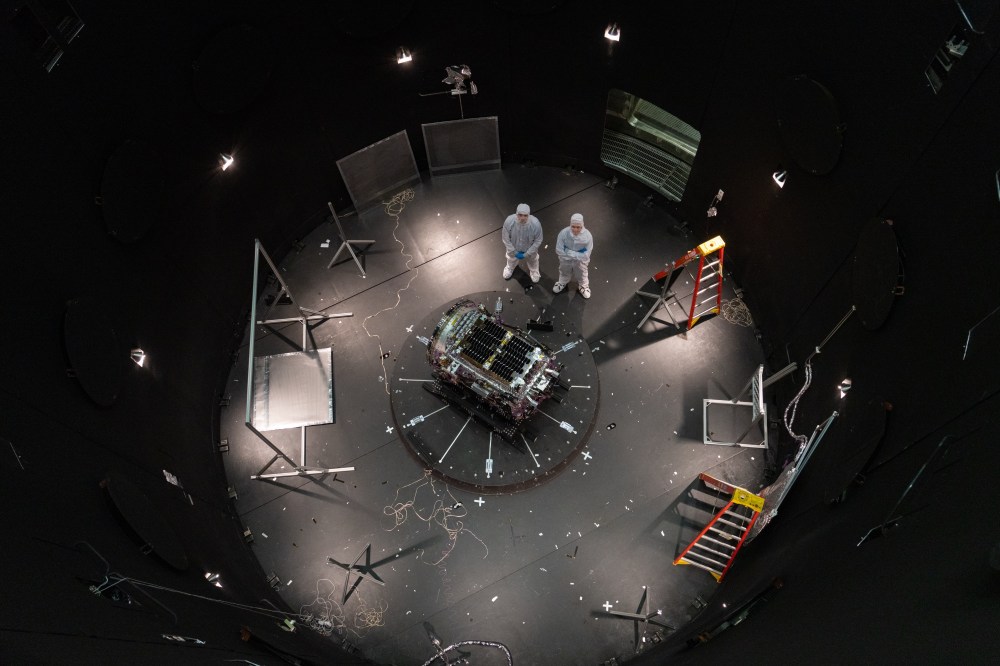
FILE - This photo provided by NASA shows Kieran Wilson, LINK's principal investigator, and Hunter Robertson, a space systems engineer, both at Katalyst Space, standing next to their spacecraft inside the SES (Space Environment Simulator) at NASA's Goddard Space Flight Center in Greenbelt, Md., April 17, 2026, ahead of thermal vacuum testing. (Sophia Roberts/NASA via AP, File)

Katalyst’s Link spacecraft got within 15 kilometers (9 miles) of Swift on Tuesday, using its sensors to gather data on the doomed telescope for NASA. The rescue effort had already been called off in August because of Link’s own troubles in orbit, but the company wanted the practice for future satellite-servicing missions.

Link went into an uncontrollable spin soon after rocketing to Swift’s rescue in July. Flight controllers managed to slow the tumble and stabilize the spacecraft, using up precious fuel. In the end, there was not enough fuel remaining to boost the aging Swift into a higher, longer-lasting orbit so it could continue observing the cosmos.

Lee blamed Link’s problems on the rush to get it flying. The mission was put together in just nine months, and engineers often had to use whatever was available instead of waiting for the preferred parts, he said.

NASA paid the company $30 million to carry out the attempt, which was always going to be rushed. Both sides viewed it as an experiment with little to lose, although no one wanted a collision that would unleash clouds of space debris.

“Unfortunately, it wasn’t the outcome that we were expecting,” NASA Administrator Jared Isaacman said following Sunday’s launch of the Roman Space Telescope. “But that’s exactly the type of missions that we should be flying at NASA. We will learn from that.”

Isaacman said it makes sense to extend the life of a valuable spacecraft, especially if salvaging it costs less than replacing it. That is why the Roman telescope was designed to be refueled even though it is headed toward an observation point 1 million miles (1.6 million kilometers) away.

It is unlikely that Link has enough fuel left to attempt another close approach to Swift, according to Lee. But it can continue exercising its three 3-foot (1-meter) arms and providing important data before it reenters the atmosphere and burns up in the next few weeks, he said.

Launched in 2004, Swift has a little more time remaining in orbit, depending on how active the sun is. Intense solar storms in recent years are responsible for bringing the telescope down much sooner than expected. As of Friday, its orbit had dropped to 208 miles (335 kilometers), barely half as high as when it set out to scan some of the biggest explosions in the universe.

NASA anticipates Swift will plunge through the atmosphere sometime between October and the end of the year. The space agency resumed observations with the telescope last week after halting them early this year to conserve precious power.
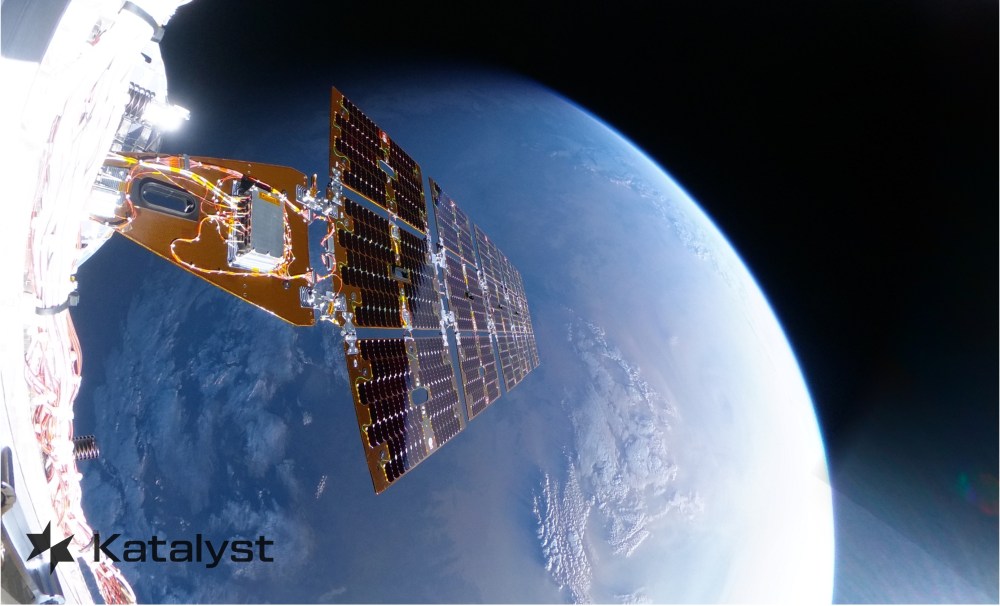
This photo provided by Katalyst Space shows a solar panel on Katalyst Space Technologies’ Link robotic servicing spacecraft in orbit on Aug. 24, 2026. (Katalyst Space via AP)

Like Swift’s, the Hubble Space Telescope’s orbit also has been lowered by solar activity. Katalyst is developing a next-generation spacecraft that could boost the 36-year-old Hubble into a longer-lasting orbit.

“Hubble does still have a few years of life yet, right? So the good news is this isn’t imminent,” Lee said.

Servicing old telescopes and other satellites used to be “a very, very niche concept,” he added, “and we believe it’s going to become more and more commonplace.”

This story was updated to correct that the close approach happened Tuesday, not last weekend, based on updated information from Katalyst Space Technologies.

___

The Associated Press’ health and science coverage receives financial support from the AP Fund for Journalism and private foundations. AP is solely responsible for all content. Find AP’s standards for working with philanthropies, along with a list of supporters and funded coverage areas, at AP.org.


Report Error Submit a Tip

More Stories

Westwood standoff ends with two arrested

Morgan Modjeski and Erik Pindera 3 minute read Preview

Westwood standoff ends with two arrested

Morgan Modjeski and Erik Pindera 3 minute read Thursday, Sep. 3, 2026

An hours-long standoff in Westwood came to an end Thursday with Winnipeg police arresting two men and seizing a gun.

Winnipeg Police Service officers were called to Byrd Avenue shortly before 9:30 a.m. after a man was seen walking with what appeared to be a firearm, said police spokesman Const. Claude Chancy.

Officers identified a home connected to the investigation, he said.

Two men were arrested but Chancy could not yet say what they will be charged with. It’s not clear whether either of the men arrested was the male spotted with a gun.

Read
Thursday, Sep. 3, 2026

QDoc patients in tight spot over billing dispute

Chris Kitching 6 minute read Preview

QDoc patients in tight spot over billing dispute

Chris Kitching 6 minute read Thursday, Sep. 3, 2026

Manitobans have been pulled into a dispute between QDoc — a Winnipeg-based virtual health-care platform — and the NDP government over fees billed to the province for patient care.

An Aug. 24 email from QDoc to its users prompted concern or calls for clarity from Manitobans who use the 24-7 platform to see a physician or nurse practitioner through encrypted video calls.

“When I first read it, like many others, I assumed they were going to be nixing the service altogether because that’s the way it was presented,” Tyndall resident Stephanie Pituley said.

“Upon further research, obviously that’s not the case, but I am still concerned to be honest. How many people did that research, I don’t know.”

Read
Thursday, Sep. 3, 2026

Klein put on defensive as mayoral run made official

Malak Abas 7 minute read Preview

Klein put on defensive as mayoral run made official

Malak Abas 7 minute read Thursday, Sep. 3, 2026

Kevin Klein faced a barrage of attacks from the city’s incumbent mayor and largest union as he officially entered Winnipeg’s mayoral race Thursday.

While the former city councillor and Progressive Conservative cabinet minister was registering to run at city hall, Mayor Scott Gillingham’s team sent out a news release noting Klein was one of two councillors to vote against pursuing legal action against participants in the Winnipeg police headquarters scandal.

Shortly after, Canadian Union of Public Employees Local 500 accused Klein of blaming Canada for its ongoing trade war with the U.S. and called him an “unfit” candidate who would “bend a knee to American interests” in a news release of its own.

Klein defended himself outside city hall after putting in his papers.

Read
Thursday, Sep. 3, 2026

Letters, Sept. 4

7 minute read Preview

Letters, Sept. 4

7 minute read Updated: Yesterday at 8:22 AM CDT

I do think it’s important to stand up and be heard — and that is why I want to add my voice to the chorus of folks condemning U.S. Defence Secretary Pete Hegseth for his recent social media post that very obviously drew attention in a negative way to the physical stature of two Canadian cadets at a military training course.

Read
Updated: Yesterday at 8:22 AM CDT

Frequency of private plasma donations called into question

Marsha McLeod and Rylee Gerrard 9 minute read Preview

Frequency of private plasma donations called into question

Marsha McLeod and Rylee Gerrard 9 minute read Yesterday at 12:47 PM CDT

Two weeks after the death of a second plasma donor in Winnipeg at a privately run collection site, provincial and territorial health officials compiled a list of urgent questions for Health Canada.

A health department official in Nova Scotia, which leads the Provincial Territorial Blood Liaison Committee, wrote in mid-February to the federal regulator that their members had expressed “a great deal of curiosity tempered with concern” and forwarded two dozen questions, according to documents obtained by the Free Press.

Under a section titled “MANITOBA ESTABLISHMENT INCIDENTS,” the provinces wanted to know: “What requirements are in place to ensure Grifols is ensuring collections frequency (does) not exceed the limit under the Health Canada licence?” and “Is Health Canada able to identify whether Grifols Canada has a donor system across establishments? (e.g., can identify when a donor last donated and where, similar to their operations in the United States).”

“Does the situation of two high-severity incidents in one Province or at establishments run by a relatively new entity to Canada, within a short period of time, initiate any additional protocols?”

Read
Yesterday at 12:47 PM CDT

Rescue satellite gets close to NASA’s doomed telescope, even if it can’t save it

Marcia Dunn, The Associated Press 4 minute read Preview

Rescue satellite gets close to NASA’s doomed telescope, even if it can’t save it

Marcia Dunn, The Associated Press 4 minute read Updated: Yesterday at 4:45 PM CDT

CAPE CANAVERAL, Fla. (AP) — A private spacecraft that was supposed to provide a lifeline to NASA’s Swift Observatory managed to get close to the sinking telescope and even snap photos two weeks after the rescue was abandoned.

But the three-armed robotic salvager had to turn away because it was low on fuel, according to Katalyst Space Technologies, which attempted the daring operation.

“We got so close, but so far,” Katalyst CEO Ghonhee Lee told The Associated Press this week.

Katalyst’s Link spacecraft got within 15 kilometers (9 miles) of Swift on Tuesday, using its sensors to gather data on the doomed telescope for NASA. The rescue effort had already been called off in August because of Link’s own troubles in orbit, but the company wanted the practice for future satellite-servicing missions.

Read
Updated: Yesterday at 4:45 PM CDT