Japan says its surveillance drone probably crashed off its northwestern coast
Advertisement
Read this article for free:
or
Already have an account? Log in here »
To continue reading, please subscribe:

Digital Subscription
One year of digital access for only $205*
- Enjoy unlimited reading on winnipegfreepress.com
- Read the E-Edition, our digital replica newspaper
- Access News Break, our award-winning app
- Play interactive puzzles
*First annual payment billed as $205.00 + GST for one year. This annual subscription will automatically renew at $233.00 + GST every 52 weeks (10% off the regular annual price of $259.35). Offer available to new and qualified returning subscribers only. Cancel any time.
To continue reading, please subscribe:
Add Free Press access to your Brandon Sun subscription for only an additional
$1 for the first 4 weeks*
- Enjoy unlimited reading on winnipegfreepress.com
- Read the E-Edition, our digital replica newspaper
- Access News Break, our award-winning app
- Play interactive puzzles
*Your next Brandon Sun subscription payment will increase by $1.00 and you will be charged $17.95 plus GST for four weeks. After four weeks, your payment will increase to $24.95 plus GST every four weeks.
Read unlimited articles for free today:
or
Already have an account? Log in here »
TOKYO (AP) — Japan’s air force said one of its long-distance surveillance drones is believed to have crashed into the sea during a flight Tuesday off the country’s northwestern coast.
There were no immediate details on the nature of the mission of the uncrewed RQ-4B aircraft, also known as Global Hawk. So far, there was no indication of foul play, but officials said the cause of the presumed crash was under investigation.
The Air Self-Defense Force said the drone had trouble connecting with a communication device about one and a half hours after taking off from the Misawa Air Base. Three minutes later, it disappeared from the radar and was last seen 50 kilometers (31 miles) off the coast of Tottori, the ASDF said.
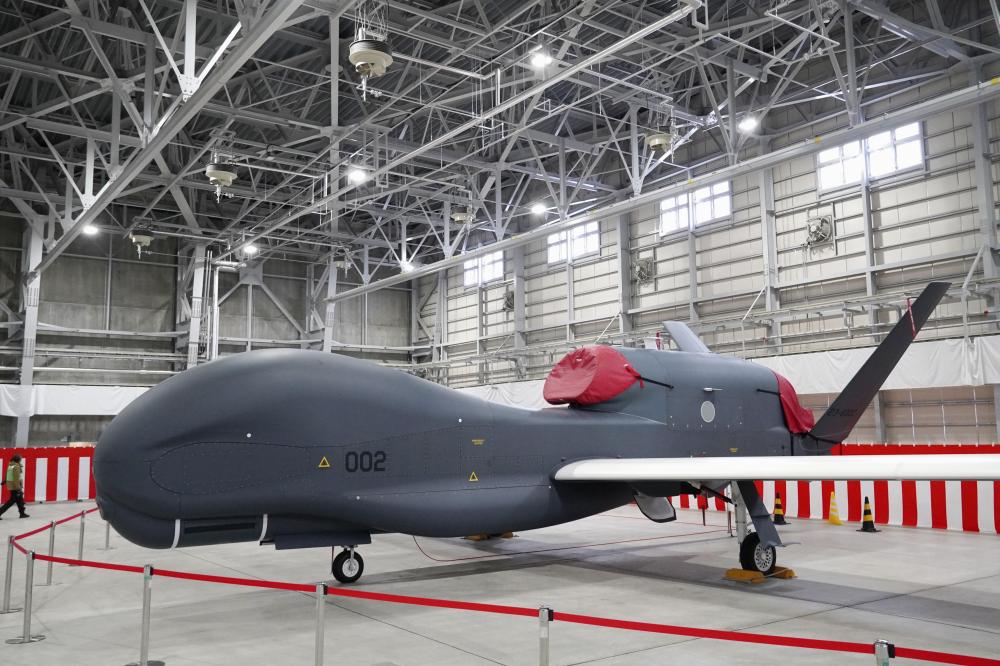
Later Tuesday, a fighter jet and a Japan Coast Guard patrol ship spotted debris believed to be from the Global Hawk. After examining photos of the debris, the ASDF said the drone is believed to have crashed just after disappearing from the radar.
The cause of the Global Hawk’s presumed crash is still under investigation, the ASDF said. There have been no reports of injury or damage related to the crash.
The drone is one of three Global Hawks owned by the air force and deployed at its Misawa Air Base in the northern prefecture of Aomori. Losing one could be a setback for Japan’s surveillance capability.
The drones are considered valuable because they can conduct long-range missions and are able to fly at a height of about 60,000 feet (18.3 kilometers) and can fly continuously for up to 36 hours. They allow Japan to easily monitor areas on the Asian mainland, including North Korea and China.
Japan is trying to adapt to changing times and develop defense strategies that use drones, including those for combat, artificial intelligence and new methods of warfare. Under its five-year plan established in 2022, the country has doubled its defense spending to about 2% of its gross domestic product to build up its Self-Defense Forces’ offensive role to counter China’s growing assertiveness.

Prime Minister Sanae Takaichi’s government is now preparing new security and defense strategies, expected to be unveiled later this year.
Beijing has criticized Japan’s defense buildup as “new militarism.”