Agency says sea turtle eggs laid on California beaches are a first for the US West Coast
Advertisement
Read this article for free:
or
Already have an account? Log in here »
To continue reading, please subscribe:

Digital Subscription
One year of digital access for only $205*
- Enjoy unlimited reading on winnipegfreepress.com
- Read the E-Edition, our digital replica newspaper
- Access News Break, our award-winning app
- Play interactive puzzles
*First annual payment billed as $205.00 + GST for one year. This annual subscription will automatically renew at $233.00 + GST every 52 weeks (10% off the regular annual price of $259.35). Offer available to new and qualified returning subscribers only. Cancel any time.
To continue reading, please subscribe:
Add Free Press access to your Brandon Sun subscription for only an additional
$1 for the first 4 weeks*
- Enjoy unlimited reading on winnipegfreepress.com
- Read the E-Edition, our digital replica newspaper
- Access News Break, our award-winning app
- Play interactive puzzles
*Your next Brandon Sun subscription payment will increase by $1.00 and you will be charged $17.95 plus GST for four weeks. After four weeks, your payment will increase to $24.95 plus GST every four weeks.
Read unlimited articles for free today:
or
Already have an account? Log in here »
HUNTINGTON BEACH, Calif. (AP) — A reptile believed to be struggling in sand at a Southern California beach was simply making history: a sea turtle laying eggs on the U.S. West Coast.
And three days later, there were more. An olive ridley turtle — maybe the same one — laid eggs on Sept. 19, a few miles away near the Huntington Beach Pier in Orange County, authorities said.
“This is the first-ever recorded natural nesting for any sea turtle species” on the West Coast, the National Oceanic and Atmospheric Administration’s West Coast Fisheries division said on Facebook.
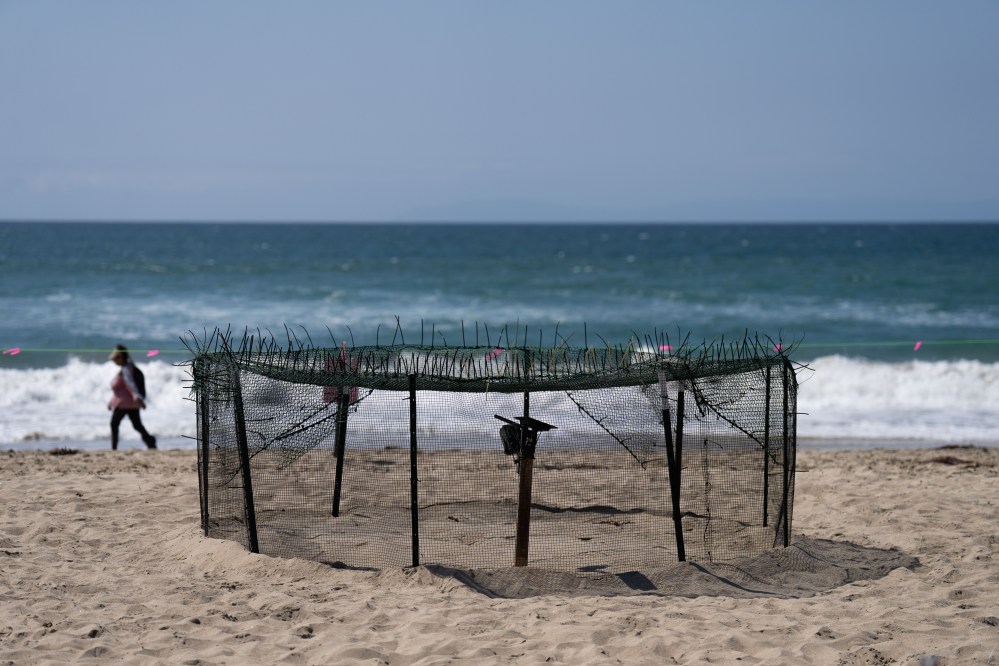
Olive ridley turtles are the smallest of sea turtles, with adults weighing up to 100 pounds (45.3 kilograms). NOAA said they’re found worldwide but primarily in the tropical waters of the Pacific, Indian and Atlantic oceans.
The first nesting spot was near Seal Beach on Sept. 16, followed by the discovery at Huntington Beach. Both sites were subsequently fenced off. Incubation typically lasts 45 to 60 days, NOAA said.
“We’re excited about it,” said Trevor McDonald, marine safety chief at the Huntington Beach Fire Department.
Lifeguards patrolling at night saw a turtle digging in the sand and thought “maybe this turtle is sick. We just don’t see this very often,” McDonald said. “Then they observed the turtle starting to lay eggs.”
Heidi Stephen said her 9-year-old son, Jude, begged her to take him to Huntington Beach to see the nest Tuesday.

“It’s so magical,” Stephen said.
George Zamora said he hopes the eggs can survive any impact from tides, storms and popular beach events.
“Let them do their thing,” Zamora said. “Let them be born.”
___
White reported from Detroit.