Scientist who hunts mysterious ghost particles in the Antarctic ice wins Nobel Prize for physics

Advertisement

Advertise with us

STOCKHOLM (AP) — Belgian-born scientist Francis Halzen won the Nobel Prize in physics Tuesday for his efforts to demystify a rare group of neutrinos, tiny cosmic particles that researchers believe offer clues to how the universe evolved.

Read this article for free:


or

Already have an account? Log in here »

To continue reading, please subscribe:

Subscribe and receive a limited-edition Free Press branded hat or tote.

Digital Subscription

One year of digital access for only $205*

  • Enjoy unlimited reading on winnipegfreepress.com
  • Read the E-Edition, our digital replica newspaper
  • Access News Break, our award-winning app
  • Play interactive puzzles

*First annual payment billed as $205.00 + GST for one year. This annual subscription will automatically renew at $233.00 + GST every 52 weeks (10% off the regular annual price of $259.35). Offer available to new and qualified returning subscribers only. Cancel any time.

To continue reading, please subscribe:

Add Free Press access to your Brandon Sun subscription for only an additional

$1 for the first 4 weeks*

  • Enjoy unlimited reading on winnipegfreepress.com
  • Read the E-Edition, our digital replica newspaper
  • Access News Break, our award-winning app
  • Play interactive puzzles
Start now

*Your next Brandon Sun subscription payment will increase by $1.00 and you will be charged $17.95 plus GST for four weeks. After four weeks, your payment will increase to $24.95 plus GST every four weeks.

STOCKHOLM (AP) — Belgian-born scientist Francis Halzen won the Nobel Prize in physics Tuesday for his efforts to demystify a rare group of neutrinos, tiny cosmic particles that researchers believe offer clues to how the universe evolved.

Halzen said he had been told he was among the favorites for the prize since he first published about cosmic neutrinos in 2013. In any given year, he thought he had a 1 in 20 chance to win a Nobel.

“And I just had to live long enough, so here I am,” the 82-year-old told The Associated Press in an interview in Turin, Italy.

Halzen, a physicist at the University of Wisconsin-Madison in the U.S., said the research was a huge collaborative effort. He was working on a new research proposal when the Nobel Physics Committee called.

“I hope that this prize will help getting it approved,” he told the committee by phone from Italy, in a call broadcast at the news conference announcing the winner. The comment elicited chuckles from the audience.

Halzen paved the way for a new kind of astronomy

Neutrinos are tiny cosmic particles with no electric charge and extraordinarily small mass, making them difficult to detect. Yet they are everywhere: They spew from stars like the sun, and trillions zip through our bodies every second.

Scientists cannot glimpse the mysterious ghost particles zooming around on their own, so they measure what happens when the particles collide with other bits of matter. Neutrinos bump into other particles only rarely, so scientists build large detectors to improve their odds of catching collisions.

Halzen had the idea to turn the vast Antarctic ice into such a detector. The Nobel committee said his work was instrumental to the construction of the IceCube Neutrino Observatory in Antarctica, which glimpsed the first high-energy neutrinos from faraway galaxies.

“This experiment in the Antarctic is a revolutionary way of understanding the universe that we didn’t have before,” said Michael Moloney, chief executive officer for the American Institute of Physics.
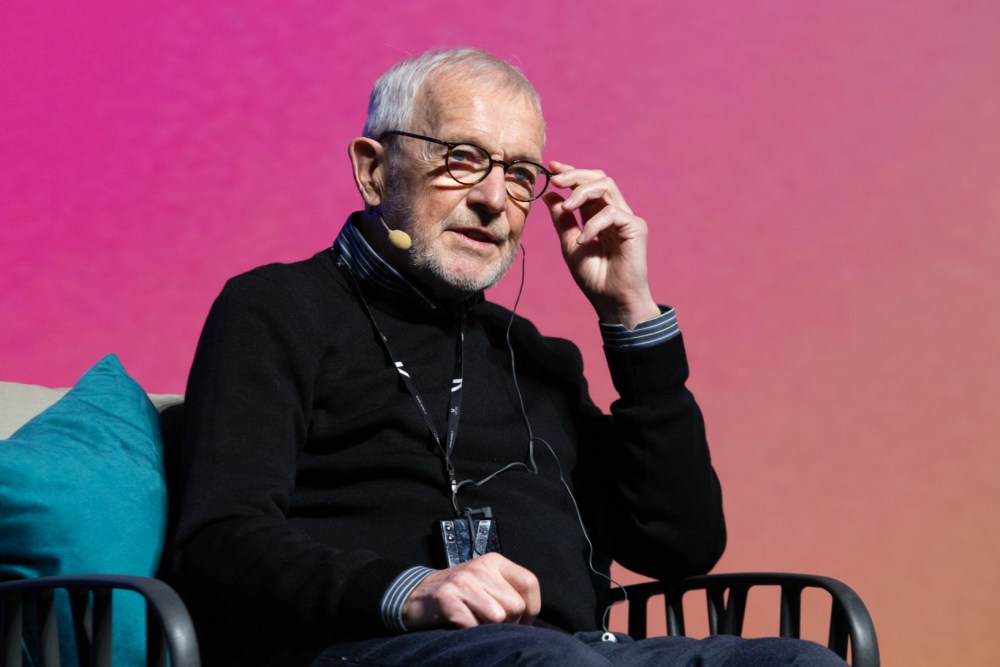
In this handout photo provided by 'Bergamo Scienza 2026', physicist Francis Halzen speaks during a presentation on the IceCube Neutrino Observatory at the BergamoScienza science festival in Bergamo, Italy, Sunday, Oct. 4, 2026. Halzen was awarded the Nobel Prize in Physics on Tuesday, Oct. 6, for his contributions to the IceCube Neutrino Observatory and the discovery of high-energy neutrinos of astrophysical origin. (Laura Pietra/Bergamo Scienza 2026 via AP)

When a neutrino interacts with ice in the detector, it produces a flash of light that’s picked up by sensors. The transparent ice makes it easier for scientists to find faint signals from the particles, and the sensors are buried about 8,200 feet (2,500 meters) deep to protect against interference from cosmic rays and radiation.

“People always thought this was a cute idea, right, but it would never work,” Halzen said at a news conference hosted by his university. “The greatest surprise is that we did make it work.”

Neutrinos can help scientists understand the universe

Halzen helped pull back the curtain on an elusive crew of neutrinos that scientists say carry clues about the development of other galaxies and the universe as a whole.

He said the work was painstakingly slow because the team had to differentiate between neutrinos from the cosmos and neutrinos that are emitted in Earth’s atmosphere.

“We actually detect 3,000 charged particles every second, and in these 3,000 a second, we have to find one every day, then like one a month we are totally sure of. That is the mathematics of the problem.”
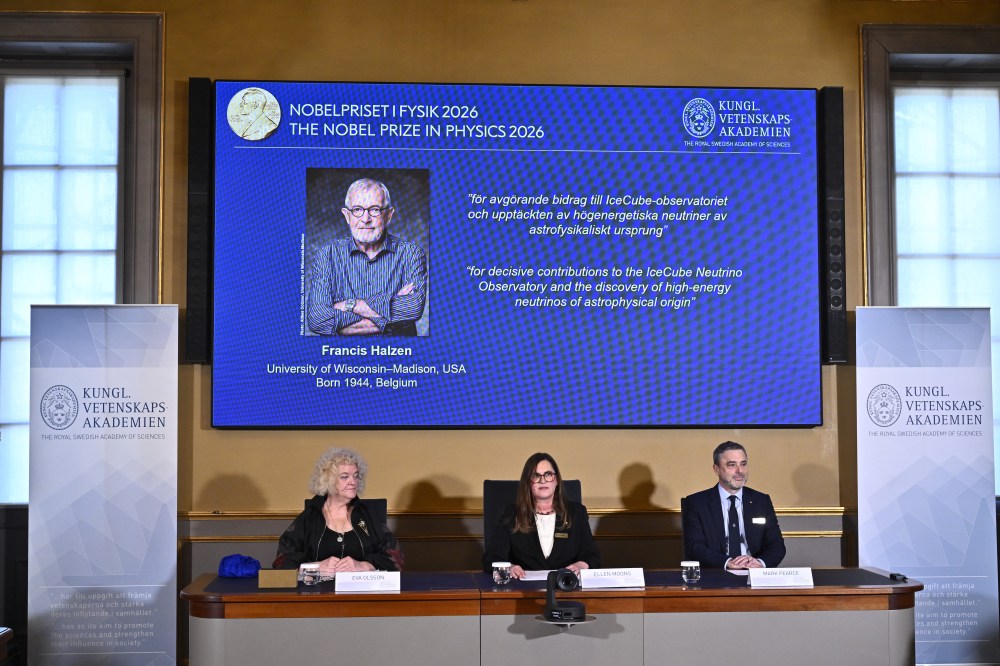
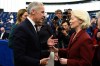
A portrait of Francis Halzen is shown on the screen as Eva Olsson, Ellen Moons, and Mark Pearce announce as the recipient of the 2026 Nobel Prize in Physics during a press conference at the Royal Swedish Academy of Sciences, Stockholm, Sweden, Oct. 6, 2026. (Christine Olsson/TT News Agency via AP)

The research showed “that neutrino astronomy is possible — that it exists and it can be done,” Halzen told AP. “Where it leads, we will see. But no window on the universe has ever been a disappointment.”

He likened the Antarctic observatory to “a big eye made out of ice that can look at the universe in neutrinos, rather than in light.”

Supported by the National Science Foundation and run by Halzen’s university in Wisconsin, the IceCube Neutrino Observatory involves more than 400 scientists in 14 countries.

“IceCube is like no other telescope in the world,” the university’s interim chancellor, Eric M. Wilcots, said in a news release. “And there is no other scientist quite like Francis Halzen, whose idea to create a neutrino detector under almost a mile of ice has led to a remarkable multinational and multi-institutional scientific collaboration and a fundamental shift in how we think about the universe.”

In a post on social media, Belgian Prime Minister Bart De Wever said Halzen is the 11th Belgian to win a Nobel Prize. De Wever called the award “recognition for a lifetime dedicated to shedding light on the great mysteries of the cosmos through its smallest components.”

Prize money is about $1.2 million
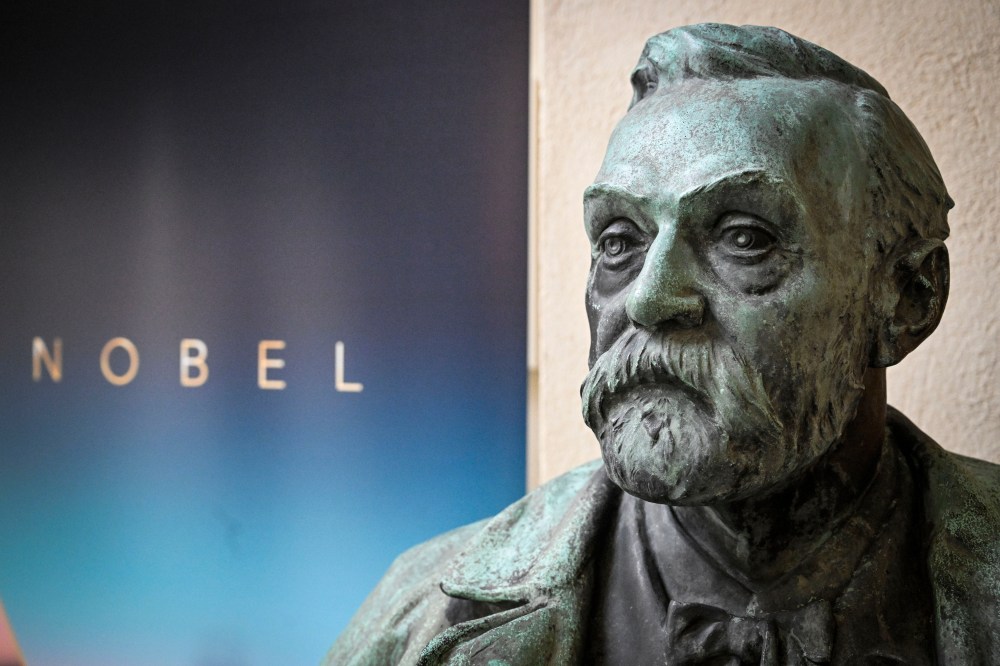
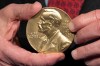
FILE - A bust of Alfred Nobel on display following a press conference to announce the Nobel Committee for Physiology or Medicine at the Karolinska Institute in Stockholm, Sweden, on Oct. 3, 2022. (Henrik Montgomery/TT News Agency via AP, File)

Ellen Moons, secretary-general of the Royal Swedish Academy of Sciences, announced the award in Stockholm. She is the first woman to head the prestigious academy and present the award.

The prize money this year is 12 million Swedish kronor (about $1.2 million), whether for an individual, a small group of laureates or an organization.

Last year, three scientists won the Nobel Prize in physics for research on the strange behavior of subatomic particles called quantum tunneling that enabled the ultrasensitive measurements achieved by MRI machines and laid the groundwork for better cellphones and faster computers.

The announcements of this year’s prizes began Monday with the Nobel Prize in medicine being awarded to three scientists whose work led to a tool that uses light to help unravel how the brain works.

This week’s awards continue Wednesday with the chemistry prize and literature on Thursday. After Friday’s peace prize is awarded, the Nobel Memorial Prize in Economic Sciences will be announced Monday.

___
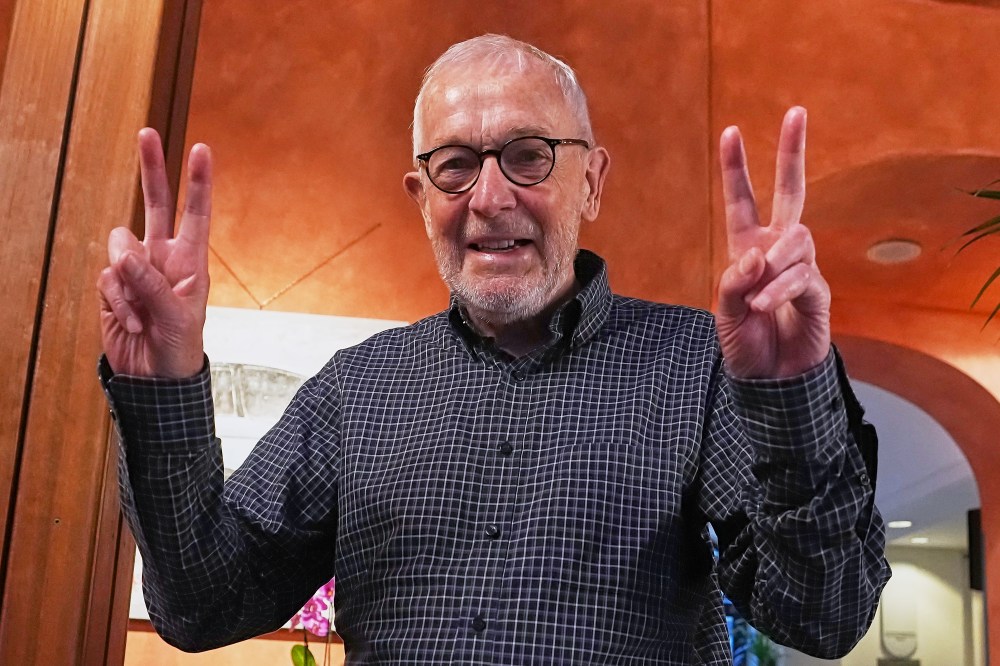
Physicist Francis Halzen flashes a victory sign in his hotel in Turin, Italy, Tuesday, Oct. 6, 2026, after he was awarded the Nobel Prize in Physics for his contributions to the IceCube Neutrino Observatory and the discovery of high-energy neutrinos of astrophysical origin. (AP Photo/Luca Bruno)

Dazio reported from Berlin, and Ramakrishnan reported from New York. Associated Press journalists Alexa St. John in Detroit; Scott Bauer in Madison, Wisconsin; Colleen Barry in Milan; and Luca Bruno in Turin, Italy, contributed to this report.

___

AP Nobel Prizes: https://apnews.com/hub/nobel-prizes

Report Error Submit a Tip

More Stories

Alberta’s gopher museum closed until further notice as owners find new facility

Daniela Germano, The Canadian Press 3 minute read Preview

Alberta’s gopher museum closed until further notice as owners find new facility

Daniela Germano, The Canadian Press 3 minute read Tuesday, Oct. 6, 2026

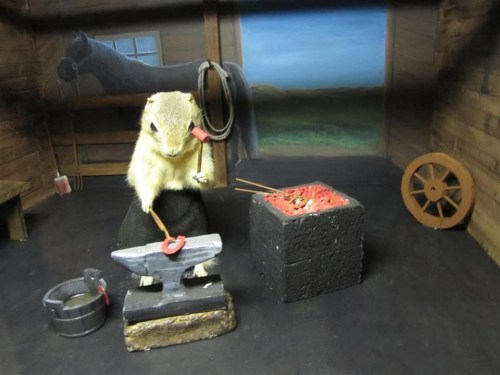
A quirky Alberta roadside attraction that has delighted travellers for decades with its stuffed rodents in tiny costumes is closed until further notice. 

The World Famous Gopher Hole Museum, located in Torrington, a hamlet about 120 kilometres north of Calgary, made the announcement online earlier this week.

Laural Kurta, museum director, said she was forced to close the doors because the two historical buildings that house the exhibits need to be replaced. 

"We have done every patch repair, staple, spackle, everything we could possibly do, and it is just at its end," Kurta said in an interview Tuesday. 

Read
Tuesday, Oct. 6, 2026

Indigenous leaders meet with Governor General during first official visit to Manitoba

Chris Kitching 4 minute read Preview

Indigenous leaders meet with Governor General during first official visit to Manitoba

Chris Kitching 4 minute read Updated: Yesterday at 6:09 PM CDT

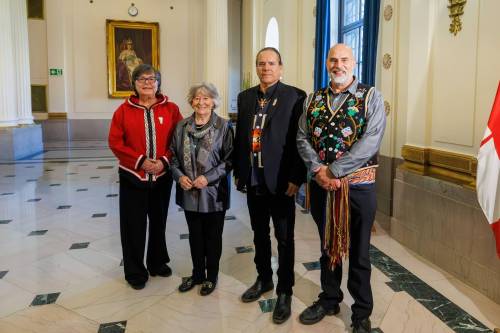
Three Indigenous leaders were encouraged after discussing reconciliation and the need to confront residential school denialism with Gov. Gen. Louise Arbour, while she began her first official visit to Manitoba Wednesday.

Read
Updated: Yesterday at 6:09 PM CDT

Bombers still control post-season destiny

Taylor Allen 6 minute read Preview

Bombers still control post-season destiny

Taylor Allen 6 minute read Yesterday at 6:42 PM CDT

Jake Ceresna was confident he was putting pen to paper with a Grey Cup contender.

When the star defensive tackle signed with the Winnipeg Blue Bombers in free agency back in February, did he foresee any scenario in which they’d be under .500 at this point in the season and in danger of missing the playoffs?

“That’s a good question,” Ceresna admitted after Wednesday’s closed practice.

“Obviously, at the beginning of the year, you think you’re gonna go 18-0. But the reality of life is there’s roller-coasters. There’s going to be hard times, there’s going to be good times. We’re in the valley right now and we just have to come out of it and get back to the peak.”

Read
Yesterday at 6:42 PM CDT

Police seize cocaine valued at $1.5M, about $750K in cash in raid on St. Vital house

Scott Billeck 5 minute read Preview

Police seize cocaine valued at $1.5M, about $750K in cash in raid on St. Vital house

Scott Billeck 5 minute read Tuesday, Oct. 6, 2026

A St. Vital homeowner and her husband were going about their business during an afternoon last month when police officers in tactical gear suddenly appeared, walking across their front lawn.

The target was a few doors down: a maroon bi-level home on a quiet stretch of Satinwood Place, within earshot of children playing outside at a nearby school.

The homeowner, who asked not to be named to protect their privacy, said the police presence caught the couple by surprise in the Southglen neighbourhood, where they weren’t accustomed to seeing that kind of activity.

“We never heard the (police) cars pull up, but there were cars blocking the entrance to the street from both sides,” said the neighbour. “They had a shield, a battering ram — everything. Just not used to seeing that.”

Read
Tuesday, Oct. 6, 2026

Manitoba spends, what comes next?

Rafiq Andani 4 minute read 2:00 AM CDT

Whatever Manitobans think of this government’s health-care record, its willingness to spend is impressive. The promise to rebuild care has inspired a massive mobilization of public money.

Health, Seniors and Long-Term Care spending reached $9.66 billion in 2025-26. Next year’s budget allocates $10.59 billion, an almost 10 per cent increase above last year’s actual spending, following increases of approximately 5.6 and 6.8 per cent in the preceding years. The government has found room for another $931 million in a single year.

That allocation stands roughly $2 billion above spending in 2023-24, the year the government changed, and represents an increase of nearly one-quarter. At $10.59 billion, the budget amounts to approximately $29 million a day.

Let’s consider the province’s reported additions and funding commitments:

Province to fund livestock cop to cut down on theft

Connor McDowell 3 minute read Preview

Province to fund livestock cop to cut down on theft

Connor McDowell 3 minute read 2:01 AM CDT

BRANDON — The Manitoba government will fund a new RCMP position dedicated to investigating livestock theft.

The announcement is expected to be made today at the annual lunch for the Manitoba Beef Producers at the legislature.

Agriculture Minister Ron Kostyshyn said the investigative role will fill a pressing need.

“Personally speaking, I think this has been a long time waiting for this to come to reality,” the Dauphin MLA said Wednesday. “We are doing a great thing for the industry.”

Read
2:01 AM CDT