A First Nation community in Canada is using a data center to preserve its heritage

Advertisement

Advertise with us

WIIKWEMKOONG UNCEDED TERRITORY, Ontario (AP) — For thousands of years, Indigenous peoples have passed down their traditions and culture through oral storytelling. Now, a Canadian Indigenous community is using a data center to help preserve its heritage.

Read this article for free:


By clicking the button above, an account will be created and you will begin to receive some of our recommended newsletters. You may opt out of any newsletter by visiting your Email and Communication Preferences page or by clicking "unsubscribe" at the bottom of any email.

or

Already have an account? Log in here »

To continue reading, please subscribe:

Digital Subscription

One year of digital access for only $1.44 a week*

  • Enjoy unlimited reading on winnipegfreepress.com
  • Read the E-Edition, our digital replica newspaper
  • Access News Break, our award-winning app
  • Play interactive puzzles

*Billed as $5.77 plus GST every four weeks. After 52 weeks, price increases to the regular rate of $19.95 plus GST every four weeks. Offer available to new and qualified returning subscribers only. Cancel any time.

To continue reading, please subscribe:

Add Free Press access to your Brandon Sun subscription for only an additional

$1 for the first 4 weeks*

  • Enjoy unlimited reading on winnipegfreepress.com
  • Read the E-Edition, our digital replica newspaper
  • Access News Break, our award-winning app
  • Play interactive puzzles
Start now

*Your next Brandon Sun subscription payment will increase by $1.00 and you will be charged $17.95 plus GST for four weeks. After four weeks, your payment will increase to $24.95 plus GST every four weeks.

WIIKWEMKOONG UNCEDED TERRITORY, Ontario (AP) — For thousands of years, Indigenous peoples have passed down their traditions and culture through oral storytelling. Now, a Canadian Indigenous community is using a data center to help preserve its heritage.

The Wiikwemkoong Unceded Territory in rural Ontario installed a small data center as it modernized its recordkeeping systems. Among the digital files it holds are video recordings of Anishinaabe speaking their native language.

“Our language is one of the biggest things that most First Nations across the country are losing,” said Wiikwemkoong Chief Tim Ominika. “We will have our knowledge keepers, our language speakers who may be moving on to the spirit world, but their legacy is still going to be protected for many years to come by having our own data systems in place and protecting that.”
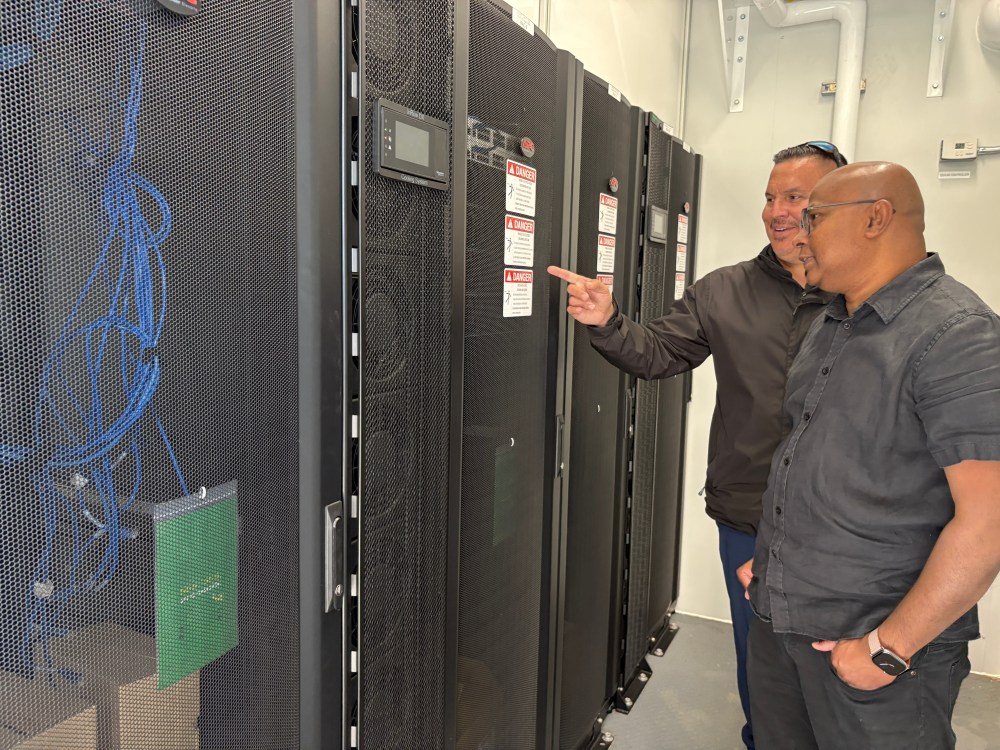
Wiikwemkoong's Chief Technology Officer Michael McCormick, right, and a worker inspect the community's data center in Wiikwemkoong, Ontario, Canada, July 22, 2026. (AP Photo/Kelvin Chan)

The idea of digital sovereignty has gained momentum in places like Europe, where leaders are wary of the widespread influence of American Big Tech. For the Wiikwemkoong First Nation and other Indigenous communities, it is also about asserting authority over their own information after historically being excluded from its collection and use by colonizers.

About the size of a single-car garage, the data center installed last year also stores the community’s corporate documents, health data for residents, and security camera footage.

“The purpose of all of this is having the ownership, access, control and possession of our information,” Ominika said. It’s about preventing anyone else from “having authority or setting their guidelines on what they could do with our data.”

The First Nation has been transferring all its information from a Microsoft data center in Toronto, about 190 miles (305 kilometers) south, said Michael McCormick, the community’s chief technical officer.

Other Indigenous communities have been taking an interest

Wiikwemkoong is on the eastern end of Manitoulin Island in Lake Huron, an area that attracts visitors with its rugged wilderness, extensive waterways and Anishinaabe cultural offerings.

The data center, which underpins a modernization of Wiikwemkoong’s administrative services, also has paved the way for new public safety infrastructure, including a drone fleet and a network of surveillance cameras. A backup data center on the mainland and public Wi-Fi transmitters are also planned for the community of about 4,000 people. The chief declined to disclose how much is being spent on the projects.

Improvements to data storage gained urgency after a flood in 2022 resulted in the loss of some of its digital records, which had been scattered in various offices.

“That information is very important to us. And in order to protect it, keep it safe, we said ’Why can’t we not look at developing and creating and implementing our own data sovereignty program?’” Ominika said.

Wiikwemkoong’s upgrade program is among the first for Indigenous communities in Canada that include First Nations, Inuit and Métis. Delegations from other Indigenous communities in Ontario and neighboring Manitoba have come to check out the project, McCormick said.

The chief said he has to explain to visitors that their data center is not like the giant ones relied on by artificial intelligence companies that require vast amounts of land and water.

Wiikwemkoong’s data center sits in a secure bunker next to the administrative office, accessed by a facial recognition scanner. Its four racks of computer servers are cooled by a pair of fans — not water — and it has “a relatively small carbon footprint,” McCormick said.

In the U.S., a few Native American tribes like the Navajo Nation have for years been operating their own data centers for local infrastructure services.

Wiikwemkoong’s data center is believed to be the only one on Indigenous territory in Canada, but McCormick said other Indigenous leaders are increasingly savvy about control of their data. The Chiefs of Ontario, which represents 133 First Nations in the province, held a data sovereignty conference earlier this year that included a panel on AI and data centers.

For generations, Indigenous communities worldwide have had no say in how information on them has been collected, interpreted and held by governments, researchers and institutions, said Carmen Jones, director of research and data management for the Chiefs of Ontario.

“As more information is collected and stored, it is critical that First Nations determine how that data is accessed, managed, and used,” she said.

The technology has addressed some issues — and raised new ones

Amid the island’s natural splendor, the community faces its share of problems that community leaders hope the technology can help address.

Since installing the data center, McCormick’s team has added 700 surveillance cameras around the community, and a dozen drone docking stations on the administrative office’s rooftop housing a fleet of DJI drones. They are used to find people who go missing in the area’s wooded hills, look out for criminal activity, such as drug deals and break-ins, and monitor for forest fires.

Ominika said there was “a little bit of resistance” to the drone program from residents worried about privacy.

Wiikwemkoong’s drones are supplied by DJI, a Chinese company whose drones have been blocked in the United States over national security concerns. McCormick said all drone footage would be stored locally. The chief said he wanted to make sure any information the drones collect “is going to be protected” and not “used against us, moving forward, by China.”

First Nations in Canada recognized the importance of data sovereignty decades ago, drawing up their own data governance principles in 1998 because they were often the focus of research by outsiders that didn’t benefit them. That argument is reflected in current criticism of Big Tech companies building AI large language models by scraping text, video, images and other data from the internet, often without permission.

Ominika said community leaders would be cautious and thoughtful when considering the use of AI.

“Once we start to realize and understand that there is a potential of any kind of resistance or harm towards our community, then we would put a stop there,” he said.

___

Cara McKenna of IndigiNews contributed to this report.

___ This story is published through the Global Indigenous Reporting Network at The Associated Press.

Report Error Submit a Tip

More Stories

Letters, Oct. 26

6 minute read 2:00 AM CDT

Privacy risks of health information

Manitobans deserve answers about how their personal health information is collected, accessed and protected. Three everyday practices warrant public scrutiny: repeatedly requesting birth dates at pharmacies; exposing historical medical records to reception staff; and requiring callers to disclose personal details to Health Links.

A Manitoba health card proves health coverage. Why must patients repeatedly disclose their birth dates to collect prescriptions? What assumptions or biases might arise from a person’s age or outdated medical history? Being classified as “authorized personnel” does not eliminate the risk of unnecessary scrutiny.

I have personally experienced the distress of a doctor’s receptionist drawing attention to a decades-old medical entry by asking, “Is this you?” A last name which had apparently been removed legally was visible again. Patients should not have to explain or relive painful chapters of their past simply because historical information appears on a screen.

When privacy means deprivation

John R. Wiens 5 minute read 2:00 AM CDT

The right to a private life is a fundamental human need — that is not in dispute. However, our current practices of privacy, particularly when it comes to privacy for children, are a recipe for deprivation, an unintended consequence of our otherwise good intentions.

Two articles in the Oct. 17 Free Press — “If every child matters, why no public inquiry?” by Marion Willis; and “Student violence surges” by Maggie Macintosh — raised serious questions which make privacy seem more like neglect than benefit.

A democratic society has every right to be concerned about privacy and its many advantages. Ancient Greeks likened privacy to home life, a safe place where you could make foolish mistakes, behavioural and otherwise, away from public scrutiny and judgment. The point was that it was a place to test your ideas to make them fit for appearing in public.

Our public schools are to a large measure built on those premises — classrooms out of the public eye where children can make mistakes and learn without paying a price. It’s why all visitors must first report to the office to establish their validity. That sense of privacy has proved beneficial and essential as we try to teach children the civility, respect, empathy, integrity and personal responsibility essential for entering and contributing to a healthy public — thriving communities and a humane society where everyone is welcomed and valued.

Echoes of Idle No More as Carney set to meet with First Nations

Niigaan Sinclair 5 minute read Preview

Echoes of Idle No More as Carney set to meet with First Nations

Niigaan Sinclair 5 minute read Yesterday at 10:29 AM CDT

The prime minister, premiers and First Nations leaders will meet in Ottawa Monday to discuss a host of issues, including Indigenous involvement in energy and resource development projects.

Read
Yesterday at 10:29 AM CDT

‘Tough part of the business’

Mike McIntyre 6 minute read Preview

‘Tough part of the business’

Mike McIntyre 6 minute read Saturday, Oct. 24, 2026

Relief? Regret? Rage?

How are the Winnipeg Jets feeling following Friday’s Connor Hellebuyck trade — particularly those with deep roots and strong bonds with the franchise goaltender who now finds himself a member of the New Jersey Devils?

“It was a bit of a cloud hanging over our heads,” captain Adam Lowry admitted on Saturday. “It’s nice we can look forward now. We don’t have to keep talking about it. We’ve got guys that want to be here.”

That was a bit of a common theme around the room following an outdoor practice at Princess Auto Stadium ahead of Sunday’s Heritage Classic game against the Montreal Canadiens.

Read
Saturday, Oct. 24, 2026

School division’s mental-health liaison helps students in crisis access help faster

Kelly-Anne Riess 4 minute read Preview

School division’s mental-health liaison helps students in crisis access help faster

Kelly-Anne Riess 4 minute read Yesterday at 9:19 AM CDT

A youth experiencing a mental-health crisis at a River East Transcona school was connected with specialized care within hours this fall, offering an early example of how a new partnership is helping students in distress.

After the teen made statements that raised safety concerns, school administrators contacted a newly appointed mental-health crisis liaison, who arrived within 30 minutes, assessed the situation and met with the student, their family and school staff.

By the end of the morning, the student was admitted to a crisis stabilization unit for several days, and arrangements were made for followup therapy.

The intervention was possible because of a pilot partnership between RETSD and The Link: Youth and Family Supports, which began at the start of the school year.

Read
Yesterday at 9:19 AM CDT

Welcoming newcomers requires co-operation

Temitope Oluwalusi 5 minute read 2:00 AM CDT

What does it truly mean to welcome someone to Canada? Is saying that newcomers belong here enough, or should we also ensure they have a fair opportunity to create a stable life? In Winnipeg, welcoming immigrants and refugees should involve more than simply opening the door. It should also involve helping people get settled after they arrive.

Immigrants and refugees come to Canada for various reasons and with different goals. Some arrive to study or work, while others escape difficult or dangerous circumstances to find safety. Their experiences are different from one another. Still, many newcomers may encounter barriers as they look for housing, find meaningful work, learn about available services and form relationships in a new community. These difficulties can affect individuals as well as families trying to settle in and feel a sense of belonging.

Imagine arriving in a city where almost everything is unfamiliar. You might need to learn how services operate, understand new systems, look for housing and find a job. Even with skills, education, and a strong wish to contribute, building a new life can be challenging. Being told that you are welcome does not automatically provide the opportunities necessary to succeed. A kind welcome is important, but practical support makes it possible for people to experience that welcome in their daily lives.

For this reason, the Manitoba and federal governments should co-operate more closely with community organizations so that newcomer support is easier to access and better connected. People should not have to struggle to figure out where to get help or feel responsible for solving every problem alone. Help with housing, employment, language learning and using services should be connected instead of working as separate parts of a puzzle.