Stanford probes faculty ties to China gene-edited baby work
Advertisement
Read this article for free:
or
Already have an account? Log in here »
To continue reading, please subscribe:

Digital Subscription
One year of digital access for only $205*
- Enjoy unlimited reading on winnipegfreepress.com
- Read the E-Edition, our digital replica newspaper
- Access News Break, our award-winning app
- Play interactive puzzles
*First annual payment billed as $205.00 + GST for one year. This annual subscription will automatically renew at $233.00 + GST every 52 weeks (10% off the regular annual price of $259.35). Offer available to new and qualified returning subscribers only. Cancel any time.
To continue reading, please subscribe:
Add Free Press access to your Brandon Sun subscription for only an additional
$1 for the first 4 weeks*
- Enjoy unlimited reading on winnipegfreepress.com
- Read the E-Edition, our digital replica newspaper
- Access News Break, our award-winning app
- Play interactive puzzles
*Your next Brandon Sun subscription payment will increase by $1.00 and you will be charged $17.95 plus GST for four weeks. After four weeks, your payment will increase to $24.95 plus GST every four weeks.
Read unlimited articles for free today:
or
Already have an account? Log in here »
Hey there, time traveller!
This article was published 07/02/2019 (2743 days ago), so information in it may no longer be current.
Stanford University has started a review of interactions that some faculty members had with He Jiankui, the Chinese scientist who claims to have helped make gene-edited babies.
Several Stanford professors have said they knew or strongly suspected He wanted to try gene editing on embryos intended for pregnancy.
The work has been widely criticized since November, when He revealed the births of twins whose DNA he said he altered to try to help them resist possible future infection with the AIDS virus.
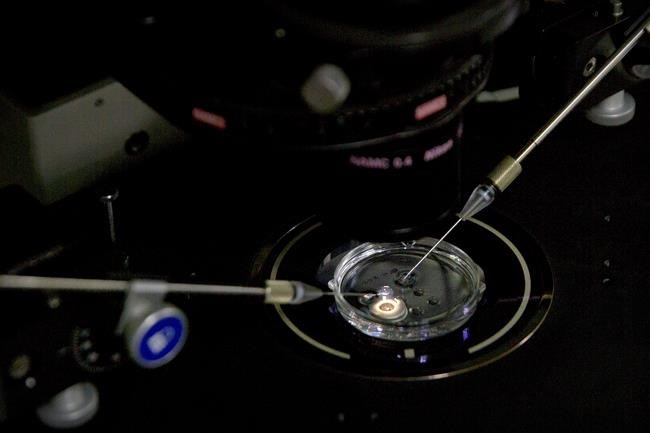
Most scientists think gene editing for reproductive purposes is too risky to be tried yet because of the danger of harming other genes and because the DNA changes may be passed to future generations.
He did postdoctoral research at Stanford and began the gene editing project after returning to his homeland for a job at Southern University of Science and Technology of China in Shenzhen.
Several Stanford professors including He’s former adviser, Stephen Quake; bioethicist Dr. William Hurlbut and genetics expert Dr. Matthew Porteus have said they were in contact with He over the last year.
Hurlbut and Porteus said they disapproved of and discouraged any such experiment. Quake said he only discussed the matter in broad, general terms with He.
After He’s work was revealed, Rice University in Houston announced an investigation into interactions between He and his former adviser at that school, Michael Deem.
On Thursday, Stanford spokesman E.J. Miranda said in an email that Stanford is reviewing “the circumstances around Dr. He’s interactions with researchers at the university.” Miranda said he had no additional information on questions about who would do the review, what would be examined and how long it would take.
Hurlbut said Thursday that university officials suggested that he refer inquiries to them instead of responding himself. Porteus declined to comment. Quake did not immediately respond to requests for comment.

Last month, Chinese investigators said He had evaded supervision of his work and violated research norms because he wanted to be famous. The report said He could face consequences, although it didn’t say which regulations he may have broken.
___
Marilynn Marchione can be followed on Twitter: @MMarchioneAP
___
The Associated Press Health & Science Department receives support from the Howard Hughes Medical Institute’s Department of Science Education. The AP is solely responsible for all content.