The highs and lows of being Lois
Generational trends, parental hopes and camaraderie all part of the name game

Advertisement
Read this article for free:
or
Already have an account? Log in here »
To continue reading, please subscribe:

Digital Subscription
One year of digital access for only $205*
- Enjoy unlimited reading on winnipegfreepress.com
- Read the E-Edition, our digital replica newspaper
- Access News Break, our award-winning app
- Play interactive puzzles
*First annual payment billed as $205.00 + GST for one year. This annual subscription will automatically renew at $233.00 + GST every 52 weeks (10% off the regular annual price of $259.35). Offer available to new and qualified returning subscribers only. Cancel any time.
To continue reading, please subscribe:
Add Free Press access to your Brandon Sun subscription for only an additional
$1 for the first 4 weeks*
- Enjoy unlimited reading on winnipegfreepress.com
- Read the E-Edition, our digital replica newspaper
- Access News Break, our award-winning app
- Play interactive puzzles
*Your next Brandon Sun subscription payment will increase by $1.00 and you will be charged $17.95 plus GST for four weeks. After four weeks, your payment will increase to $24.95 plus GST every four weeks.
Read unlimited articles for free today:
or
Already have an account? Log in here »
Hey there, time traveller!
This article was published 22/04/2017 (3443 days ago), so information in it may no longer be current.
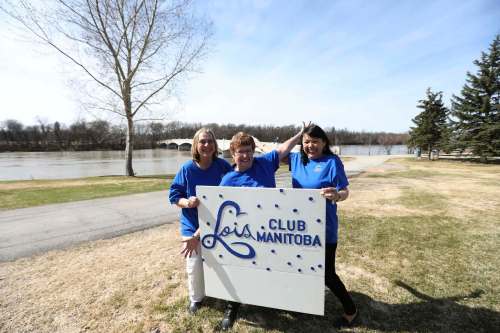
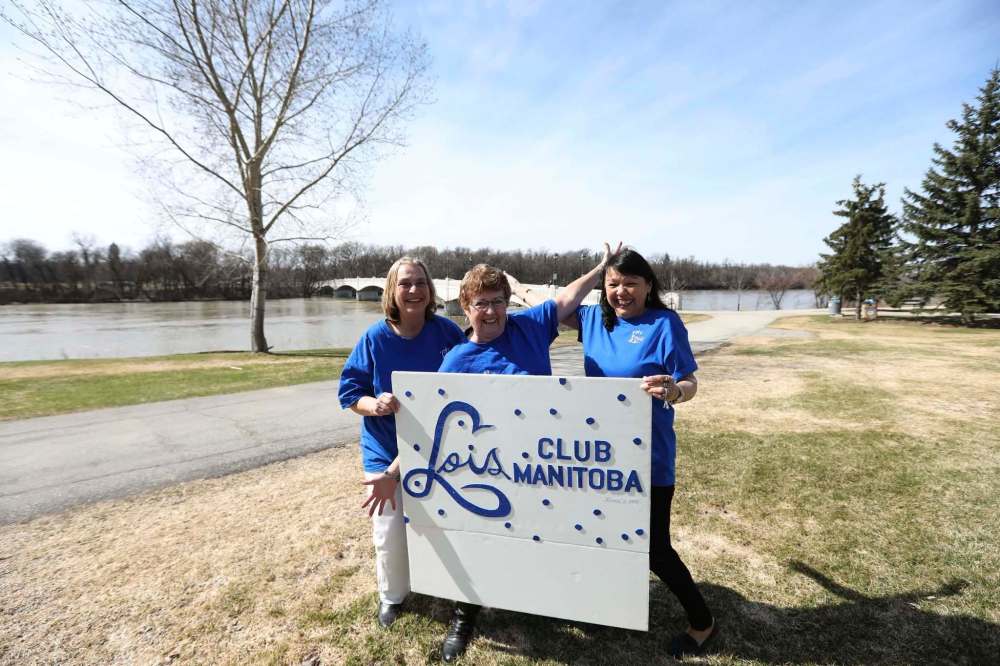
Lois Howard, Lois Kowalski and Lois Kruse are all part of an exclusive club. Every year for the past 20, they meet on the last Saturday of April for their annual lunch.
They are part of the Manitoba Lois Club, which literally is just that — a club for Loises. A group of women connected only by their name.
When I meet with this trio of Loises, who range in age from 59 to 76, to discuss the club’s 20th anniversary, they are wearing bright blue T-shirts emblazoned with their name. Being surrounded by Loises is a change for Howard.
“I heard of very few Loises growing up, to be honest,” she says.
The first Lois Club started in 1979 in Minnesota, and other Lois clubs began sprouting up across the U.S. and Canada. Howard co-founded the Manitoba chapter with Lois Dudgeon, whom she had met volunteering. Dudgeon’s dad heard CBC’s Peter Gzowski talking about these clubs on the radio, and called his daughter. Dudgeon and Howard decided to hold a lunch, figuring that their Lois Club might be a club of two. Thirty-six Loises showed up that first year.
Every decade has an It name, from the Lisas, Marys and Susans of the 1960s to the Madisons of the early 2000s. More recently, Emma, Olivia and Sophia have reigned supreme — although Charlotte snuck in a No. 3 in Canada in 2016, a year after Princess Charlotte of Cambridge was born. For boys, Jackson, Aiden and Liam have topped the lists over the last several years.
Michael is notable for its sheer endurance, cracking the Top 3 consistently since the 1950s. Mary, too, has been a solidly dependable name.
But no other name has seen a boom and bust quite like Jennifer. It’s likely that the number of Jennifers you know personally isn’t zero, and it’s likely most of those Jennifers, Jennys and Jens are in their 30s and 40s. From 1970 until 1984, Jennifer was the No. 1 girl’s name in the U.S. and Canada, but Jennifer wasn’t just a popular name — Jennifer was a generation-defining phenomenon. And then Jennifer was unceremoniously knocked from the top spot in 1985 by the strikingly similar Jessica, which had a nine-year run.
I was born in 1985 but, for the record, my full name is not Jennifer. My parents named me Jenny, which is also a family name.
Despite meaning “most desirable,” Lois has never been a list-topping name. In the U.S., it peaked at No. 17 in 1929, and then steadily dropped off since. Although there are a few famous Loises, both real and fictional — from children’s author Lois Lowry to Superman’s Lois Lane and Family Guy’s Lois Griffin — it’s an uncommon name. The ladies of the Lois Club aren’t too worried about the future of their club, however; there are a few little girls with Lois as their middle name, after a grandmother.
Some names are passed down, shaped by culture, tradition, family and religion. Some parents pick names because of the qualities they convey; if a name sounds smart, strong, virtuous, etc., perhaps the child will also embody those qualities.
Others look to movies, music, art and literature for inspiration. Take Wendy, for example. A diminutive of Gwendolyn, Wendy didn’t become a common first name until Wendy Darling made her debut in J.M. Barrie’s 1904 play, Peter Pan.
And some parents respond to trends, which is why the nursing homes of 2094 will be filled with Jaydens, Aidens, Bradens, Kaydens and Zaidens.
“Most of the women (in the club) have no idea why their parent named her Lois,” Howard says. “There are no Loises I can find in my family tree.”
“I’m named after Lois in the Bible,” Kruse says.
“My mother liked Lois better than Elma,” Kowalski says, deadpan.
Parents often obsess over giving their child a unique name — or, at least, a unique spelling, which accounts for the surprising number of ways to spell Brittany. But for young kids, there’s something attractive about ubiquity that goes beyond the ability to find your name on a personalized licence plate or a souvenir keychain. (The Loises could never find their names on anything, by the way.) While the Jennifers of the world may have felt like they came off an assembly line, they saw their name reflected back to them in a way that the Loises did not.
The Loises of the Lois Club are bonded by not only their name, but by a childhood dislike of it.
“No one could say or spell it,” Howard says. “And you ended up with all kinds of nicknames. My sister couldn’t say Lois, so she called me ‘Oi oi.’ Can you imagine?”
“I didn’t like it when I was growing up because I had a hard time with lisping,” Kruse says. “Try to say Lois without lisping.”
“When I was in the military they called me Lotus instead of Lois,” Kowalski says. “My siblings called me Loti.”
Of course, these are experiences many people can relate to whether they are named Lois or not. Having your name chronically mispronounced or mocked can warp your relationship to it. At the 2017 Academy Awards, host Jimmy Kimmel made fun of Moonlight actor Mahershala Ali’s name, as well as the name of an Asian-American tourist named Yulree, and was swiftly criticized — and rightly so. A 2015 study examining names and racial bias showed that students with “black-sounding” names are more likely to be labelled as troublemakers, while job applicants are less likely to be called in for an interview. Girls writer Jason Kim wrote a powerful essay earlier this year about changing his name to Jason from his Korean name, Jun Hyuk, on his first day of school in St. Louis. Many fellow Asian-American immigrants responded to him on Twitter with similar stories.
Our relationships to our name is personal and complicated. While my experience as a white Canadian kid is obviously not the same as a newcomer to this country, changing my name, however slightly, was part of a rebranding strategy. Jenny was a girl who kids picked on in school. Jen was not.

The Loises also say that acceptance — and even a fondness — for their name came with age. “I was a young adult when I started liking my name because it was unique,” Kowalski says.
It was because of the club that their name became a source of pride. The Loises celebrate the accomplishments of other Loises; whenever a local Lois makes the news, the piece is added to a binder of clippings.
“We don’t do good things worldwide, but we do things for every Lois,” Howard says. Many friendships have been formed among women who wouldn’t have otherwise met if not for the Lois Club.
This year’s luncheon is at 11:30 a.m. on April 29 at the Best Western Plus at 330 York Ave. If you’re a Lois and want to attend, call 204-594-0304 to RSVP.
jen.zoratti@freepress.mb.caTwitter: @JenZoratti
Jen Zoratti is a columnist and feature writer working in the Arts & Life department, as well as the author of the weekly newsletter NEXT. A National Newspaper Award finalist for arts and entertainment writing, Jen is a graduate of the Creative Communications program at RRC Polytech and was a music writer before joining the Free Press in 2013. Read more about Jen.
Every piece of reporting Jen produces is reviewed by an editing team before it is posted online or published in print – part of the Free Press‘s tradition, since 1872, of producing reliable independent journalism. Read more about Free Press’s history and mandate, and learn how our newsroom operates.
Our newsroom depends on a growing audience of readers to power our journalism. If you are not a paid reader, please consider becoming a subscriber.
Our newsroom depends on its audience of readers to power our journalism. Thank you for your support.
Jen Zoratti is a columnist and feature writer working in the Arts & Life department, as well as the author of the weekly newsletter NEXT. A National Newspaper Award finalist for arts and entertainment writing, Jen is a graduate of the Creative Communications program at RRC Polytech and was a music writer before joining the Free Press in 2013. Read more about Jen.
Every piece of reporting Jen produces is reviewed by an editing team before it is posted online or published in print – part of the Free Press‘s tradition, since 1872, of producing reliable independent journalism. Read more about Free Press’s history and mandate, and learn how our newsroom operates.
Our newsroom depends on a growing audience of readers to power our journalism. If you are not a paid reader, please consider becoming a subscriber.
Our newsroom depends on its audience of readers to power our journalism. Thank you for your support.
Advertisement Advertise With Us
Advertisement Advertise With Us