There ain’t no brunch for the wicked
Daytime boozing with a side of eggs -- fun pastime or annoying fad?
Advertisement
Read this article for free:
or
Already have an account? Log in here »
To continue reading, please subscribe:

Digital Subscription
One year of digital access for only $205*
- Enjoy unlimited reading on winnipegfreepress.com
- Read the E-Edition, our digital replica newspaper
- Access News Break, our award-winning app
- Play interactive puzzles
*First annual payment billed as $205.00 + GST for one year. This annual subscription will automatically renew at $233.00 + GST every 52 weeks (10% off the regular annual price of $259.35). Offer available to new and qualified returning subscribers only. Cancel any time.
To continue reading, please subscribe:
Add Free Press access to your Brandon Sun subscription for only an additional
$1 for the first 4 weeks*
- Enjoy unlimited reading on winnipegfreepress.com
- Read the E-Edition, our digital replica newspaper
- Access News Break, our award-winning app
- Play interactive puzzles
*Your next Brandon Sun subscription payment will increase by $1.00 and you will be charged $17.95 plus GST for four weeks. After four weeks, your payment will increase to $24.95 plus GST every four weeks.
Read unlimited articles for free today:
or
Already have an account? Log in here »
Hey there, time traveller!
This article was published 28/04/2018 (3001 days ago), so information in it may no longer be current.
WASHINGTON — “How,” a woman next to me muttered, “can you have mimosas and no orange juice?”
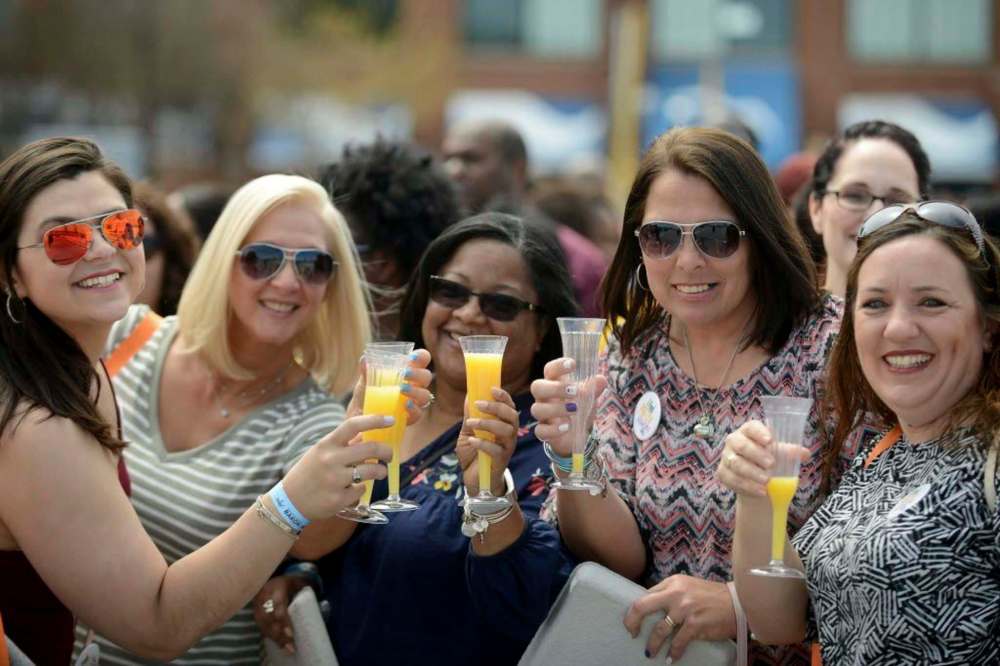
We were at the bottomless mimosa refill station at BrunchCon, a sprawling brunch festival that will stop in four cities this spring and summer, and for a brief moment, the orange juice had run dry. The brunchers were restless.
We dared not say it aloud, but without that sunny splash of citrus, the elegant façade of brunch would collapse. Without juice, this was just drinking.
“You can never have too many mimosas,” Lincoln Powell, 35, visiting from Ahoskie, N.C., explained as his wife posed for photos in front of an ivy-covered BrunchCon backdrop and organizers located more OJ.
Actually, I protested, it is entirely possible to have too many.
“You can?”
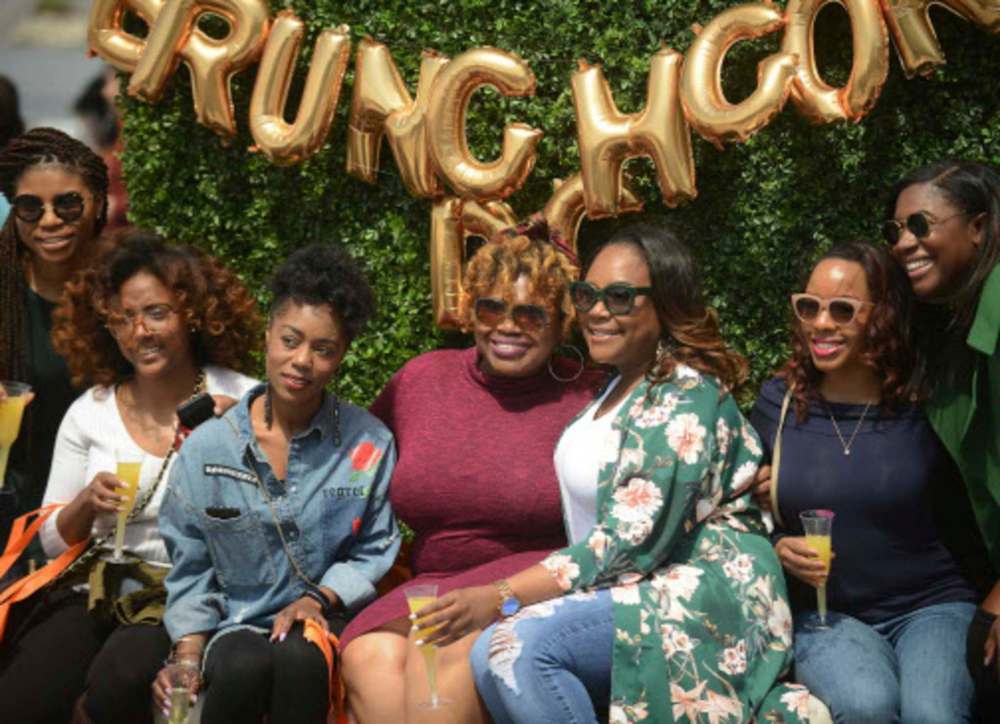
That was debatable at BrunchCon, which set up shop for one Sunday at the waterfront tourist magnet outside Washington, D.C., known as National Harbor, drawing 2,500 people who armed themselves upon entry with tote bags that proclaimed “Brunch so hard” and plastic flutes brimming with cheap champagne and orange juice.
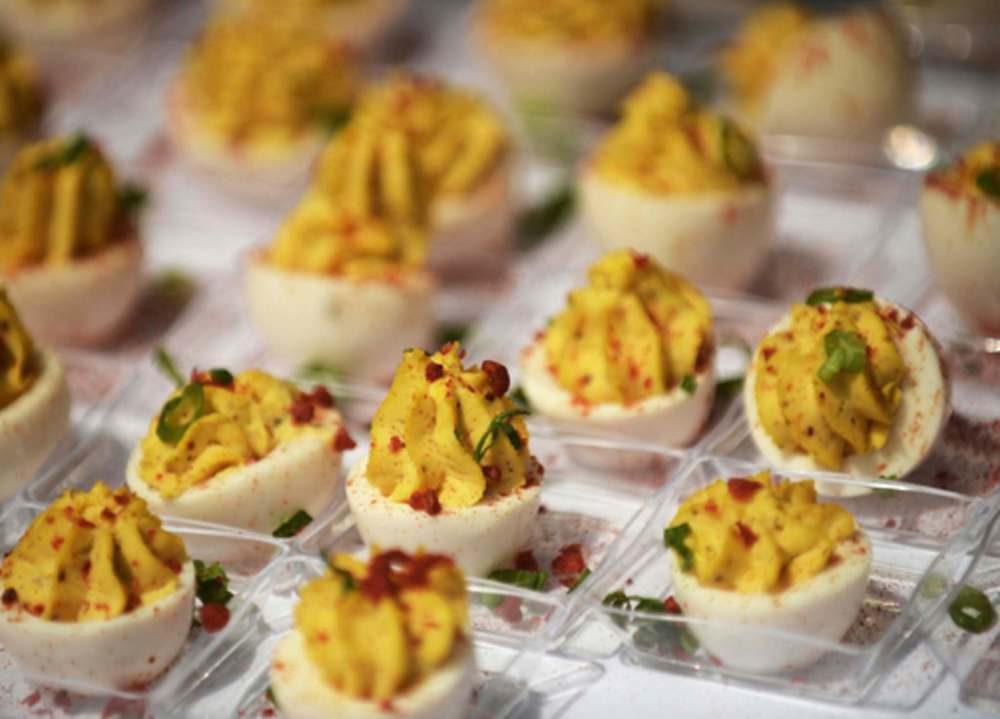
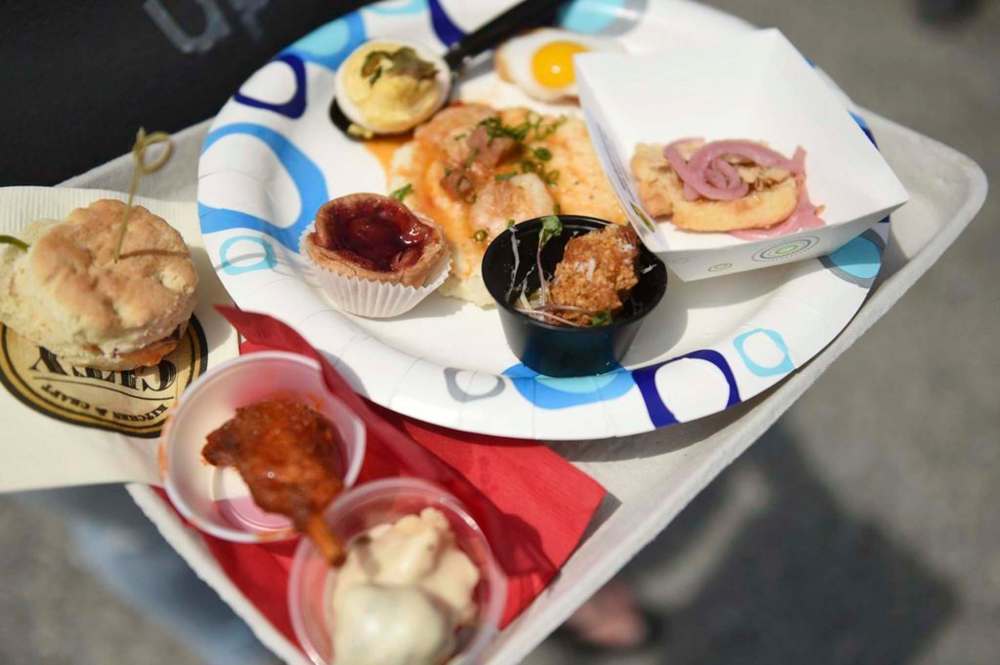
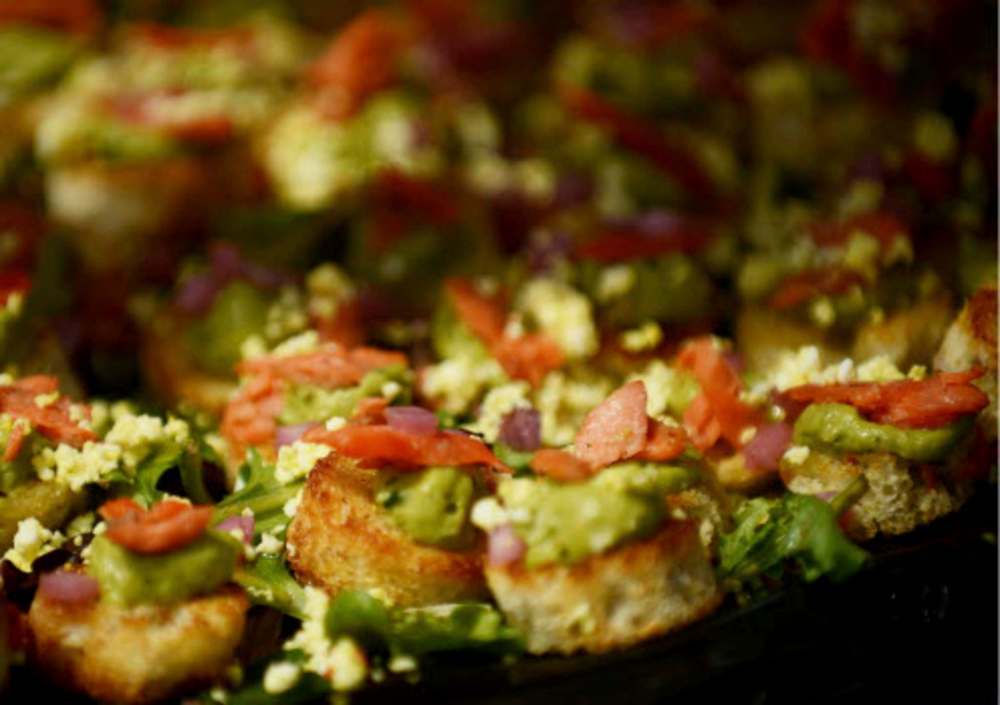
For more than US$60 a person, they were entitled to scoop up tiny pitaya bowls piled with granola and berries, crostini with chorizo and adorable little sunny-side-up quail eggs, spoonfuls of cookie dough and strange little discs the purveyor of which promised would taste like a molecular-gastronomy version of a B.L.T., if you could get past the fact that they looked like communion wafers sprinkled with Fruity Pebbles.
But the festival, whose bright orange logo bears the unmistakable silhouette of a mimosa glass, recognizes that cocktails are the lifeblood of the bruncher, the reason to rise in the morning (and the cause for a nap before dinner).
Brunch has waxed, the founder of BrunchCon told me, as our interest in religion has waned.
“I don’t have time to get up at 7 or 8 to go to church. But I do have time to go brunch,” confirmed Monica Zurita, 32, of Vienna, Va.
Brunch is its own kind of religion. Or at least a pagan ritual, practised each Sunday by urban elites who are known to pound so many mimosas that it’s easy to imagine a nationwide shortage of André bubbly on the horizon.
Brunch is a lifestyle. And, friends, it is also a lewk, and that lewk is off-the-shoulder and frilly, and hobbles up the sidewalk in flesh-toned stilettos. Brunch wears coral-coloured khakis and pocket squares tucked into baby-blue slim-fit blazers, or sometimes it rolls out of bed and throws on a cleanish T-shirt that says “Resting brunch face” or “You can’t brunch with us.”
All of this — but especially the mimosas and the loud and leisurely ways of brunchers — is why every Sunday, brunch cleaves us into Two Americas.
One America sneers at the drunken sea of humanity that emerges from restaurants at 4 p.m. to pose for the ‘Gram (and, occasionally, to puke in the streets).
The other brunches.
We sidled up to the brunchers at BrunchCon in the hope that someone could explain our deep divide. You, ma’am, in the “Shut the brunch up” tank top — why do we, as Americans, feel compelled to brunch so hard?
“I don’t know,” replied Amanda, a 26-year-old from Baltimore who, approximately five minutes into the VIP hour, had already had words with organizers over her two-fisted mimosa strategy. “I’m too drunk to think about it,” she sighed.
● ● ●
The first mention of the Sunday hybrid meal is often attributed to a late-19th-century British scribe, Guy Beringer, whose essay Brunch: A Plea, called for a lighter, more sociable meal than the traditional laborious post-church meatfest.
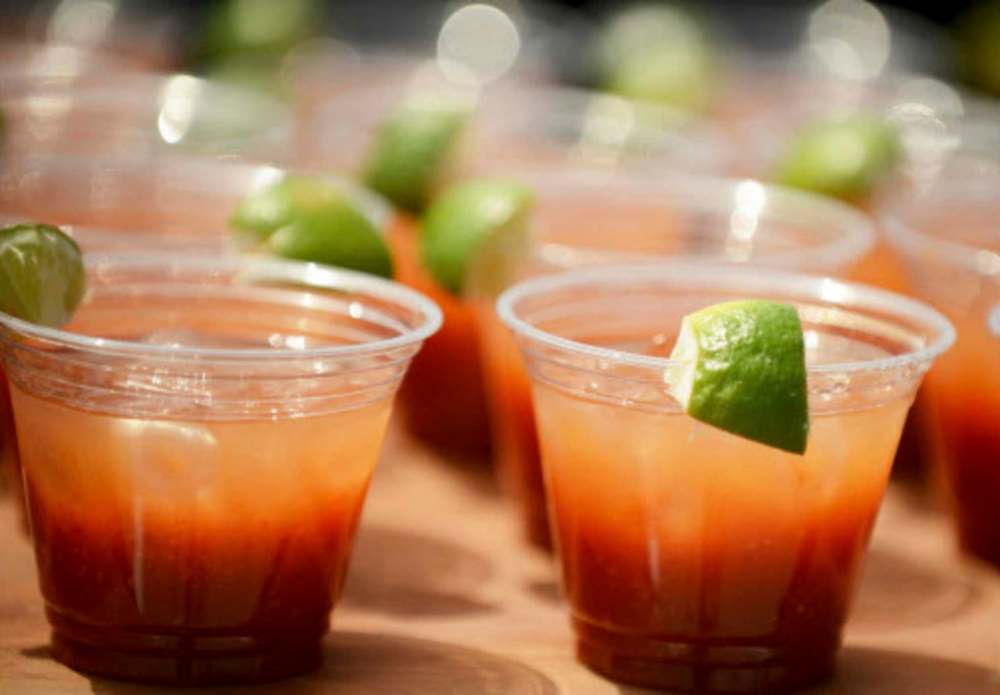
Naturally, though, it was Americans who turned brunch into an excuse to day-drink. In her book Brunch: A History, sociologist Farha Ternikar traces the rise of the boozy brunch to Prohibition, when drinkers discovered that a little orange or tomato juice was a perfect camouflage for whatever illicit substances were in one’s glass.
By the 1940s, brunch emerged as a status-symbol meal, with omelette stations and cellists at swank hotels, or fussy, tableside bananas foster at dining destinations such as Brennan’s in New Orleans. It was a new ritual for the wealthy; for everyone else, it was a splurge reserved for Easter or Mother’s Day.
Now, there are day-long DJ brunches in Dubai and whole restaurants devoted only to brunch in Chicago.
And a meal that should be innocuous — who can object to a little French press and eggs after sleeping in? — has triggered a great national hand-wringing. Brunch has become yet another insufferable symbol of millennial idleness, proof that foodies are the absolute worst.
(Go on, just search for the phrase “brunch sucks,” and realize that there are as many brunch thinkpieces as there are iterations of avocado toast.)
Shawn Micallef, a Toronto Star columnist, even penned The Trouble With Brunch, a book that connects brunch culture with a kind of class warfare. Micallef’s call-out netted him his first death threat.
People don’t appreciate it, he notes sympathetically, when you take shots at things they love.
And so now, he wants to make clear: “Brunch is not the enemy. I don’t actually condemn it.”
But.
It’s just all the baggage that brunch has taken on. There’s the wait for a table. The tired servers and overpriced, middling food. (Anthony Bourdain has inveighed against the stale moonrocks that are called home fries.) There is the avoidance of the gym and chores and adulthood. The wilfully decadent day-drinking, which Micallef sees as a way for the middle class to feel as if it’s living dangerously — a bourgeois distraction.
“Brunch,” he says, “is like a little bomb you set off in your day.”
● ● ●
According to Google Trends, searches for “brunch” have climbed steadily worldwide since 2004. But the area that Googles the word “brunch” more than anywhere else? Washington.
It’s no surprise, really, given that the city’s population has, in the past decade, grown increasingly young, urbane and, well, lonely.
“I grew up watching Sex and the City and they were always brunching,” explained Richard Adams, 36, of D.C., at BrunchCon with his husband and friends. Now it’s as if he’s Carrie. “My friends are my family,” Adams says. Mimosa mornings are the family meal.
So, the capital city is the capital of brunch, and ground zero for brunch backlash: We have drag brunches and “day parties,” a “Bad & Boozy Trap Brunch” and hookah brunch and the particularly debaucherous LaBoum Brunch, a party where the shades are drawn and phones are locked away.
At LaBoum, “people’s pants have come off, mysteriously,” somewhere between the breakfast pastries and the frittatas, said Christopher Lynch, a restaurateur who co-founded the weekly party nearly a decade ago. “People’s bras have come off, mysteriously.”
Brunch in Washington once was a meal “where you had to really consider if you wanted to have an alcoholic drink, because we’re so boring, that stodgy,” he says. But “somewhere along the way, this bottomless thing came into play.” Bottomless — which keeps brunchers drinking for hours for one low, low price — then rippled through the restaurant community, he says, particularly in cities where restaurants operate like dominoes, one teetering directly next to another.
Now, Sunday morning looks an awful lot like Saturday night. “I remember people just falling out of La Boum into the tree box,” Lynch said. “And I was like, ‘This is not a good look for you. Or me.”
Lauren Bliss of Chesapeake Beach, Md., came to BrunchCon with her daughter, Lindsay Edwards, in matching T-shirts (”Momma needs a mimosa”) to mark her 59th birthday. She remembers the time before bottomless, when you might have a drink or two, a little hair of the dog, but the champagne didn’t flow quite so readily. Bliss taught the kids a few things about drinking, she said with a smirk as she balanced a spicy bloody mary. “They taught me a few things, too.”
Sarelyn Radecke launched BrunchCon in Los Angeles in 2016, when she was just 24 and working in marketing for the event ticketing site Eventbrite. Observing which events sold briskly taught her that “anything involving alcohol does really well.”
A brunch festival checked all the boxes: food + booze + a selfie-friendly “experience,” in the parlance of those who market to millennials. She added a DJ, who flitted from Cardi B to Bell Biv DeVoe while the brunchers turned the pavement into a makeshift dance floor and got to twerking. Yes, at brunch.

“There’s a classy brunch culture, and a not-classy brunch culture,” Radecke acknowledged. The drinking “may be a little destructive,” but she argued that it’s largely the domain of the young. “I don’t see what the problem is. That specific culture, you grow out of it.”
For now, the brunch set is living a life of leisure that can, she said, begin with pancakes at 10 a.m. and end, God knows how, at 10 p.m.
“What else are you doing on Sunday?” said Grace Kim, 26, of Rosslyn, Va., her glittered eyelids twinkling in the sun. She knew brunch has its haters. She proclaimed it her favourite meal.
“It’s a classy drinking situation,” she says. “It’s what adults do.”
— Washington Post