There’s an app for that: Students opt for delivery over bag lunches, cafeterias
Advertisement
Read this article for free:
or
Already have an account? Log in here »
To continue reading, please subscribe:

Digital Subscription
One year of digital access for only $205*
- Enjoy unlimited reading on winnipegfreepress.com
- Read the E-Edition, our digital replica newspaper
- Access News Break, our award-winning app
- Play interactive puzzles
*First annual payment billed as $205.00 + GST for one year. This annual subscription will automatically renew at $233.00 + GST every 52 weeks (10% off the regular annual price of $259.35). Offer available to new and qualified returning subscribers only. Cancel any time.
To continue reading, please subscribe:
Add Free Press access to your Brandon Sun subscription for only an additional
$1 for the first 4 weeks*
- Enjoy unlimited reading on winnipegfreepress.com
- Read the E-Edition, our digital replica newspaper
- Access News Break, our award-winning app
- Play interactive puzzles
*Your next Brandon Sun subscription payment will increase by $1.00 and you will be charged $17.95 plus GST for four weeks. After four weeks, your payment will increase to $24.95 plus GST every four weeks.
Read unlimited articles for free today:
or
Already have an account? Log in here »
Hey there, time traveller!
This article was published 02/01/2019 (2785 days ago), so information in it may no longer be current.
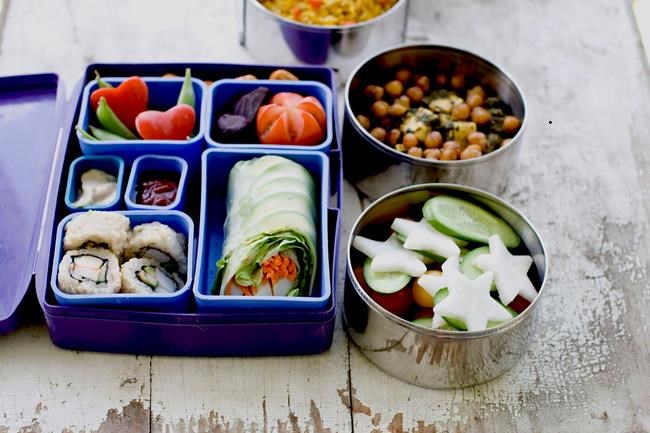
Gone are the days of bag lunches and bologna sandwiches.
With a tap on a smartphone, students are getting burgers, paninis and sushi delivered right into their hungry hands at school.
It’s a growing trend that has school officials across the country deciding whether they should impose rules on the use of food delivery apps, including Skip the Dishes and Uber Eats, or ban their services altogether.
“We wanted to get ahead of it,” says Raza Husain, principal of Balmoral Drive Senior Public School in Brampton, Ont.
Lunch deliveries at the middle school aren’t causing a problem, he says. But he has heard about it creating a bit of disruption at other schools, so a rule was put in place requiring lunches to be prepaid before they are delivered to the school.
“We treat it as if a parent is dropping off a lunch.”
St. Theresa Catholic School in Sherwood Park, Alta., just east of Edmonton, banned the use of app deliveries earlier this year.
“These businesses are not permitted on school property unless authorized by school administration, as the use of these services may pose a security risk to the school,” said a note sent to parents in November.
It’s difficult to track school lunch deliveries.
A spokesman for Skip the Dishes says the company doesn’t keep count of its school deliveries. And most school districts say it’s up to each school to determine whether it will allow them.
“If student use of these services disrupts the learning environment of a school, principals may make the decision to ban or limit the use of these services,” says Megan Normandeau, a spokeswoman with Edmonton Public Schools.
Anjana Rajan, a full-time working mother of two in Sherwood Park, says making lunches isn’t her favourite thing to do.
She had been running late one morning during the last school year and knew she couldn’t keep a promise to her eight-year-old for an after-school treat. So she had Skip the Dishes deliver a Quiznos sandwich to the front office at Ecole Campbelltown for his lunch.
“It was just the perfect storm and the idea of making lunch that morning just irritated me to no end,” Rajan says. She had also seen other parents occasionally deliver Happy Meals from McDonald’s during school lunch breaks, so figured it was no big deal.
She gave office staff a heads-up about the order and it wasn’t an issue, she says. Her son was happy, and she was relieved.
She hopes to surprise her kids with another lunch treat someday, as long as the school doesn’t impose a ban. “I understand the schools, if they’re getting an influx of orders and the office has to manage that.”

James Johnston, principal at Semiahmoo Secondary School in Surrey, B.C., says about five to 10 lunches were being delivered each day in October and he decided the problem should be addressed. Delivery drivers were showing up at different times and walking through the school to meet students.
“We started thinking about that as a bit of a safety issue,” he says.
The school now requires students to pick up food deliveries off school property — most go to a nearby public parking lot — and not during class time.
Although the school has its own cafeteria and is close to several restaurants, many students have their own cellphones and credit cards and want to have their lunches dropped off, Johnston says.
“The novelty of having it delivered, the novelty of being able to pay online through the app … a few kids are doing it, then a few more are doing it, and then everybody wants to give it a try.”