Tips on teaching your teen how to drive
Driver inexperience leading cause of collisions
Advertisement
Read this article for free:
or
Already have an account? Log in here »
To continue reading, please subscribe:

Digital Subscription
One year of digital access for only $205*
- Enjoy unlimited reading on winnipegfreepress.com
- Read the E-Edition, our digital replica newspaper
- Access News Break, our award-winning app
- Play interactive puzzles
*First annual payment billed as $205.00 + GST for one year. This annual subscription will automatically renew at $233.00 + GST every 52 weeks (10% off the regular annual price of $259.35). Offer available to new and qualified returning subscribers only. Cancel any time.
To continue reading, please subscribe:
Add Free Press access to your Brandon Sun subscription for only an additional
$1 for the first 4 weeks*
- Enjoy unlimited reading on winnipegfreepress.com
- Read the E-Edition, our digital replica newspaper
- Access News Break, our award-winning app
- Play interactive puzzles
*Your next Brandon Sun subscription payment will increase by $1.00 and you will be charged $17.95 plus GST for four weeks. After four weeks, your payment will increase to $24.95 plus GST every four weeks.
Read unlimited articles for free today:
or
Already have an account? Log in here »
Hey there, time traveller!
This article was published 28/05/2018 (2980 days ago), so information in it may no longer be current.
It’s been almost 35 years since I started driving, and I’ve gotten pretty good at it. But with a 16-year-old in the house, I realized we both have a lot to learn before he’s ready to get behind the wheel on his own.
Unlike when I first passed my driving test, every state and Canadian province has some form of graduated licensing, typically requiring new teen drivers to obtain a learner’s permit and then a probationary licence before they can get an unrestricted licence. As part of this, parents play a critical role in helping their teens learn the nuances and complexities of driving. Although requirements vary, most mandate a certain number of practice driving hours with a parent or an instructor in the car as part of the process.
It’s daunting to think about breaking down and explaining all of the judgment calls and assessments that go into everyday manoeuvres such as merging or changing lanes. But I also know how important my role is in helping my son learn to drive, given the sobering statistics.
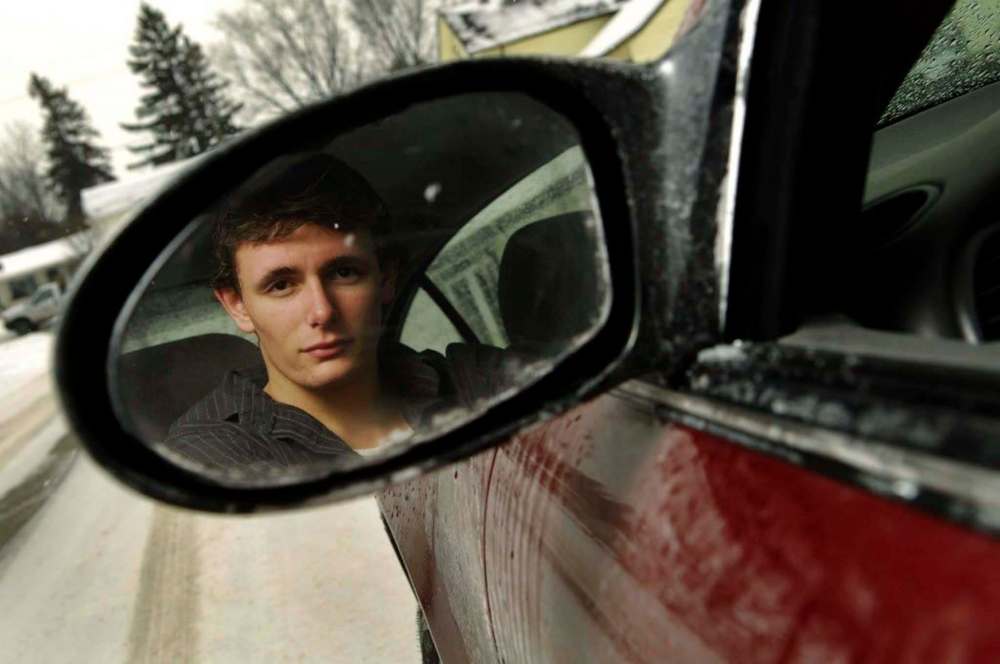
Car crashes are the leading cause of death for U.S. teens, and teenage boys are twice as likely to die as teenage girls, according to the Centers for Disease Control and Prevention. New teen drivers are especially dangerous: research by AAA’s Foundation for Traffic Safety shows that 16- and 17-year-olds are nearly three times more likely than adults 30 to 59 to be involved in a fatal crash. The leading cause is driver inexperience; teens simply haven’t been at it long enough to know what to do in all of the myriad scenarios they may encounter.
If your teen is learning to drive, here are some ways to make your time in the car together more effective.
● Keep your emotions in check, and pay attention to theirs. Even if you think you’re being calm, your teen may not see it that way.
“In surveys asking teens what parents could do better, they say, ‘Tell them not to yell at us,’ “ says Robert Foss, director emeritus of the Center for the Study of Young Drivers at the University of North Carolina at Chapel Hill. He cites a study he co-authored that used in-vehicle video cameras to capture parent-teen interactions: some teens later described their parents as yelling at them even when they hadn’t raised their voices.
As with many other aspects of parenting teens, it’s important to remember that what they’re reacting to may have nothing to do with you.
For Corinne Peek-Asa, director of the Injury Prevention Research Center at the University of Iowa, timing was everything when sharing feedback with her two teenage daughters.
“I had to be patient with their moods,” she explains. “It might have been a good time for me, but it wasn’t for them.”
Sometimes, too, it’s a matter of choosing to remain calm. If your teen seems argumentative, it’s best to refrain from responding in kind and instead to stay focused on the broader picture.
“Just roll with it,” Peek-Asa says.
Supervising your teen’s driving when you’re feeling frustrated with each other can actually be counterproductive. Orit Taubman-Ben-Ari, who heads the Positive Family and Developmental Psychology Lab at Israel’s Bar-Ilan University, found when the atmosphere is tense, parents provide less feedback overall and what they do share is less focused on safety.
The best approach is one that strikes the right balance between support and control. The Children’s Hospital of Philadelphia has found that parenting styles have a direct impact on teen driving safety and notes that “parents may cut their teen drivers’ crash risk in half if they set driving rules and monitor them in a supportive, non-controlling way.”
But even researchers acknowledge that maintaining a positive, motivating tone all the time can be hard: Peek-Asa recalls one stressful incident when her younger daughter was pulling into the garage and hit the gas rather than the brake pedal.
“It’s just one of those mistakes that’s going to happen,” she adds, noting that it’s better to have it happen during this stage, rather than later on.
● Focus on a wide range of skills and driving environments. Learning the fundamentals of how to operate a car, such as parking, turning and braking, generally comes fairly quickly. But beyond the basics, teens need higher-order skills that develop with ongoing practice, including scanning for potential hazards and developing general situational awareness so they can anticipate and respond appropriately.
As the CDC notes in its “Parents Are the Key to Safe Drivers” outreach campaign, this includes driving at night, in different kinds of weather and on a variety of roads.
“We learn to drive by driving,” Foss says. “Be sure your teens drive as much as they possibly can, in as wide a range of circumstances as they can, throughout the entire learner licence period.”
“A few drives in the country are not enough for city dwellers. A few hours in city traffic are not enough for rural residents. And a couple of long trips on an interstate are not enough for anyone,” he says. He recommends that parents accompany their teens in the full range of conditions, building up over time to more challenging scenarios such as icy roads or rain.
● Model and encourage good behaviour. Your teen will probably be paying closer attention to your own driving now, so make sure you’re setting a good example. Research has found parents who are risky drivers foster the same behaviour in their teens, whether it’s driving aggressively, sending or reading texts while driving or drinking before getting behind the wheel.
When it comes to cellphone use, parents may not realize they’re contributing to bad driving behaviours by expecting teens to answer when they call. Instead, ask your teen to return your call after reaching their destination. (Many newer phones have an auto reply or “do not disturb” setting that’s triggered when the car is moving.)
In addition to limiting cellphone use (including texting), discourage your teen from having teen passengers in the car, especially early on. A 2012 AAA Foundation for Traffic Safety study found that the risk for 16- and 17-year-old drivers of being killed in a crash was up to four times higher when passengers in the car were under 21.
● Prepare for your role. As a starting point, parents and teens can go online and read Graduated Driver Licensing (mpi.mb.ca/en/PDFs/GDLGuide.pdf), a guide compiled by Manitoba Public Insurance.
In addition to the CDC’s “Parents Are the Key to Safe Drivers” website, other resources for parents include the National Safety Council’s “Drive It Home” site.
Connecticut, Massachusetts and Northern Virginia now require that parents complete a driver’s education class to brush up on their skills and learn more about their responsibilities supervising their teens. (A similar requirement goes into effect later this year in Rhode Island, which will offer the classes online at no cost.)
Remember, though, that what’s required by law is only a baseline. The goal is to help teens develop what Foss calls “a more intuitive understanding of driving.” This doesn’t come from meeting a set number of hours of supervised driving, but instead develops over time.
“My kids were supervised forever before they drove on their own,” Peek-Asa says.
This gatekeeper role is a critical one. But how do you know when your teen is ready? Foss suggests it’s when you’d feel comfortable sleeping while your teen drives.
I still recall the countless hours I spent driving around town when my son was a baby, to coax him to nap. It’s hard right now to envision such a complete reversal, but I know we’ll get there.
— Washington Post
History
Updated on Monday, May 28, 2018 8:06 AM CDT: Adds photo