UN health agency issues 1st strategy to address snake bites
Advertisement
Read this article for free:
or
Already have an account? Log in here »
To continue reading, please subscribe:

Digital Subscription
One year of digital access for only $205*
- Enjoy unlimited reading on winnipegfreepress.com
- Read the E-Edition, our digital replica newspaper
- Access News Break, our award-winning app
- Play interactive puzzles
*First annual payment billed as $205.00 + GST for one year. This annual subscription will automatically renew at $233.00 + GST every 52 weeks (10% off the regular annual price of $259.35). Offer available to new and qualified returning subscribers only. Cancel any time.
To continue reading, please subscribe:
Add Free Press access to your Brandon Sun subscription for only an additional
$1 for the first 4 weeks*
- Enjoy unlimited reading on winnipegfreepress.com
- Read the E-Edition, our digital replica newspaper
- Access News Break, our award-winning app
- Play interactive puzzles
*Your next Brandon Sun subscription payment will increase by $1.00 and you will be charged $17.95 plus GST for four weeks. After four weeks, your payment will increase to $24.95 plus GST every four weeks.
Read unlimited articles for free today:
or
Already have an account? Log in here »
Hey there, time traveller!
This article was published 23/05/2019 (2636 days ago), so information in it may no longer be current.
LONDON – The World Health Organization is publishing its first-ever global strategy to tackle the problem of snake bites, aiming to halve the number of people killed and disabled by snakes by 2030.
Nearly 3 million people are bitten by potentially poisonous snakes every year, resulting in as many as 138,000 deaths. Last week, Britain’s Wellcome Trust announced an 80 million-pound ($100 million) program to address the problem, saying there were new potential drugs that could be tested.
In a statement, Doctors Without Borders said it was “cautiously optimistic” WHO’s snakebite strategy could be a “turning point” in addressing snake bites.
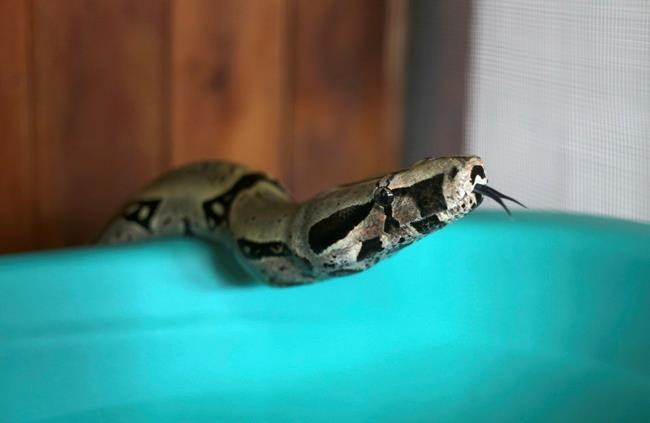

The agency called the problem of snake bites “a hidden epidemic” and said most bites are treatable.
WHO’s strategy includes plans to increase global access to treatment and antivenom.