UN health agency: Rising misconduct reports are ‘positive’
Advertisement
Read this article for free:
or
Already have an account? Log in here »
To continue reading, please subscribe:

Digital Subscription
One year of digital access for only $205*
- Enjoy unlimited reading on winnipegfreepress.com
- Read the E-Edition, our digital replica newspaper
- Access News Break, our award-winning app
- Play interactive puzzles
*First annual payment billed as $205.00 + GST for one year. This annual subscription will automatically renew at $233.00 + GST every 52 weeks (10% off the regular annual price of $259.35). Offer available to new and qualified returning subscribers only. Cancel any time.
To continue reading, please subscribe:
Add Free Press access to your Brandon Sun subscription for only an additional
$1 for the first 4 weeks*
- Enjoy unlimited reading on winnipegfreepress.com
- Read the E-Edition, our digital replica newspaper
- Access News Break, our award-winning app
- Play interactive puzzles
*Your next Brandon Sun subscription payment will increase by $1.00 and you will be charged $17.95 plus GST for four weeks. After four weeks, your payment will increase to $24.95 plus GST every four weeks.
Read unlimited articles for free today:
or
Already have an account? Log in here »
Hey there, time traveller!
This article was published 18/01/2019 (2751 days ago), so information in it may no longer be current.
GENEVA – The World Health Organization said Friday that it’s seeing increasing reports of misconduct reported by staffers within the U.N. health agency, describing the trend as “a positive thing.”
WHO spokesman Tarik Jasarevic said at a press briefing in Geneva the agency has been investigating misbehaviour for “years and decades” and would continue to do so.
The comments came after an Associated Press story Thursday which reported that WHO’s director-general had ordered an internal probe into claims the agency is rife with racism, sexism and corruption.
The AP obtained three anonymous emails addressed to senior WHO managers charging that there were numerous problems at the agency, including “systematic” racism against African staffers and allegations that some money intended to fight Ebola in Congo was misspent.
Last month, WHO chief Tedros Adhanom Ghebreyesus instructed the agency’s internal office of oversight to investigate the allegations, announcing his decision at a staff meeting in Geneva.
The first email, which was sent last April, claimed there was “systematic racial discrimination against Africans at WHO” and that African staffers were being “abused, sworn at (and) shown contempt to” by their Geneva-based colleagues.
Two further emails addressed to WHO directors complained that senior officials were “attempting to stifle” investigations into such problems and also alleged other instances of wrongdoing, including allegedly misspent Ebola funds.
The last email, sent in December, labeled the behaviour of a senior doctor helping to lead the response against Ebola as “unacceptable, unprofessional and racist,” citing a November incident where the doctor reportedly “humiliated, disgraced and belittled” a Middle East subordinate.
Some staffers feared that funds donated to help stop Ebola in Congo “have not been used judiciously,” the email said, warning such blunders could undermine WHO’s credibility.
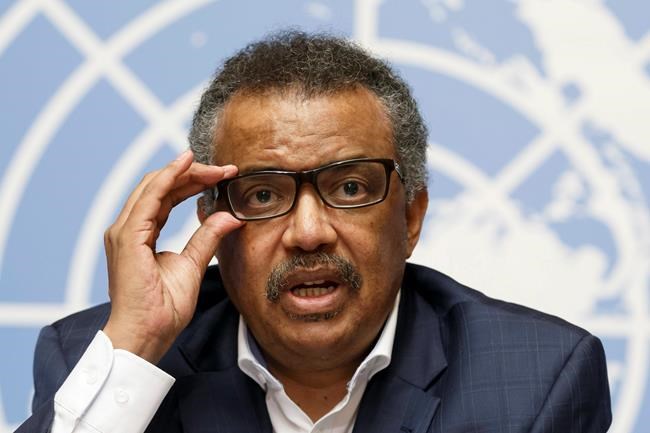
Tedros — a former health minister of Ethiopia and WHO’s first African director-general — said during the staff meeting that investigators looking into the charges “have all my support” and that he would provide more resources if necessary.
WHO spokesman Jasarevic said WHO has “established procedures and people can report on any concern they may have,” and that all such allegations would be assessed by its office of internal oversight.
“There are more reports of concern, and this is a positive trend. It’s important for us to know where there are cases of misconduct so we can address them,” Jasarevic said. He added the increased reports also suggest staffers feel “more confident to report concerns.”
But critics questioned whether WHO could effectively investigate itself, pointing out that it was WHO’s internal oversight office that botched the initial investigation into sexual harassment allegations at UNAIDS, which is technically part of WHO.
WHO’s internal investigation dismissed those claims, but an independent report concluded last year there was a culture of impunity and toxic working environment at UNAIDS, which ultimately led its chief Michel Sidibe to announce his resignation last month, effective in June.
“Having an internal investigation at WHO is as good as doing nothing,” said Ed Flaherty, a lawyer who represents Martina Brostrom, the UNAIDS whistleblower whose sexual harassment charges prompted the report.
Jasarevic said WHO’s internal investigation office reports “to (an) independent expert oversight advisory committee, and that’s not a WHO body.” He said reports on “substantiated allegations” would be publicly submitted to the World Health Assembly.

But according to a report from WHO’s internal auditor, the office reports directly to WHO’s director-general. And WHO’s 2015 “Accountability Framework” said the office is responsible both to WHO senior management and to the U.N. agency’s governing bodies.
Flaherty disputed Jasarevic’s assertion that WHO staffers have confidence in internal misconduct reporting methods.
“Whistleblowers at WHO get crushed,” Flaherty said. “The fact that people have resorted to anonymous emails to report these allegations is a sign of desperation.”
___
Maria Cheng reported from London.