Unmasking a mask-maker
Chris Sigurdson uses his love of centuries-old Italian theatre to help kids develop emotional intelligence
Advertisement
Read this article for free:
or
Already have an account? Log in here »
To continue reading, please subscribe:

Digital Subscription
One year of digital access for only $205*
- Enjoy unlimited reading on winnipegfreepress.com
- Read the E-Edition, our digital replica newspaper
- Access News Break, our award-winning app
- Play interactive puzzles
*First annual payment billed as $205.00 + GST for one year. This annual subscription will automatically renew at $233.00 + GST every 52 weeks (10% off the regular annual price of $259.35). Offer available to new and qualified returning subscribers only. Cancel any time.
To continue reading, please subscribe:
Add Free Press access to your Brandon Sun subscription for only an additional
$1 for the first 4 weeks*
- Enjoy unlimited reading on winnipegfreepress.com
- Read the E-Edition, our digital replica newspaper
- Access News Break, our award-winning app
- Play interactive puzzles
*Your next Brandon Sun subscription payment will increase by $1.00 and you will be charged $17.95 plus GST for four weeks. After four weeks, your payment will increase to $24.95 plus GST every four weeks.
Read unlimited articles for free today:
or
Already have an account? Log in here »
Hey there, time traveller!
This article was published 24/10/2017 (3188 days ago), so information in it may no longer be current.
Putting on a mask at Halloween gives you the fun of being someone you’re not. That’s also the fun of wearing a mask onstage in the theatre.
But the power of a mask can be so much more.
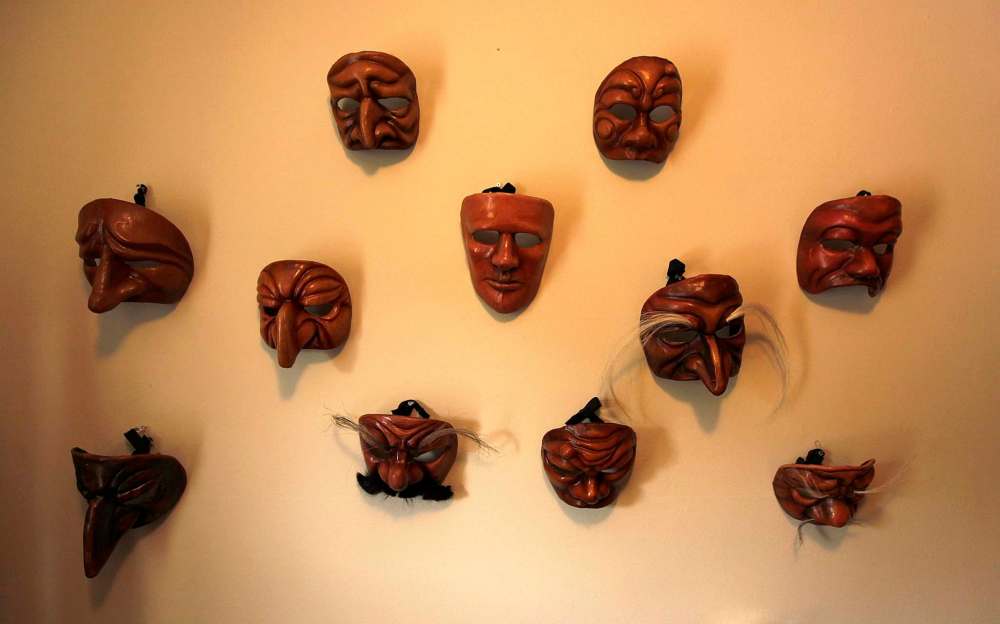
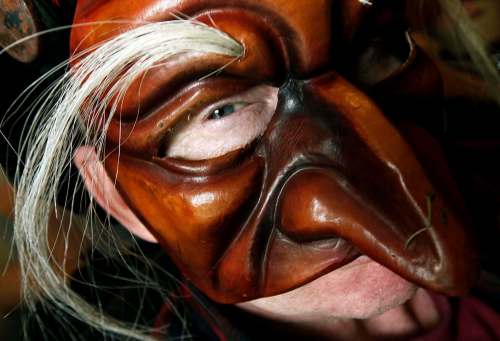
Ask Chris Sigurdson, 55, a Winnipeg actor, director, educator and mask-maker who is passionate about the magic of the theatrical mask — especially those that come out of the tradition of commedia dell’arte, a style of improvised popular comedic theatre that flourished in Italy from the 16th century to the 18th.
Sigurdson says he’s always had a comedic streak.
“I was the class clown — I had bright red hair and a lateral lisp and a target on my back — and being funny was a way of getting that target off my back and not being the butt of everyone’s jokes,” he says.
His mom encouraged him to take theatre in high school, and from there, he went on to the University of Winnipeg and studied under Reg Skene, who introduced him to commedia dell’arte, mime and the use of masks. He says it was different from his other classes.
“You’re creating a situation where the audience is complicit — there was something in it I found intoxicating and powerful — and I wanted more of it,” he says.
He pursued the object of his theatrical affection, formed a company called Mimeworks, travelled and came across opportunities to learn more about mask-making.
“I ran into a company called Faustwork Mask Theatre run by Rob Faust,” he says.
“I was like a kid in a candy shop — here was a company devoted to the esthetics of mask theatre.”
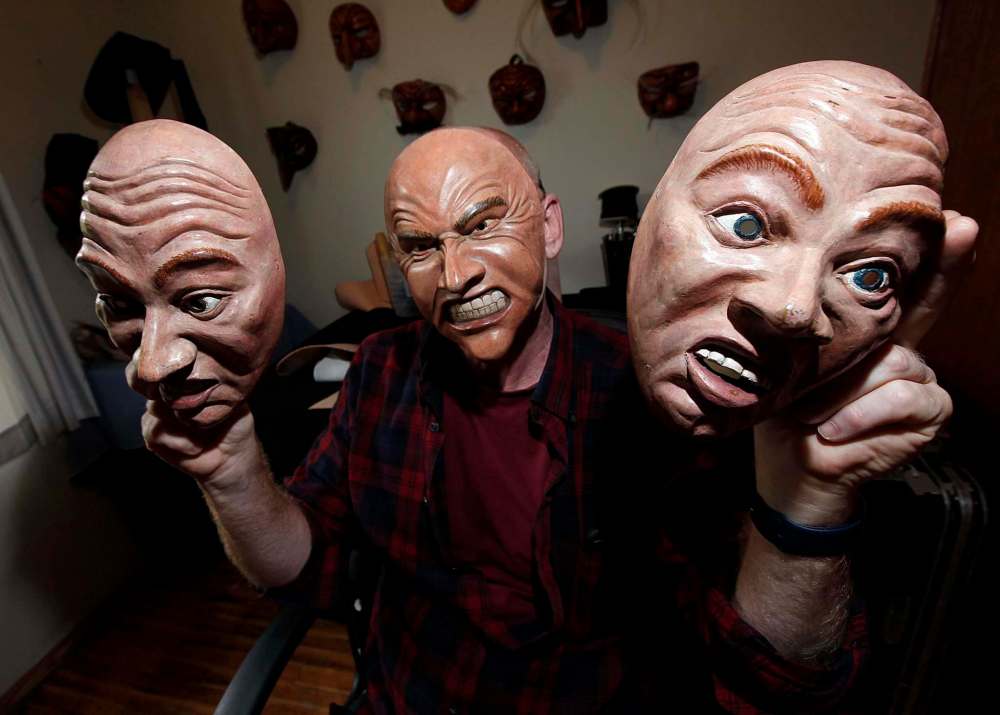
From Faust, he learned how to make both traditional and contemporary latex masks, and a lot about the finer points of facial architecture.
“I’d be working on a mask and sculpting it in clay and he’d come over and say, ‘No, this doesn’t connect.’ He’d take a sculpting tool and draw a line and show me that eyebrows aren’t just blobs, they start and they end somewhere; and the line in the cheek, it’s got to start here — and he’d muck up all the work that I’d done.
“But he was right,” he says.
“We can have a quite fantastical mask, but if you want the mask to live and you want it to be performed, the audience still has to recognize something in that mask.”
The mask-making process hass remained mostly unchanged for hundreds of years. A facial shape is sculpted out of clay, which is then handed to a woodcarver, who carves the shape out of a block of wood. Then, a piece of wet leather is stretched over the carving and attached to the back. Sigurdson has adapted the method slightly, using plaster life moulds of a person’s face instead of a wood block.
“Then I use a piece of antler and a piece of wood to press the leather against the form, to take the shape,” he says.
“Once the leather dries, you cut out the eyes and the nose, and you embed a wire into a fold around the perimeter of the mask and attach a strap.
“Then I airbrush dye on it to help bring the shapes out.”
He can make the masks out of neoprene as well, but he favours leather.
“I’m a sucker for a good metaphor, and what you are doing with leather is taking a piece of material that was once living tissue and you are forming it into something else and re-animating it,” he says.
Once created, it is ready for the performer. The maker chooses a character in creating a mask. The actor looks at the mask to create the character, shaping the body to match.
“You must perform the mask so that it comes alive and stays alive when it’s onstage — even when it’s still — and remain connected to the audience,” he says.
Sigurdson’s masks are made to be performed in the tradition of commedia dell’arte.
“For a good couple of hundred years, it dominated the culture and influenced Shakespeare, Molière and later, even Charlie Chaplin and Buster Keaton,” he says.
In a nutshell, the tradition relies on colourful stock characters using improvised dialogue and familiar frameworks that allow the stories to be retold in different ways over and over again.
“There are clown characters, servants and masters,” he says.
There are also the lovers portraying the qualities of the masculine and feminine, the trickster, the innocent, the braggart captain, the greedy merchant, the pedantic scholar and others.
“What was consistent among the troupes was the embracing of these types,” he says.
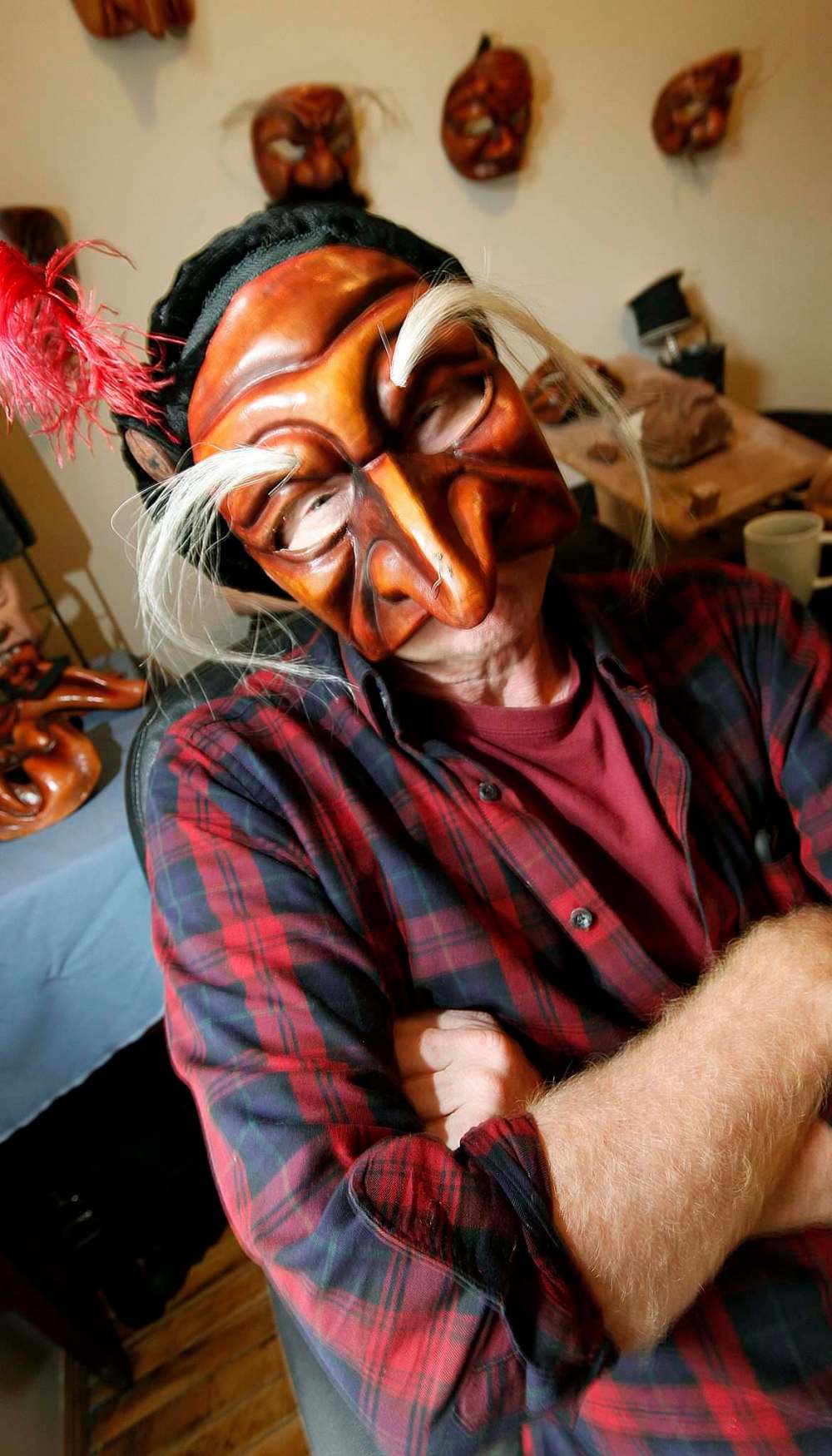
They operate in a binary universe — a hierarchy of fabricated linear order over the natural cyclical chaos — two forces that are always trying to come in to balance. Each character belongs to one of these worlds.
“The lovers are trying to get together and the servants might be trying to help, but they are battling the hierarchy — and the merchant and the pedant and the military are somehow suppressing this free expression of love, but in the end it all works out happily,” says Sigurdson.
He points out that many television sitcoms are based on these comedy traditions.
This love of theatre also led Sigurdson to become an educator and he started teaching mime 25 years ago through the Artists in the Schools program.
“A big part of my current activity is a program I call Unmasking Empathy,” he says.
Sigurdson began incorporating simple masks created from thick white cardstock, which illustrated different emotions.
“Some very interesting things happened,” he says.
Students were giving him heartfelt responses when he began to teach them how to make the masks come alive with body language.
“I asked: What would make somebody feel sad like this?” he says.
One student responded that they just realized they’re the only one at home.
“It was something very specific, but there was a nod around the room, and I recognized that it was quite profound,” he says.
“I just stumbled on this in trying to make the masks relevant: empathy is where theatre and social skills and education kind of link.”
And, he says empathy is something that has become really important, so he dug in and developed it.
“We’re talking about non-verbal communication skills; we’re talking about emotional intelligence; and we’re looking at some of the things that we can do — heightening our ability not just to observe, but what we could be compelled to do to help another person,” he says.
“So we would get suggestions like: we could say something nice to them; or invite them to play; or talk to a grown-up.”
Sigurdson says that Unmasking Empathy has led him to greater specialization in mask-making, commedia dell’arte and educating.
“My nerdiness and my love of masks fills this niche in our school system, where we don’t really have a good avenue to discuss how emotions affect us,” he says.
Sigurdson says that as a mask-maker, he sees “wonderful things.”
“As soon as people put on the mask — even those who are not actors — they strike a pose without any encouragement or anything and it’s like, ‘That’s the character!’” he says.
“Or conversely, somebody puts the mask on and you say: ‘I didn’t see that! Thank you for showing me a whole other vein of creativity in that mask.’ “
Twitter: @WendyKinginWpg