US measles count rises to 764, driven by New York outbreaks
Advertisement
Read this article for free:
or
Already have an account? Log in here »
To continue reading, please subscribe:

Digital Subscription
One year of digital access for only $205*
- Enjoy unlimited reading on winnipegfreepress.com
- Read the E-Edition, our digital replica newspaper
- Access News Break, our award-winning app
- Play interactive puzzles
*First annual payment billed as $205.00 + GST for one year. This annual subscription will automatically renew at $233.00 + GST every 52 weeks (10% off the regular annual price of $259.35). Offer available to new and qualified returning subscribers only. Cancel any time.
To continue reading, please subscribe:
Add Free Press access to your Brandon Sun subscription for only an additional
$1 for the first 4 weeks*
- Enjoy unlimited reading on winnipegfreepress.com
- Read the E-Edition, our digital replica newspaper
- Access News Break, our award-winning app
- Play interactive puzzles
*Your next Brandon Sun subscription payment will increase by $1.00 and you will be charged $17.95 plus GST for four weeks. After four weeks, your payment will increase to $24.95 plus GST every four weeks.
Read unlimited articles for free today:
or
Already have an account? Log in here »
Hey there, time traveller!
This article was published 06/05/2019 (2642 days ago), so information in it may no longer be current.
NEW YORK – U.S. health officials say at least 60 more measles cases have been reported, increasing a 2019 tally that is already the highest in 25 years.
Officials on Monday said 764 cases have been reported as of last Thursday. It’s the most in the U.S. since 1994, when 963 were reported.
New York has had the most illnesses this year, by far. Last week’s cases included 41 in New York City and 11 in nearby Rockland County. Most were unvaccinated people in Orthodox Jewish communities.
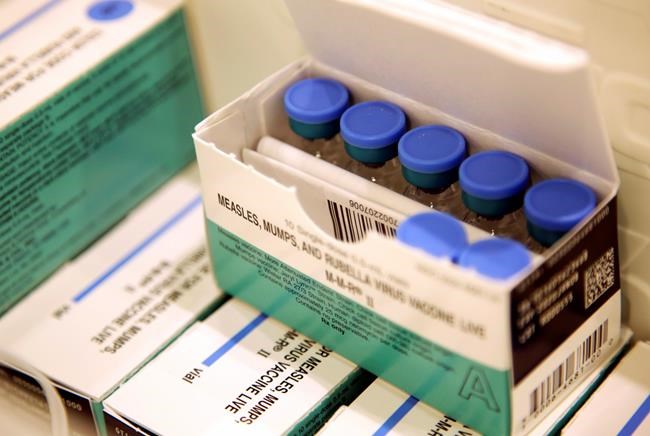
In all, 23 states have reported cases this year. The latest to join the list is Pennsylvania.
Measles was once common but gradually became rare after a vaccination campaigns that started in the 1960s.