Who owns aloha? Hawaii eyes protections for native culture

Advertisement

Advertise with us

HONOLULU - Last year, much of Hawaii was shocked to learn a Chicago restaurant chain owner had trademarked the name "Aloha Poke" and wrote to cubed fish shops around the country demanding that they stop using the Hawaiian language moniker for their own eateries. The cease-and-desist letters targeted a downtown Honolulu restaurant and a Native Hawaiian-operated restaurant in Anchorage, among others.

Read this article for free:


or

Already have an account? Log in here »

To continue reading, please subscribe:

Subscribe and receive a limited-edition Free Press branded hat or tote.

Digital Subscription

One year of digital access for only $205*

  • Enjoy unlimited reading on winnipegfreepress.com
  • Read the E-Edition, our digital replica newspaper
  • Access News Break, our award-winning app
  • Play interactive puzzles

*First annual payment billed as $205.00 + GST for one year. This annual subscription will automatically renew at $233.00 + GST every 52 weeks (10% off the regular annual price of $259.35). Offer available to new and qualified returning subscribers only. Cancel any time.

To continue reading, please subscribe:

Add Free Press access to your Brandon Sun subscription for only an additional

$1 for the first 4 weeks*

  • Enjoy unlimited reading on winnipegfreepress.com
  • Read the E-Edition, our digital replica newspaper
  • Access News Break, our award-winning app
  • Play interactive puzzles
Start now

*Your next Brandon Sun subscription payment will increase by $1.00 and you will be charged $17.95 plus GST for four weeks. After four weeks, your payment will increase to $24.95 plus GST every four weeks.

Hey there, time traveller!
This article was published 18/04/2019 (2677 days ago), so information in it may no longer be current.

HONOLULU – Last year, much of Hawaii was shocked to learn a Chicago restaurant chain owner had trademarked the name “Aloha Poke” and wrote to cubed fish shops around the country demanding that they stop using the Hawaiian language moniker for their own eateries. The cease-and-desist letters targeted a downtown Honolulu restaurant and a Native Hawaiian-operated restaurant in Anchorage, among others.

Now, Hawaii lawmakers are considering adopting a resolution calling for the creation of legal protections for Native Hawaiian cultural intellectual property. The effort predates Aloha Poke, but that episode is lending a sense of urgency to a long-festering concern not unfamiliar to native cultures in other parts of the world.

“I was frustrated at the audacity of people from outside of our community using these legal mechanisms to basically bully people from our local community out of utilizing symbols and words that are important to our culture,” said state Sen. Jarrett Keohokalole, a Native Hawaiian representing Kaneohe and Heeia.
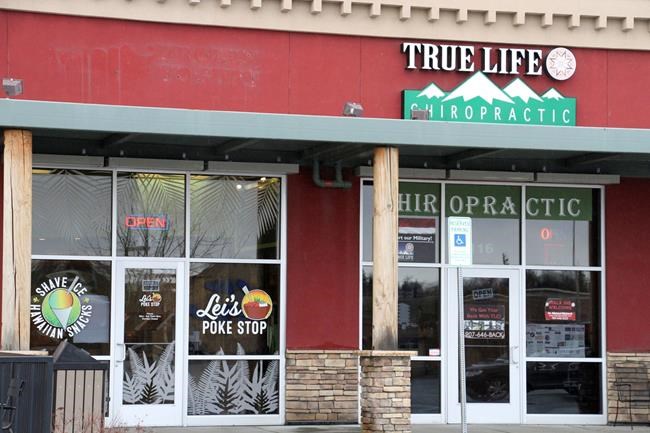
The exterior of Lei's Poke Stop, at left, is seen Wednesday, April 17, 2019, in Anchorage, Alaska. Hawaii lawmakers are considering adopting a resolution calling for the creation of legal protections for Native Hawaiian cultural intellectual property. The move comes after a Chicago restaurant chain owner shocked the island state by trademarking the name
The exterior of Lei's Poke Stop, at left, is seen Wednesday, April 17, 2019, in Anchorage, Alaska. Hawaii lawmakers are considering adopting a resolution calling for the creation of legal protections for Native Hawaiian cultural intellectual property. The move comes after a Chicago restaurant chain owner shocked the island state by trademarking the name "Aloha Poke" and sending letters to similarly named cubed fish shops around the country demanding that they change their names, including this Anchorage store, which changed its name. (AP Photo/Mark Thiessen)

The resolution calls on state agencies and Native Hawaiian organizations to form a task force to develop a legal system to “recognize and protect” Native Hawaiian cultural intellectual property and traditional cultural expressions. It also seeks protections for genetic resources, such as taro, a traditional crop that legend says is an ancestor of the Hawaiian people and that scientists have tried to genetically engineer in the past.

The task force would be commissioned to submit its recommendations and any proposed legislation to lawmakers in three years.

The House passed the resolution Thursday. The Senate is scheduled to vote on it Monday.

The Aloha Poke incident echoes past disputes, like when a non-Hawaiian photographer claimed copyright over an image of a woman dancing hula and Disney copyrighted a modified version of a Hawaiian chant used in a movie.

Chicago’s Aloha Poke Co. chose as its battleground the word “aloha” — a term meaning love, compassion, kindness as well as hello and goodbye. It’s a term central to how Native Hawaiians treat others and how many in Hawaii — Native Hawaiian or not — try to live.

“It’s traumatic when things like this happen to us — when people try to take, modify or steal what’s been in our people’s world view for generations,” said Healani Sonoda-Pale, chairwoman of the Ka Lahui Hawaii political action committee, who testified in support of the resolution.

Aloha Poke CEO Chris Birkinshaw didn’t return messages seeking comment left at his West Madison store in Chicago and on the company’s website. The company has stores in Illinois, Wisconsin, Minnesota, Florida and Washington, D.C.

Aloha Poke Shop in Honolulu initially ignored the Chicago company’s letter, said co-founder Jeff Sampson. When the issue burst into the news, he and his partners had an attorney write their Chicago counterpart saying they wouldn’t change their name. They explained there would be no confusion between their businesses because they operated far from the mainland company’s stores.

But Tasha Kahele, who is Native Hawaiian, has spent nearly $10,000 so far changing her Anchorage store’s name to Lei’s Poke Stop after receiving one of the letters.

Native Hawaiian experts note there’s a cultural clash underlying much of this. Modern European-based traditions use trademarks, copyright and patents to create economic incentives and rewards for creating knowledge and culture. Indigenous culture, on the other hand, is often passed on through generations and held collectively.

“They’re never going to sit nicely together in a box,” said Kuhio Lewis, the CEO of the Council for Native Hawaiian Advancement.

It will be difficult to determine who would decide who can use Native Hawaiian culture and who would be able to use it. Limits may violate the First Amendment of the U.S. Constitution. The task force will have to explore who can do what, Lewis said.

“At the least, they need to have some cultural sensitivity about how it’s used. And they need to know you can’t be telling Native Hawaiian businesses they can’t use their own language,” Lewis said.

The resolution points to potential models in New Zealand and Alaska, which both created signifiers that indigenous people may place on their art as a mark of authenticity.

Marie Texter of Anchorage said her late father Andy Makar — who drew, made carvings from tusks, cottonwood and horns, and sewed animal skins — was a strong believer in the Silver Hand seal for Alaska Natives.

“He said this is a great program because so many times the Native artwork gets commercialized or used by someone else,” she said.

He had to fill out proof of his Indian blood — he was mostly Yup’ik but his mother was Athabascan — to apply.

But Rosita Worl, president of Juneau-based Sealaska Heritage Institute, said not all Alaska Native artists apply for or use the emblem. Nor does the program deter the sale of bogus Native art made overseas, she said. It also lacks enforcement and publicity, she said.

Charles E. Colman, a University of Hawaii law professor, said such programs hold up under federal law because they don’t prohibit people from making work that resembles indigenous art. They merely won’t allow people to say their work is produced by an indigenous person if it’s not.

Colman believes the Aloha Poke situation, on the other hand, could be addressed within existing trademark law.

He believes the Chicago company’s trademark could be cancelled if challenged because it’s not so well-known that its name has developed a secondary meaning the way the words in the retailer name “Best Buy” have, for example.

“You can’t just register a descriptive phrase unless you’ve achieved a certain amount of public recognition,” he said.

____

Associated Press journalists Rachel D’Oro and Mark Thiessen in Anchorage contributed to this report.

Report Error Submit a Tip

More Stories

Sea Bears finish on top

Joshua Frey-Sam 6 minute read Preview

Sea Bears finish on top

Joshua Frey-Sam 6 minute read Yesterday at 8:27 PM CDT

Beauty. Bliss. Ecstasy.

That is how Aug. 15, 2026 will be remembered in Winnipeg.

What was once a pipe dream in the city’s hoops community became an epic reality on Saturday, when Simon Hildebrandt, who grew up playing on the courts of this very town, made good on a three-pointer from the wing to crown the Winnipeg Sea Bears Canadian Elite Basketball League champions.

A storybook ending to a 98-84 victory over the Brampton Honey Badgers sent a CEBL attendance record of 12,519 fans into pandemonium at Canada Life Centre and capped a Finals run for the ages — one that was fraught with injury, impromptu player exits and unprecedented circumstances.

Read
Yesterday at 8:27 PM CDT

Impaired driving victim honoured

Morgan Modjeski 5 minute read Preview

Impaired driving victim honoured

Morgan Modjeski 5 minute read Yesterday at 6:16 PM CDT

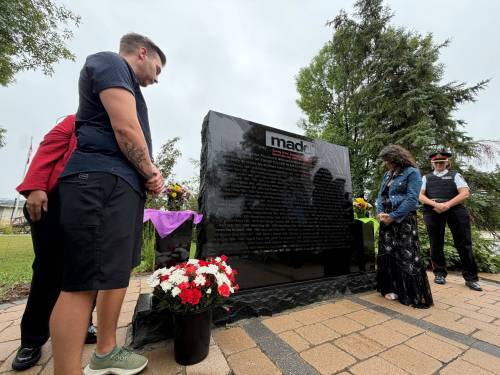
Ten years after he was killed in a collision involving an impaired driver in 2016, Robbie Anderson’s name has been added to MADD Canada’s Manitoba Memorial honouring those killed in drunk and drug-impaired-related crashes.

His older brother Chris Anderson, was one of two dozen people who gathered at the Glen Eden Funeral Home and Cemetery in West St. Paul Saturday to remember their loved ones, 86 victims whose names are etched into the granite monument near the heart of the graveyard.

“It’s heavy,” said Anderson when asked what it was like to be part of the ceremony and see his brother’s name added. “It’s been something I’ve been thinking about for a while.”

Grateful for MADD’s work and its efforts to honour Robbie, who was 27 when he died, Anderson said his brother, represented the “absolute best of us.”

Read
Yesterday at 6:16 PM CDT

Big Loser’s latest a winning mix of country, folk

Ben Waldman 5 minute read Preview

Big Loser’s latest a winning mix of country, folk

Ben Waldman 5 minute read Yesterday at 6:00 AM CDT

The yellow trucker hat for sale on Facebook Marketplace said “Selkirk Lumber,” so Adam Wayne Brown knew he had to hammer home a deal.

Like the other millennial members of Winnipeg folk-country band Big Loser, the bassist has an affinity for the nostalgic, taking every opportunity — through music, through lyrics and through wardrobe — to recall the unique circumstances of growing up in a changing Interlake.

“I remember the matte yellow trucks driving around — the lumber trucks — and so I’ve had this strange memory of something disappearing from my youth and then persisting,” says Brown, who, like the band’s frontman Alex Paradoski, moved to Winnipeg more than a decade ago.

“I have a photo of the Lockport Bridge in my dining room,” chimes in Paradoski, whose first job as a teenager was bunning wieners and chopping fries at Skinner’s, a drive-in mainstay since 1929 along Highway 44.

Read
Yesterday at 6:00 AM CDT

Rise of social media reflects rise of self-promotion — to the detriment of genuine storytelling

Reviewed by Matt Henderson 5 minute read Preview

Rise of social media reflects rise of self-promotion — to the detriment of genuine storytelling

Reviewed by Matt Henderson 5 minute read Yesterday at 3:00 AM CDT

A conversation is overheard between two people; one congratulates the other on their success, evident through countless posts on LinkedIn, but the other confesses the prolific aggrandizement is due to slumping success.

A young man on an airplane spends three hours poring over selfies taken on a vacation, zooming in on his biceps and using AI to retouch photos before posting on Instagram.

Anonymous and cowardly trolls on Reddit attempt to end another person’s career.

All this “storytelling” was observed in one day by this reviewer.

Read
Yesterday at 3:00 AM CDT

Proposed Transcona development — which could add 20,000 people — gets thumbs down from residents

Joyanne Pursaga 5 minute read Preview

Proposed Transcona development — which could add 20,000 people — gets thumbs down from residents

Joyanne Pursaga 5 minute read Friday, Aug. 14, 2026

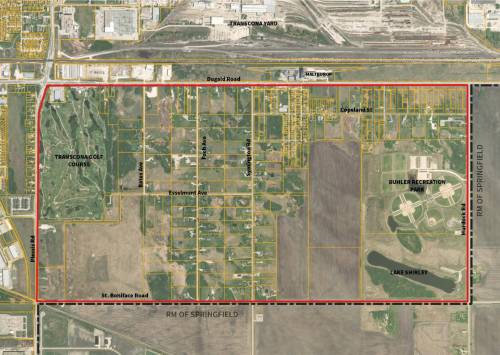
Dozens of Winnipeggers fear plans to make way for up to 20,000 more people to live in south Transcona would dramatically alter their neighbourhood and tie hefty fees for new services to their property titles.

If city council adopts the proposed South Transcona secondary plan, all future development applications would need to conform to its goals. The affected area is located south of Dugald Road, north of St. Boniface Road, east of Plessis Road and west of Murdock Road.

Homeowner Virginia Page Jähne fears the plan could add a massive tab to the title of her 4.3-acre property to cover services required for the development.

“My main concern is that they are wanting to put $1.4 million onto my title to pay for this. Now, they say that I will not have to pay it unless I subdivide. But if a person comes by and wants to buy from me … and they see that $1.4 million … what’s the first thing (they’re) going to do?” said Page Jähne, in an interview.

Read
Friday, Aug. 14, 2026

Development turning long-vacant gas station in Selkirk into commercial hub

By Tiago Resko 2 minute read Preview

Development turning long-vacant gas station in Selkirk into commercial hub

By Tiago Resko 2 minute read Thursday, Aug. 13, 2026

A plot of land that has sat vacant in Selkirk for 30 years is being redeveloped to host new businesses in the heart of the city.

The former gas station site on Main Street — between Rosser and Pacific avenues — will be turned into a commercial hub that will be home to six local businesses, and will be a big stepping stone for economic growth in Selkirk, Mayor Larry Johannson said Thursday.

“For decades this site has been a reminder of what once was. Today, it represents what is possible when investors see the potential of our community and choose to be a part of its future,” he said in a news release announcing the project and Thursday’s groundbreaking.

“This development reflects confidence in Selkirk, our economy and the direction we are heading.”

Read
Thursday, Aug. 13, 2026